Researchers at U.C. Irvine analyzed millions of Aleks math sessions from 2015–2025 and used ChatGPT's late-2022 debut as a breakpoint. After ChatGPT launched, students spent less time on word problems and correctness on those tasks rose, but proctored exam performance on word problems fell by about 25% compared with pre-ChatGPT cohorts. Controlled experiments show overreliance on AI reduces persistence on challenging tasks, while a Middlebury College study found tutor-style AI use can improve learning outcomes.
Is ChatGPT Undermining Student Learning? New Studies Show Short-Term Gains, Long-Term Risks

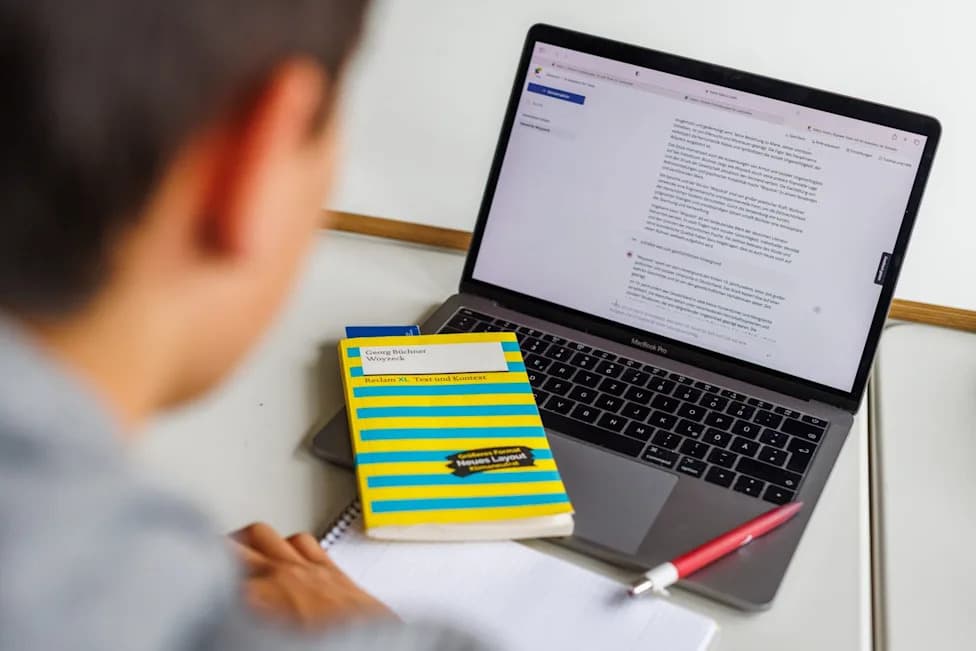
Getty Images
Multiple recent studies suggest that easy access to large language models is reshaping how students approach problems — producing faster homework results but potentially eroding durable understanding. Researchers combined large-scale usage data with controlled experiments to identify where AI is most likely to replace students' step-by-step reasoning and where it can still be used productively.
What The Large-Scale Data Shows
A University of California, Irvine team partnered with McGraw Hill to analyze roughly a decade of activity on Aleks, the publisher's adaptive math platform. The researchers examined millions of problem-solving sessions completed by learners from fifth grade through college between 2015 and 2025, using ChatGPT's late-2022 release as a natural breakpoint in the dataset.
To detect likely chatbot use, the team divided Aleks items into two groups: text-based word problems that students could readily paste into a chatbot, and more visual, interactive graphing tasks that were difficult to transfer to an AI. After ChatGPT’s launch, time spent on word problems fell sharply while correctness on those items rose — a pattern the authors interpret as evidence that some students were outsourcing answers to AI rather than working through steps themselves.
When later cohorts took proctored exams without access to AI tools, students were about 25% less likely to answer word problems correctly compared with pre-ChatGPT cohorts. Performance on graphing problems, which are harder to feed into a chatbot, remained essentially unchanged.
Controlled Experiments And Cognitive Effects
Complementary multi-institutional experiments cited by the UC Irvine team examined how adults handled logic and reasoning tasks with and without AI assistance. As participants became accustomed to letting models do the heavy lifting and skipped the "productive struggle" of working through intermediate steps, they were more likely to abandon difficult but solvable problems. This aligns with broader findings that passive overreliance on AI can reduce persistence and effort on challenging tasks.
"Part of how AI is making us dumber is undercutting the development of learning how to think in younger people that now have an alternative," said Dr. Adam Green, a cognitive neuroscientist at Georgetown University. He compared the brain's avoidance of effort to an evolutionary drive to conserve calories — people naturally favor the least effortful option that doesn't cause immediate harm.
When AI Helps Rather Than Hurts
Not all findings are negative. A July study from Middlebury College surveying more than 200 undergraduates found that students who used AI as a tutor — engaging with explanations, asking follow-up questions, and practicing concepts — earned higher test scores and produced higher-quality essays than students who used AI primarily to draft entire assignments.
Taken together, the research suggests a nuanced conclusion: shortcut or passive use of chatbots can blunt critical thinking and reduce durable learning, but guided, interactive use of AI as a teaching aid or virtual tutor can enhance performance when it supplements rather than replaces students' own cognitive work.
Practical Takeaways For Educators And Students
- Design assessments that require stepwise reasoning or tasks that are difficult to outsource to a chatbot.
- Teach students how to use AI as a tutor: ask for explanations, test understanding, and practice problem steps themselves.
- Encourage productive struggle — delaying shortcuts helps build durable skills and persistence.
Help us improve.