Summary: The rete ovarii, a small horseshoe-shaped network beside the ovary first described in 1870, was long labeled vestigial. Recent mouse studies using 3D imaging and tracers show the rete actively pumps fluid one-way into the ovary, transports proteins such as IGFBP2, and responds to estrogen and progesterone signals. Its extraovarian region interfaces with blood vessels, immune cells and nerves, suggesting a role in ovarian homeostasis. While promising, most findings are from mice and human clinical studies are needed.
Scientists Rediscover the Rete Ovarii — A Tiny, Active Hub That Talks to the Ovary

woman with stomach ache
For more than a century, a small horseshoe-shaped structure beside the ovary was dismissed as vestigial. New research now shows the rete ovarii is an active, regulated hub that pumps fluid, delivers proteins, and responds to hormonal signals.
What Is the Rete Ovarii?
The rete ovarii is a delicate network of tubules located at the base of the ovary. First identified in human tissue by German anatomist Wilhelm von Waldeyer in 1870, comparable rete structures are found across mammals — including sheep, cattle, dogs, nonhuman primates and mice. Early anatomists assumed it was a useless evolutionary leftover because nineteenth-century tools could not reveal its subtle activity.
New Evidence: A One-Way Delivery System
A team led by developmental biologist Dilara Anbarci (Duke University and University of Michigan) used modern 3D imaging, fluorescent tracers and mass spectrometry to observe the rete in mouse tissues in real time. When dye was injected into the rete, it flowed into the ovary; dye injected into the ovary did not flow back. That directional flow supports the idea of a deliberate, one-way delivery system.
Proteins and Hormone Sensitivity
Mass spectrometry showed the rete's fluid carries important proteins, notably IGFBP2, which helps modulate growth factors involved in follicle maturation. Researchers also detected estrogen and progesterone receptors in rete tissue and observed gene-expression changes across the reproductive cycle, leading scientists to liken the rete to an antenna that senses hormonal cues and responds.
Complex Anatomy and Connections
The rete ovarii is not a homogeneous mass but is organized into three specialized regions. The extraovarian portion sits adjacent to blood vessels, immune cells and nerve fibers and likely functions as an environmental sensor — detecting inflammation, hormonal spikes and other local signals. This physical connectivity suggests the ovary receives targeted chemical and cellular support rather than operating in isolation.

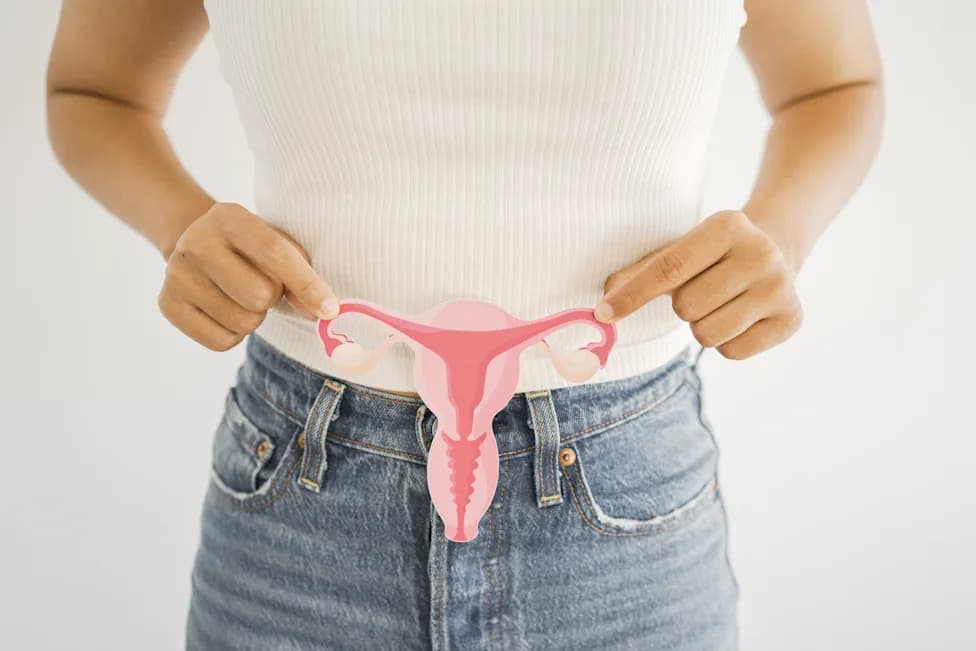
photo credit dedivan1923 via 123RF
Implications and Cautions
Unlocking the rete's roles could shed light on unexplained infertility and endocrine disorders such as PCOS or premature ovarian insufficiency. However, most functional experiments to date are in mice; older embryological studies showed follicles can still form when precursor rete tissue is removed early, implying the rete is probably an important partner rather than the sole engine of fertility.
“When this structure was first discovered in the late 1800s, it was assumed that it had no purpose because scientists couldn't see its function within the body.”
— Professor Adam Taylor, Lancaster University
Why It Was Overlooked
The rete's long absence from modern textbooks reflects historical limits of technology and broader gaps in research attention to female biology. Until the NIH Revitalization Act of 1993, U.S. policy did not require inclusion of women in clinical research, and in 1977 the FDA restricted participation of women of childbearing potential in early drug trials. Today, disparities persist: the World Economic Forum estimates women's health attracts only about 6% of private healthcare investment, while conditions accounting for some 14% of women's disease burden receive less than 1% of research funding.
What Comes Next
Researchers call for careful clinical studies in humans to determine how the rete contributes to ovarian homeostasis and whether it plays a role in human fertility or endocrine disease. The rete ovarii is a reminder that modern tools can reveal important biological roles missed by earlier generations — and that overlooked structures deserve new attention.
Photo credit: dedivan1923 via 123RF
Help us improve.