Evan Gershkovich, a US journalist, spent almost 500 days in a tiny cell at Moscow’s Lefortovo prison after his March 2023 arrest in Yekaterinburg on espionage charges he and his employer deny. Convicted and sentenced to 16 years, he was freed in August 2024 in a multi‑country prisoner swap and greeted in the United States by President Biden and Vice President Harris. In his memoir This Cursed Beautiful Land and recent interviews he details panic attacks, nightmares and a slow psychological recovery that mirrored his time behind bars. Now based in Berlin, he has returned to reporting but says he will not go back to Russia while Vladimir Putin remains in power.
From Lefortovo to Freedom: Evan Gershkovich’s 500‑Day Ordeal and Slow Recovery
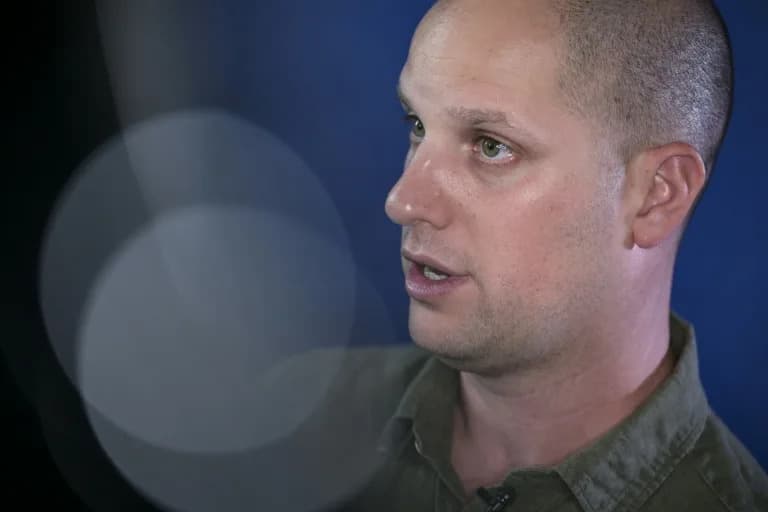
Evan Gershkovich said his release brought a flood of emotions he had kept buried in prison (Oliver Contreras)
US journalist Evan Gershkovich spent nearly 500 days confined to a tiny cell in Moscow’s notorious Lefortovo prison after his March 2023 arrest in Yekaterinburg. In his new memoir, This Cursed Beautiful Land, and in a recent interview with AFP in Washington, he recounts the arrest, the confinement and the long emotional recovery that followed his release in August 2024.
Arrest and Detention
Gershkovich was detained in March 2023 while reporting on military production in the Ural city. He says a half‑dozen officers from Russia’s Federal Security Service (FSB) burst into the restaurant where he was meeting a source, handcuffed him, placed a hood over his head and struck his midsection. The source he had been meeting was later revealed to be an FSB agent.
"Immediately it was immense fear, it was sort of like animalistic fear," Gershkovich told AFP.
Authorities charged him with espionage. The FSB’s public case relied on a document that, citing an unnamed source, alleged the Moscow bureau of The Wall Street Journal served CIA interests and therefore that Gershkovich "belongs to the apparatus of the CIA." Both he and his employer denied the allegations, and the U.S. State Department labeled him "wrongfully detained."
Life Inside Lefortovo
For much of his detention Gershkovich was held in a cell so small he said he could take only six or seven steps between walls. He describes relying on care packages from family and friends, exercising in place, meditating, keeping journals and reading Gulag memoirs to make sense of the system around him. Conversations with his cellmate taught him the unspoken rules of survival in a cramped prison environment.
Gershkovich says that apart from being roughed up during his arrest, he was not subjected to the sustained physical torture or deprivation that many other inmates, including detained Ukrainians, have reported. He believes the agents intended to hold him as a bargaining chip for a prisoner exchange rather than to "break" him completely.
Conviction, Swap and Return
After being convicted of espionage and handed a 16‑year sentence, Gershkovich was freed in August 2024 as part of a multi‑country prisoner swap. He was flown to an airbase near Washington, where President Joe Biden and Vice President Kamala Harris greeted him on the tarmac. Other Russian and German prisoners were also released in the exchange, while Western countries freed several Russian nationals.
Recovery and Reflection
Gershkovich describes a slow, difficult period of recovery after his release: panic attacks, freezing in crowds, a short temper, recurring nightmares and the surprising, unsettling longing for the predictability of prison life. He had rarely allowed himself to cry while detained; after release the emotions he had suppressed began to surface. Psychotherapy, time and the journals he kept in prison helped him rebuild a sense of normalcy.
"I'd say it took about the same amount of time as I was in to feel like I'm normal again," he told AFP.
Now based in Berlin, Gershkovich has returned to full‑time reporting for The Wall Street Journal. He says he will not travel to Russia while Vladimir Putin remains in power, but has not ruled out returning one day. "To me, my arrest is the FSB, sanctioned by Putin," he said. "But I would like to go back one day, of course. It meant a lot to me."
Why This Matters
Gershkovich’s case highlights ongoing risks faced by foreign and independent journalists working in Russia, the use of high‑profile detainees in international bargaining, and the long psychological toll of prolonged solitary confinement. His memoir and interviews offer a rare first‑hand account of the emotional aftermath of wrongful detention and the slow work of recovery.
Help us improve.