Belarusian President Alexander Lukashenko met U.S. special envoy John Coale in Tallinn to press for lifting remaining U.S. sanctions and to seek help unblocking assets. Recent U.S.-mediated deals have secured the release of hundreds of political detainees and led to targeted sanction relief for banks and potash producers. Human rights groups warn that repression continues—Viasna reports 912 political prisoners—and U.N. experts say Belarus uses its criminal justice system to silence opponents. Analysts say renewed U.S. engagement could ease Belarus' international isolation but stress that lasting reform is not guaranteed.
Lukashenko Presses U.S. Envoy in Tallinn to Seek Sanctions Relief After Prisoner Releases
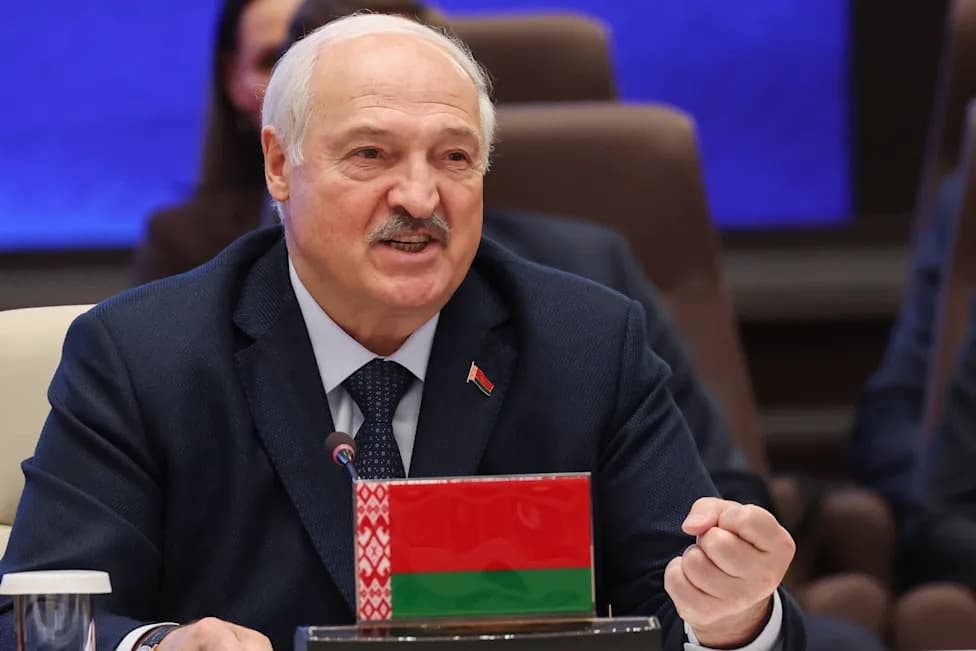
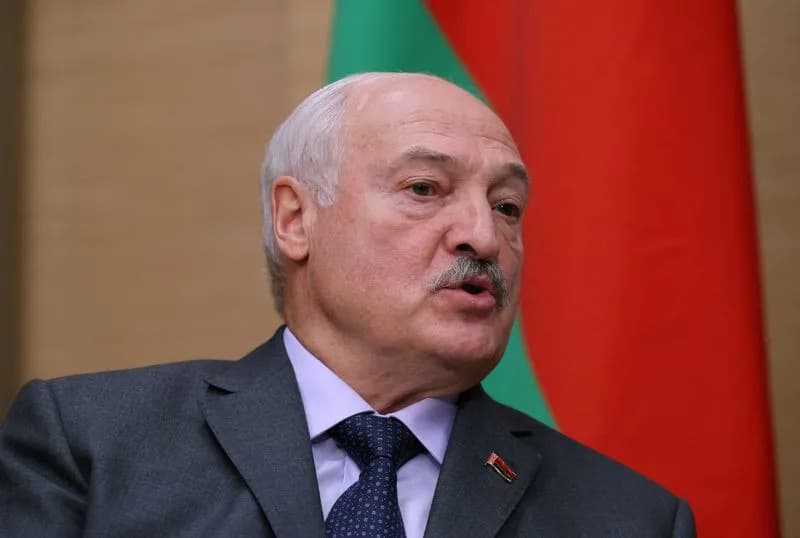
Belarusian President Alexander Lukashenko gestures while speaking at the Shanghai Cooperation Organization (SCO) summit, in Bishkek, Kyrgyzstan, on Tuesday, Sept. 1, 2026. (Vyacheslav Prokofyev, Sputnik, Kremlin Pool Photo via AP)
In Tallinn, Estonia, Belarusian President Alexander Lukashenko met with U.S. special envoy for Belarus John Coale to press Washington to lift the remaining U.S. sanctions on Belarus and to seek assistance unblocking assets he says are 'stuck in Citibank.'
Lukashenko said the talks produced progress on economic ties and that he was open to negotiating "a deal big or small." He emphasized the possibility of expanding exports, including Belarusian fertilizers, to the United States if sanctions were eased.
According to Belarusian officials, recent U.S.-mediated arrangements since President Donald Trump's return to the White House have led to the release of hundreds of political detainees and to the rolling back of some sanctions. In March, a deal brokered with Washington resulted in the release of 250 political prisoners in exchange for U.S. removal of sanctions on two Belarusian state banks, the Finance Ministry and major potash producers. A separate April swap with Poland freed journalist Andrzej Poczobutin among a group of 10 released.
Opposition figures and human rights monitors say these releases, while significant, do not reflect a broader change in Belarus' human rights record. The Viasna human rights center reports that 912 people remain classified as political prisoners, including about 20 journalists. Viasna lawyer Pavel Sapelka warned that the regime uses a 'revolving door' approach, releasing some detainees while new arrests continue.
"There is no need for us to persecute anyone for political reasons today," Lukashenko asserted at the meeting, denying that Belarus holds political prisoners and calling reports of ongoing repression "absolutely untrue."
Exiled opposition leader Sviatlana Tsikhanouskaya praised U.S. engagement as an important humanitarian initiative and thanked U.S. officials for prioritizing political prisoners, but she cautioned that repression persists and said the goal should be to empty prisons, not to rehabilitate the dictatorship.
Analysts say renewed contacts with the United States give Lukashenko room to reduce his dependence on Moscow and to chip away at Belarus' international isolation. "Contacts with the U.S. will allow him not only to reduce his total dependence on the Kremlin, but also to return to the international stage and seek an easing of European Union sanctions," political analyst Valery Karbalevich told reporters.
Separately, a U.N. group of experts released a report concluding that Belarusian authorities continue to use the criminal justice system as an instrument of political repression, systematically targeting opponents. U.N. expert Susan Bazilli urged the international community not to look away and warned that those responsible for serious human rights violations should not expect permanent impunity.
This meeting underscores a complex dynamic: humanitarian gains and diplomatic openings coexist with persistent concerns about systemic repression and Belarus' role in the region. Observers say any easing of sanctions will be judged by whether it leads to lasting political reforms and the genuine release and protection of political opponents.
Help us improve.