New 2026 research in mice suggests EPA — a common omega-3 in fish oil — may impair blood-vessel repair and worsen spatial memory after mild traumatic brain injury. Human cell studies showed EPA disrupted metabolism in brain microvascular endothelial cells, while DHA did not. The team also found EPA accumulation and tau buildup in injured mouse brains, and similar metabolic and vascular signs in human CTE tissue; authors stress that human studies are needed.
Study Suggests EPA in Fish Oil May Impair Brain Blood-Vessel Repair After Mild Head Injury

(Olga Pankova/Moment/Getty Images)
Fish oil supplements are widely used for brain and heart health, but a new 2026 study raises questions about one of their main omega-3 components: eicosapentaenoic acid (EPA). Researchers report that EPA — but not docosahexaenoic acid (DHA) — may interfere with vascular repair in the brain after mild traumatic injury, with consequences for learning and memory in mice.
What the Study Did
In experiments using mice exposed to mild traumatic brain injury (mTBI), animals fed diets containing EPA performed worse on spatial learning and memory tests than mice not given EPA. Follow-up laboratory experiments on human-derived brain microvascular endothelial cells (the cells that form the blood–brain barrier) showed that EPA reprogrammed cellular metabolism in a way that disrupted repair processes. In contrast, DHA did not produce the same destabilizing effects in these cell studies.
Key Findings
The authors described a "context-dependent metabolic vulnerability" — a shift in how cells use energy that can divert resources away from repair following injury. EPA, rather than DHA, accumulated in the brains of mice fed the supplement, and the EPA-associated vascular destabilization was linked to buildup of tau proteins, which are implicated in neurodegeneration.
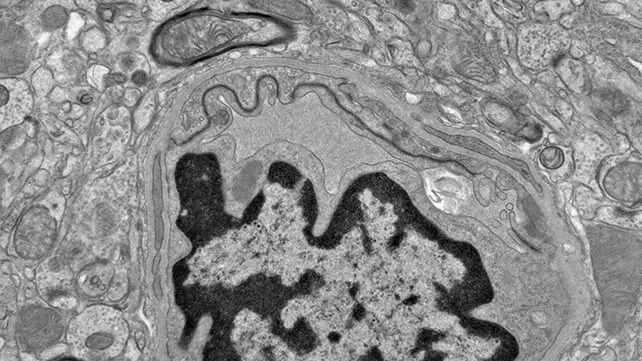
In mouse experiments, the researchers found changes in the brain'sneurovascular unit(depicted here), which regulates blood flow, associated with fish oil diets. (Albayram lab/MUSC)
Human Tissue Analysis and Caution
The team also examined human brain tissue from people diagnosed with chronic traumatic encephalopathy (CTE), a degenerative condition tied to repeated head trauma, and found similar patterns of metabolic disruption and vascular damage. The researchers therefore speculate that supplements containing EPA could, in some circumstances, worsen recovery after repeated mild concussions. However, they emphasize that most of the current evidence comes from animal and cell experiments and shows associations that require further testing in living humans.
"Fish oil supplements are everywhere, and people take them for a range of reasons, often without a clear understanding of their long-term effects," said neuroscientist Onder Albayram of the Medical University of South Carolina. "This paper is a starting point...It opens a new conversation about precision nutrition in neuroscience."
What This Means
The study does not prove that EPA-containing fish oil harms people, but it highlights that different omega-3s can have different effects in specific contexts. The authors call for more research into how EPA and DHA affect diverse brain-cell types and regions, and suggest that clinical trials could be warranted to evaluate relevance for human health and recommendations.
Publication: Cell Reports (2026).
Help us improve.