EU member states rejected a European Commission plan to grant indefinite approvals to many pesticide active substances, saying only officially low-risk chemicals should be exempt from routine re-approval. The Commission had proposed extending initial approvals to 15 years and later renewals up to a 25-year maximum while relying on targeted scientific checks. Ireland, holding the EU Council presidency, emphasised predictability for farmers but underlined the need to safeguard health and environmental standards. Negotiations with the European Parliament will decide the final rules.
EU States Reject Indefinite Pesticide Approvals — Glyphosate Excluded From Fast-Track Plan
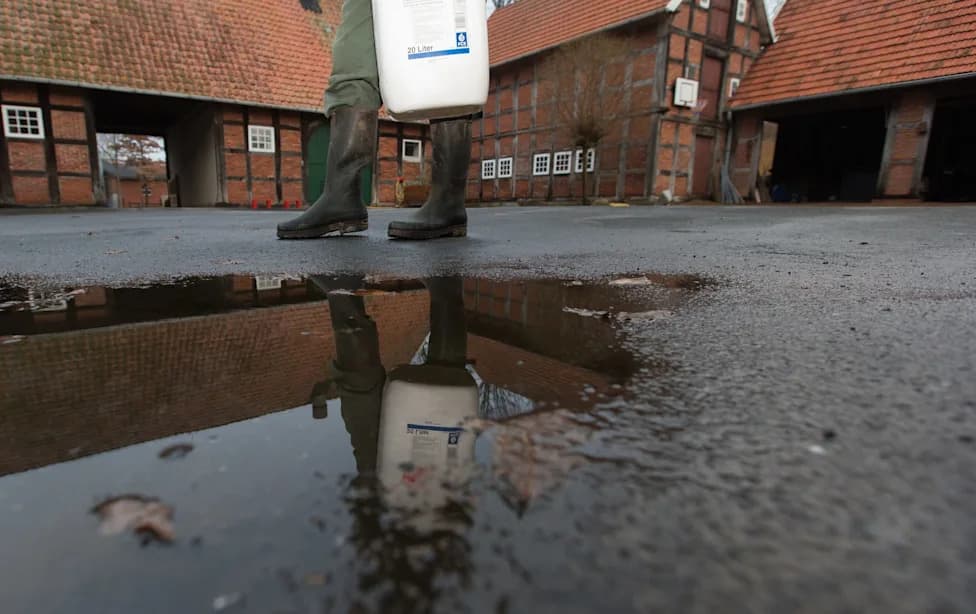
A farmer carries a canister of plant protection agent with glyphosate at his farm in Badbergen. (is associated with: «EU states oppose indefinite approval of pesticides such as glyphosate») Friso Gentsch/dpa
EU member states have pushed back on a European Commission proposal that would have allowed many pesticide active substances to be approved indefinitely, explicitly excluding widely used chemicals such as glyphosate from any automatic exemption.
What Member States Decided
In a joint position adopted on Wednesday to guide negotiations with the European Parliament, the 27 EU governments said only substances and products formally classified as low-risk should be relieved of routine re-approval requirements. Chemicals like glyphosate would remain subject to regular reassessment under the current safety framework.
Current Rules and The Commission Proposal
Under existing EU rules, active substances receive time-limited approvals that must be renewed; approvals lapse if not successfully renewed. In December, the European Commission proposed a major change: most substances short of the most hazardous could be authorised indefinitely, with renewals and targeted reassessments triggered only if new scientific evidence warranted them.
The draft rules also envisaged extending initial approval terms for standard active substances to up to 15 years (an increase of five years) and allowing subsequent approvals to be extended by 10 years, up to a 25-year maximum. To compensate, the proposal would oblige competent authorities to carry out regular checks to identify new scientific findings that might prompt reassessment.
Rationale and Reactions
The Commission argues the changes would reduce administrative burdens, simplify and speed procedures, and strengthen European competitiveness. Supporters say longer approval windows would give farmers and agribusinesses greater predictability to invest and innovate.
"Europe's farmers and agrifood businesses need greater predictability and fewer unnecessary burdens so they can invest, innovate and compete in the global market, while maintaining the high health and environmental standards that underpin the trust of our citizens," said Irish Agriculture Minister Martin Heydon. Ireland currently holds the rotating presidency of the Council of the European Union.
Next Steps
With the Council's joint position set, negotiations with the European Parliament will determine the final shape of the rules. Key issues for lawmakers will include the definitions of "low-risk," the frequency and scope of mandatory scientific checks, and safeguards to ensure public health and environmental protection remain central.
Help us improve.