The article follows residents on Statesboro Place in Ashburn, Virginia, who now live beside data centers owned by Amazon Web Services and Microsoft. Construction left dust and introduced a constant mechanical hum; neighbors report lost views and rising household tax bills even as the county benefits financially. Loudoun County counts more than 230 data centers built or underway (with 116 more planned) and received about $1.2 billion in data-center tax revenue in FY2026. Residents ask for stronger mitigation — sound walls, noise monitoring and targeted tax relief — while local officials debate limiting development to industrial zones.
Life on the Edge of AI: Loudoun Neighbors Say Data Centers Bring Noise, Dust and Rising Taxes
Amazon said its data center projects undergo local, state and federal reviews and operate within legal and regulatory limits. The company said it takes residents' concerns seriously and has worked with the HOA to evaluate and reduce noise, address lighting issues and provide updates on construction and commissioning schedules.
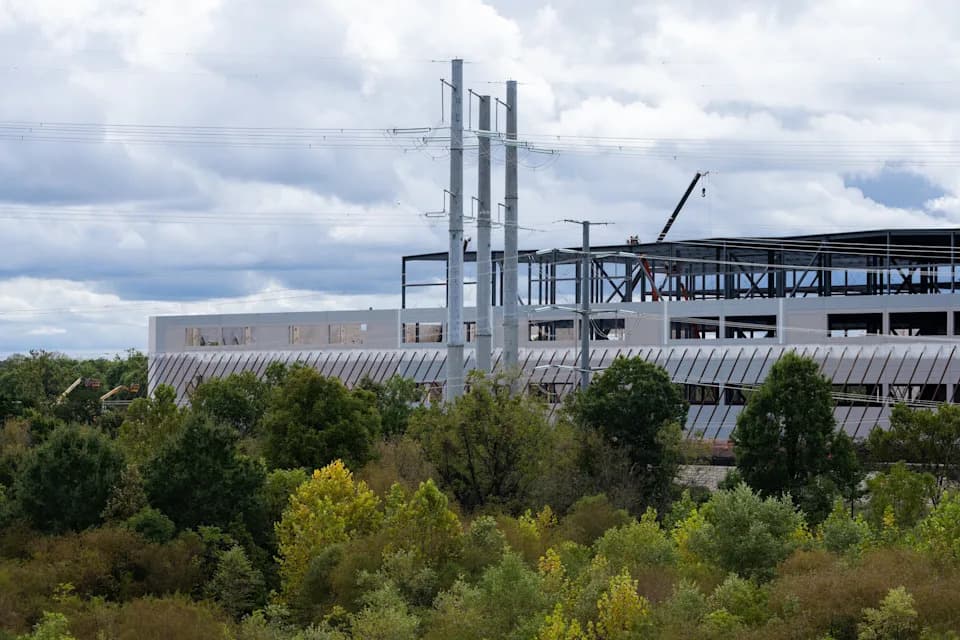
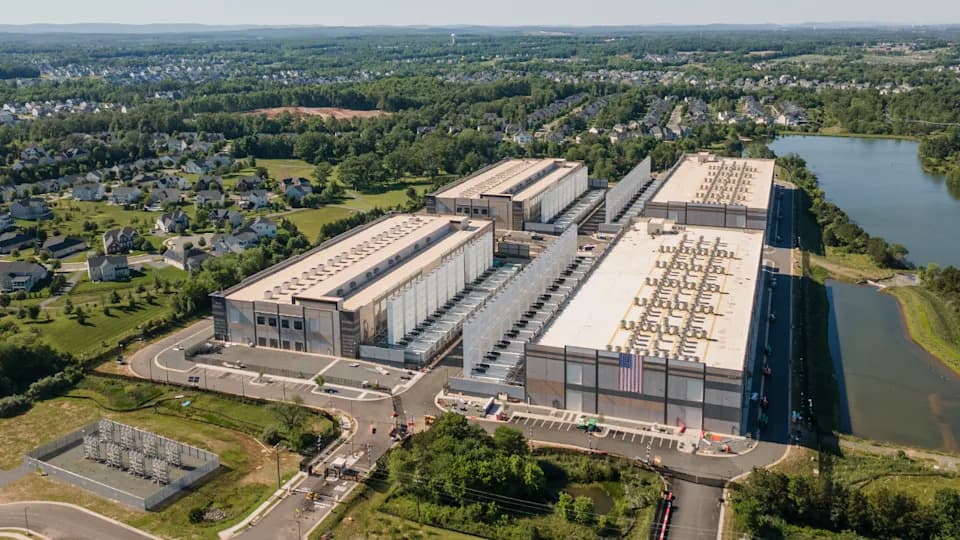
Explosions, heavy earthmoving equipment and a fine red dust first announced the arrival of a new industrial presence just beyond a thin row of trees that lines Statesboro Place, a quiet cul-de-sac in Ashburn, Virginia. Within months the construction noise faded, replaced by towering, windowless buildings and — now — a constant mechanical hum that punctuates afternoons and evenings.
Homeowners on the street say the featureless structures are data centers owned and operated by Amazon Web Services and Microsoft: the infrastructure behind a growing wave of artificial intelligence activity in the region. Residents who spoke to reporters requested anonymity because they are engaged in ongoing conversations with their homeowners association and county officials.
What Residents Are Experiencing
Neighbors describe audible noise at the back fence, dust during construction and a loss of open views they once enjoyed. "It's like 150 feet away and just constant noise," one resident said on a rainy September afternoon, looking across a backyard. Another longtime resident recalled: "When I moved in, it was an open field. I had a nice backyard and there was not an ugly building to look at."
"Only two data centers are active right now and two additional ones are planned to be active next spring," a resident said, adding that neighbors fear the hum will grow louder as more facilities come online.
Countywide Buildout And Finances
Loudoun County has become one of the world’s largest concentrations of data centers and a central hub for the nation’s AI infrastructure buildout. As of March 2026, more than 230 data centers had been built or were under construction in the county, with another 116 projects in the pipeline.
Those facilities have reshaped county finances: officials report data centers generated approximately $1.2 billion in tax revenue in fiscal year 2026 — roughly 39% of the county budget — and project revenue will rise to $1.3 billion in fiscal year 2027. That money helps fund public services and is credited with keeping overall tax rates lower.
Household-Level Concerns
Despite countywide revenue gains, some homeowners report rising bills. One resident provided six years of property tax records showing the annual real estate tax bill increased from $17,391 in 2021 to about $22,250 in 2026, a rise of nearly $5,000. Officials noted that individual bills can increase if assessed values rise even when rates fall.
That apparent disconnect between county-level benefits and household-level costs has intensified debate about whether the local impacts outweigh the economic gains for some residents. Little River District Supervisor Laura TeKrony said Loudoun County should limit data center development to industrial zones and has declined to vote for data center applications during her term. "There are some things that matter more than additional tax revenue: our land, our water, our quality of life and our community character," she said.
Operator Responses And Community Requests
Both companies say they are engaging with the community. A Microsoft spokesperson said the company is "actively meeting with nearby HOAs to address community priorities, including landscaping, lighting and noise, working to ensure that our development lives up to residents' expectations." An Amazon spokesperson noted the company has "been part of Loudoun for 20 years" and that its local team is working directly with residents and the HOA to address concerns.
Residents say they don’t expect the data centers to disappear but are urging stronger mitigation: permanent sound barriers rather than tree rows, ongoing noise monitoring, clearer timelines for commissioning, and targeted tax relief for homeowners closest to the facilities. "Trees are not a solution," one neighbor said, calling for a sound wall similar to those used along major highways. Another suggested property tax relief, proposing a reduction of up to 50% for the most-affected households.
Looking Ahead
As Loudoun continues to attract data center projects, the community, county leaders and operators remain locked in a debate about how to balance large-scale economic benefits with the everyday quality of life for people living nearest the infrastructure powering the tech boom. For residents of Statesboro Place, the nation’s AI ambitions are no longer abstract policy talk; they are audible at the back fence.
Help us improve.