The 2024 Hajj in Mecca saw temperatures reach 51°C and at least 1,300 heat-related deaths among more than 1.5 million pilgrims. Investments in cooling, water stations, medical facilities and stricter visa enforcement helped reduce fatalities in 2025 to the hundreds. The WHO's new guidance stresses that planning, infrastructure, trained staff and a designated heat-risk manager are essential to protect attendees at mass gatherings as extreme heat becomes more common due to climate change.
How to Protect Crowds From Extreme Heat at Mega-Events: Lessons From the Hajj and WHO Guidance
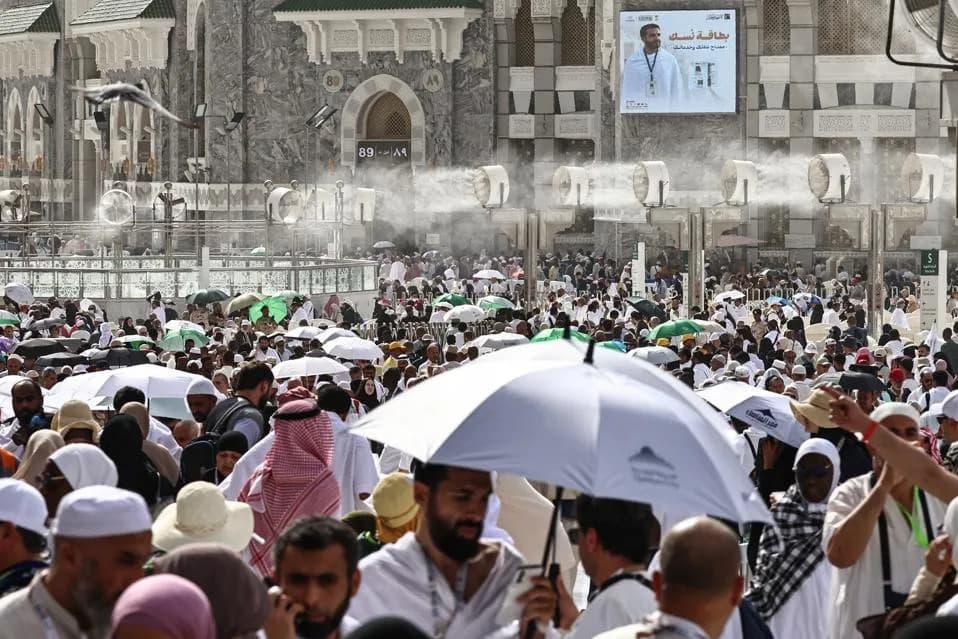
Misters and umbrellas around the Grand Mosque complex in Mecca, in May 2026. (Photo by Zain Jaafar)AFP via Getty Images
Photo: Misters and umbrellas around the Grand Mosque complex in Mecca, May 2026. (Photo by Zain Jaafar)
More than 1.5 million people gathered for the annual Hajj pilgrimage in Mecca in 2024, when Saudi Arabia experienced a heat wave that pushed temperatures up to 51°C. The extreme heat and humidity caused mass collapses; at least 1,300 pilgrims died during those scorching conditions.
The Hajj is particularly vulnerable to heat-related harm for several predictable reasons. Many pilgrims walk several miles a day, a strain that is especially dangerous for older people and those with chronic health conditions. Economic constraints force some pilgrims to sleep in crowded, sweltering tents or to miss out on formal cooling services altogether. Pilgrims without official Hajj visas are often excluded from government cooling infrastructure and medical support.
But heat-related fatalities are not inevitable. When the Hajj again fell in June 2025, Saudi authorities had invested in additional air-conditioned shelters, misting systems, shaded zones, drinking-water stations and field hospitals, and they tightened visa enforcement. The death toll that year fell to the hundreds rather than the thousands—a result attributed partly to somewhat cooler timing and substantially to improved planning and infrastructure.
What the WHO Recommends
Today, the World Health Organization released a set of guidance documents emphasizing a simple but crucial principle: preparation saves lives. The WHO stresses that safety at mass gatherings depends on systems and design rather than asking individuals to shoulder the burden alone.
Key measures the WHO highlights include:
- Cooling infrastructure in critical locations (air-conditioned shelters, misting systems, shaded corridors)
- Free, accessible, clearly signed drinking-water points and encouragement of refillable bottles
- Logistics that reduce time spent in direct sun or peak heat, including phased entry/egress and route design
- Staff training to recognise, triage and refer heat-illness victims quickly
- Contingency plans to adjust, delay or cancel activities when conditions become unsafe
The WHO review also examined 45 years of studies on medical care at mass gatherings and concluded that with adequate resources and coordination, most heat-related illnesses can be treated on site. That requires pre-event planning, clear chains of command and a designated heat-risk manager to integrate heat into overall event risk management.
"Instead of cancelling, WHO recommends that all mass gatherings include a risk assessment, which should cover heat risk management," said Amaia Artázcoz Glaria, a WHO public health officer. "With proper measures in place—like shade, hydration stations, early warning systems, and adjusted timings—events can still be held safely, even in hot weather."
As climate change increases the frequency and intensity of extreme heat, these lessons will become ever more important. Avoiding outdoor events in hot seasons is not always feasible because many gatherings are culturally and economically essential. Thoughtful scheduling, infrastructure investment and clear operational plans make it possible to reduce risk substantially.
Bottom line: Organizers must plan and invest in cooling, hydration, medical capacity and trained staff—and designate accountable leaders—so that millions can gather safely even as temperatures rise.
This article was originally published on Forbes.com.
Help us improve.