The Best4 trial in Wales is evaluating a minimally invasive "pill-on-a-string" sponge test to find precancerous changes in people with chronic heartburn. Participants swallow a gelatin capsule on a cord; a sponge released in the stomach is pulled back up to collect oesophageal cells for analysis. The study aims to recruit 120,000 regular heartburn medication users, using mobile screening vans and targeting men aged 55–79 and women aged 65–79. Results will help decide whether the method should be adopted across the UK for earlier detection of Barrett's oesophagus and oesophageal cancer risk.
‘Pill-on-a-String’ Test Could Spot Oesophageal Cancer Risk in People With Chronic Heartburn
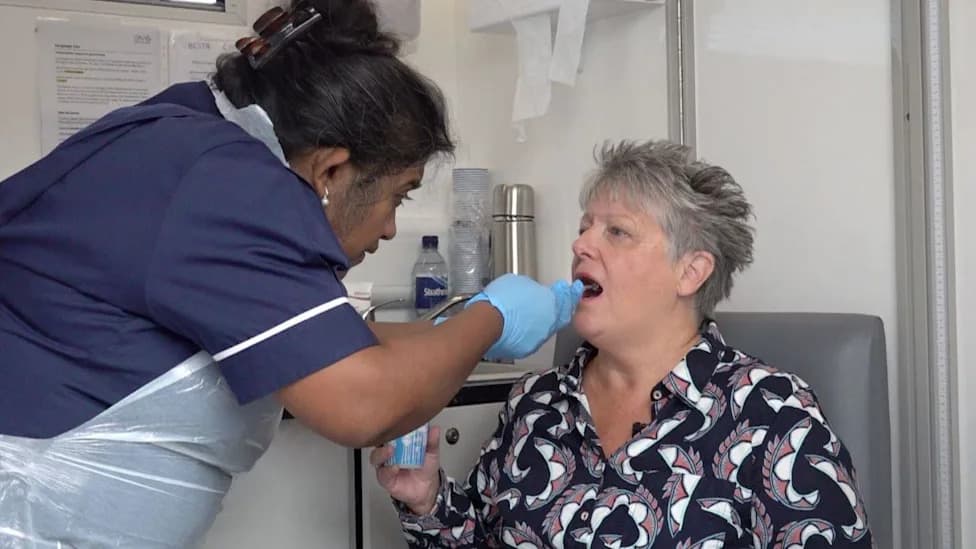
Iola Protheroe agreed to take part in the trial, where a pill attached to a thread swallowed for seven minutes [BBC]
A large Welsh trial is testing a minimally invasive "pill-on-a-string" test designed to identify people with chronic heartburn who may be at increased risk of oesophageal cancer.
The technique involves swallowing a small gelatin capsule attached to a thin cord. Once the capsule dissolves in the stomach it releases a compact sponge, which a nurse gently pulls back up through the oesophagus. The sponge collects cells from the oesophageal lining that are then analysed for abnormalities such as Barrett's oesophagus, a precancerous change associated with long-standing acid reflux.
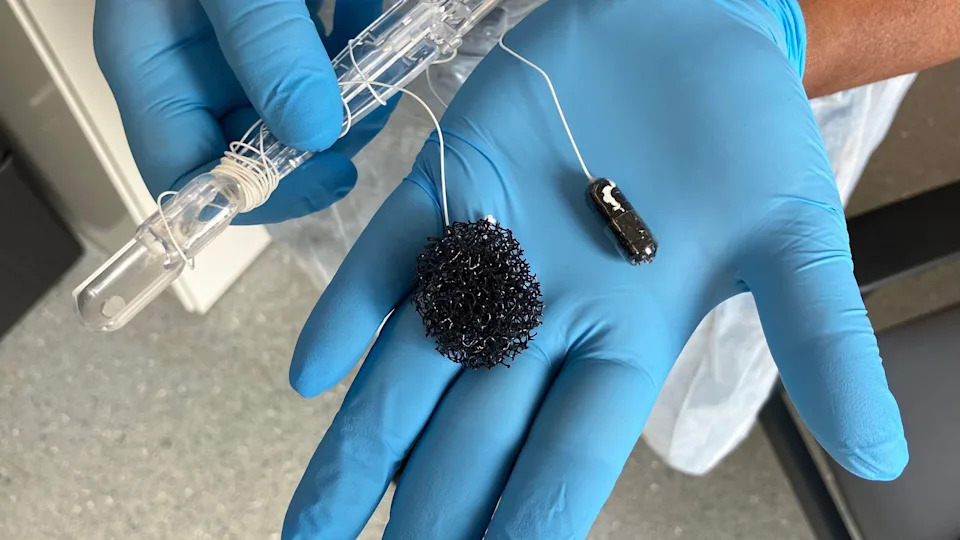
A gelatin capsule dissolves in the stomach and releases a small sponge which collects cells from the lining of the oesophagus as it's removed [BBC]
Less Invasive Alternative to Endoscopy
Health experts say the capsule sponge test is less invasive than a traditional endoscopy and can be an effective way to detect early cellular changes that indicate higher cancer risk. Dr James Calvert, Deputy Chief Medical Officer for Wales, says the method could help identify people who would benefit from closer monitoring or early treatment.
Best4 Trial: Scope and Purpose
The Best4 trial plans to recruit about 120,000 people who regularly take medication for heartburn, such as over-the-counter antacids or prescription proton pump inhibitors. Mobile screening vans are operating across communities in Wales to make the test accessible. The trial is open to men aged 55–79 and women aged 65–79 who take regular heartburn medication.

Iola, who has suffered with heartburn, agreed to participate in the trial [BBC]
Results from Best4 will help determine whether this cell-collection method could be rolled out as part of cancer screening programmes across the four UK nations.
Patient Experience
Participants say the test is quick but can be uncomfortable for a few seconds when the sponge is pulled back up. Iola Protheroe, a participant from Taff's Well, Rhondda Cynon Taf, described her reflux as "horribly uncomfortable" and said the procedure was unpleasant but brief. After receiving a text invitation from NHS Wales, she agreed to take part in the study.

The trial's principle investigator in Wales, Dr Hasan Haboubi, said it will improve patient outcomes and relieve pressure on the NHS [BBC]
"It's not the most pleasant thing I've ever had to do. Swallowing the tablet was okay, but then it opens in your stomach into a little brush and that's got to come out. And that was uncomfortable but only for a couple of seconds," Iola said.
What Clinicians Recommend
Consultant gastroenterologist Dr Hasan Haboubi, the trial’s principal investigator in Wales, says people who regularly use antacids or proton pump inhibitors and have persistent heartburn should be assessed for lifestyle changes and considered for monitoring. "A capsule sponge test is able to detect pre-cancerous changes at an early stage," he said, adding that earlier detection can improve patient outcomes and reduce pressure on NHS services.
Public Health Context
Oesophageal cancer causes roughly 22 deaths a day in the UK and is the seventh most common cause of cancer death nationwide. The Best4 study aims to produce robust data from a large, diverse sample so health services can decide whether to adopt the test more widely.
If adopted, the pill-on-a-string test could provide a more accessible screening option for at-risk patients and help catch precancerous changes earlier, when interventions are more likely to be effective.
Help us improve.