The Northern Ireland bowel screening programme will be expanded in phases so invitations extend from the current 60–74 age group down to 50–74 by 2031, with 59-year-olds invited from November and 58-year-olds from April 2027. Officials estimate the expansion will reach an extra 135,000 people a year and could save about £1.7m–£2m annually once fully implemented. However, Northern Ireland currently uses a higher FIT threshold (120 µg/g) than England, Scotland and Wales (80 µg/g), and 50-year-olds in NI will not be eligible until 2031, leaving a temporary disparity in screening coverage.
Northern Ireland Expands Bowel Cancer Screening — 50-Year-Olds Still Face Five-Year Wait

Screening is currently offered to people aged between 60 and 74 in Northern Ireland [Getty Images]
More people across Northern Ireland will be invited to take part in bowel cancer screening as health authorities begin a phased expansion of the home testing programme. The move aims to detect cancers earlier, improve survival and reduce long-term treatment costs — but full eligibility for 50-year-olds will not arrive until 2031.
What Is Changing?
Currently, the screening service automatically invites people aged 60 to 74. From November, invitations will begin to be sent to 59-year-olds, with 58-year-olds added from April 2027. The phased roll-out will continue so that everyone aged 50 to 74 is eligible by 2031.
Why The Expansion Matters
The UK National Screening Committee recommends biennial bowel screening for people aged 50–74 using a faecal immunochemical test (FIT). Health officials say the expanded programme will reach an additional 135,000 people a year when fully implemented. Health Minister Robbie Butler said the change could save lives by finding cancers at an earlier, more treatable stage and is expected to deliver annual health service savings of roughly £1.7m–£2m once fully in place.
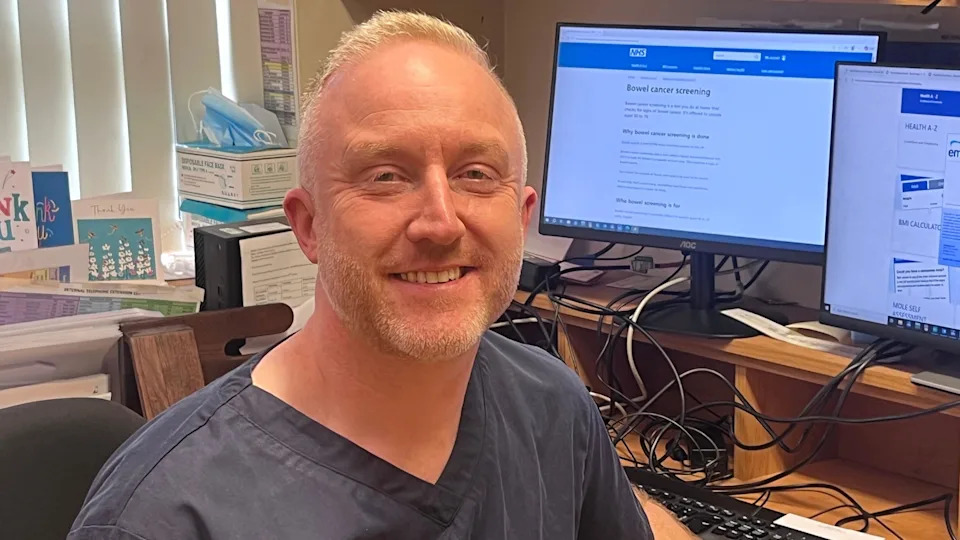
Dr Jonny Dillon was 49 when he was diagnosed with bowel cancer in 2024 [BBC]
How FIT Works And Current Differences
FIT is a simple home kit that lets people collect a small stool sample and send it by post. Results typically arrive within around two weeks. A positive result does not diagnose cancer; it detects tiny traces of blood in stool that may require further diagnostic tests such as a colonoscopy.
Thresholds that trigger follow-up testing differ across the UK. England, Scotland and Wales currently use a threshold of 80 µg of blood per gram of faeces (µg/g), while Northern Ireland uses a higher threshold of 120 µg/g. The Department of Health has said data from the expanded programme will be used to consider future reductions to Northern Ireland's threshold.
Voices From Clinicians and Campaigners
"The decision to extend bowel screening will assist in detecting those patients at a much earlier stage, requiring less treatment and much better survival rates with the potential to save many lives," said Dr Jonny Dillon, a GP diagnosed with bowel cancer in 2024 at age 49.
Professor Lourda Geoghegan, Deputy Chief Medical Officer, said the phased rollout will help ensure screening, diagnostic and treatment services can manage increased demand while maintaining high standards of care. Genevieve Edwards, Chief Executive of Bowel Cancer UK, described the expansion as an important step toward improving survival in Northern Ireland.
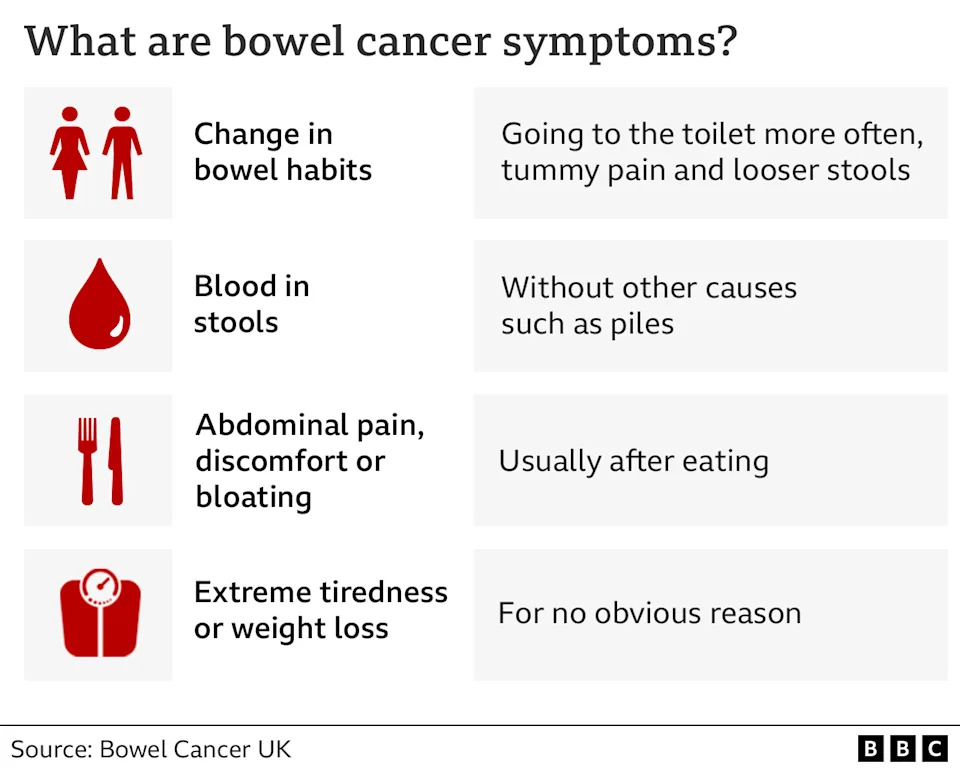
[BBC]
Scale Of The Problem And Advice
About 1,300 people are diagnosed with bowel cancer each year in Northern Ireland — roughly 25 people a week — and more than 500 people die annually. Campaigners warn that until the programme reaches 50–74 year olds and thresholds are aligned with the rest of the UK, Northern Ireland will lag behind its neighbours.
If you experience possible symptoms — such as persistent changes in bowel habits, blood in the stool, unexplained weight loss or abdominal pain — do not wait for a screening invitation. Contact your GP promptly.
Final Note
While the phased expansion is widely welcomed, officials and clinicians emphasise the importance of accelerating access and aligning testing thresholds to maximise early detection and reduce avoidable deaths.
Help us improve.