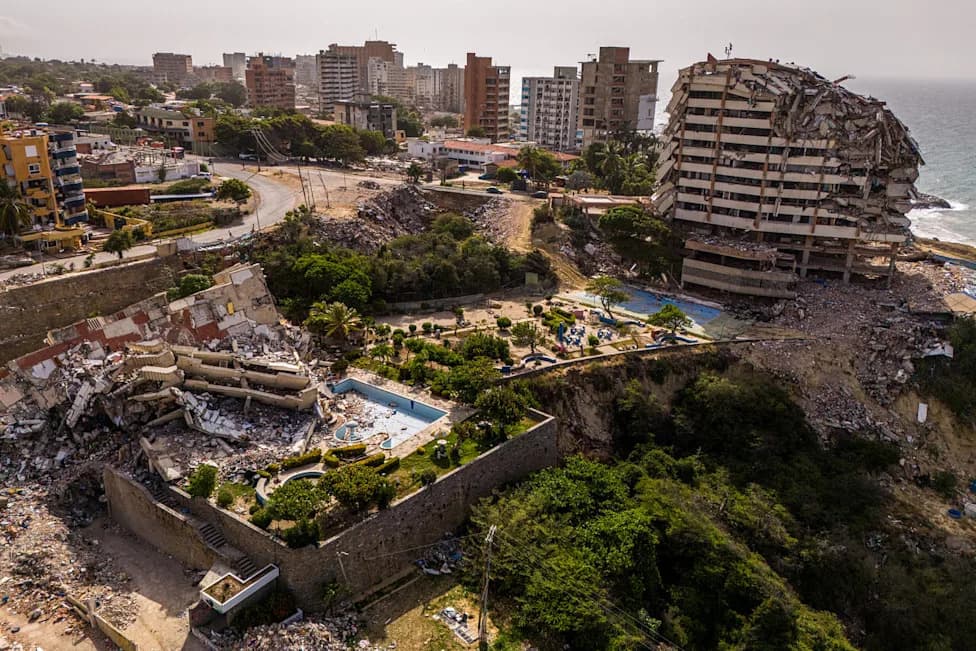
The AP investigation finds the collapse of La Guaira’s public housing towers after June’s earthquakes resulted from a combination of rushed construction on loose, flood‑deposited soils, proximity to the San Sebastian Fault, and an especially destructive near‑fault pulse. Stanford video analysis reconstructed extreme ground motion and nearly simultaneous collapses, while local seismic monitoring and official construction records remain unavailable. Experts warn that rebuilding must be cautious and more costly to prevent repeating past mistakes.
AP Probe: Flawed Siting, Resonance and a Near‑Fault Pulse Toppled La Guaira Towers
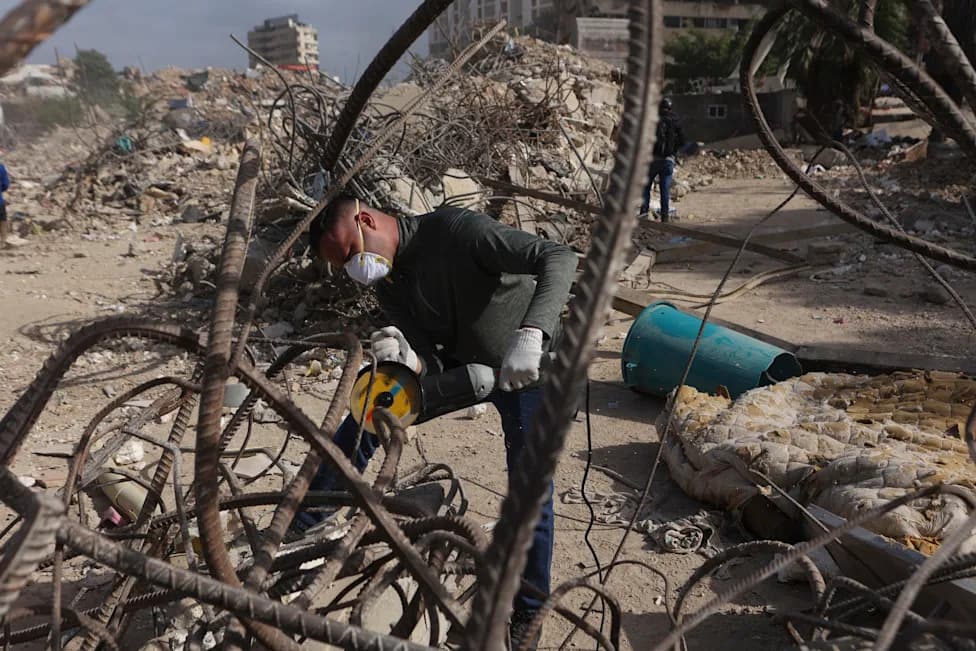
FILE - A worker cuts rebar from an an O-P-P housing tower that was built as part of a government program, and collapsed during twin earthquakes in La Guaira, Venezuela, July 25, 2026. (AP Photo/Pedro Mattey, File)(AP Photo/Pedro Mattey)
CARABALLEDA, Venezuela (AP) — An Associated Press investigation concludes that the catastrophic collapse of public housing towers in La Guaira after the June earthquakes traces back to decisions made when the projects began in 2010. Rapid construction on loose, flood‑deposited soils, proximity to the San Sebastian Fault and gaps in oversight combined with unusually destructive earthquake motion to produce devastating failure.
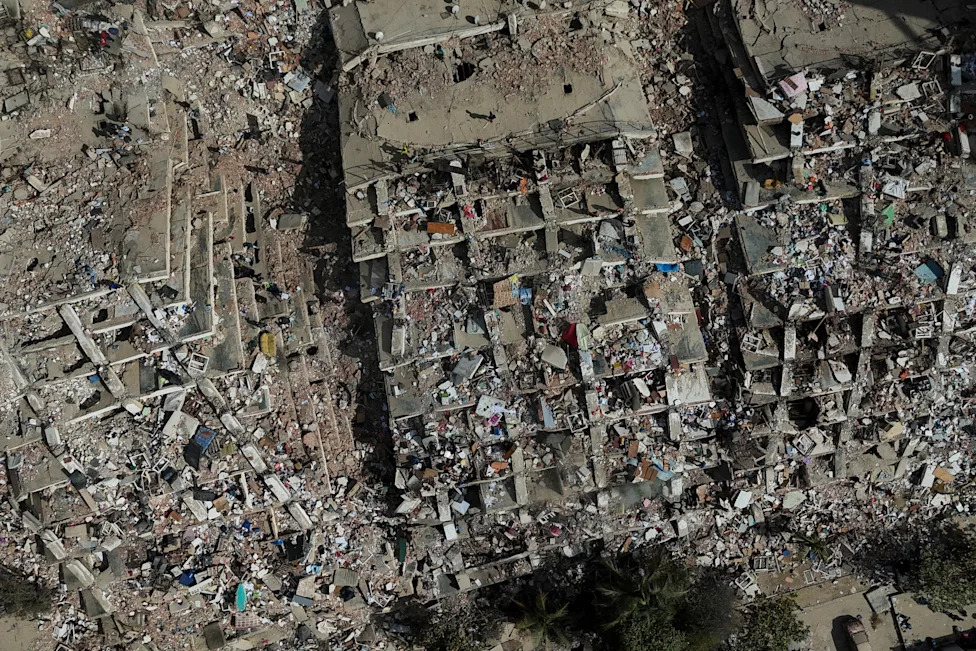
FILE - Buildings are in ruins three days after earthquakes struck La Guaira, Venezuela, June 27, 2026. (AP Photo/Matias Delacroix)(AP Photo/Matias Delacroix)
Key Findings
Poor site selection and rapid construction: After 2010 mudslides and heavy rains displaced more than 100,000 people, authorities rushed to build apartment towers on a narrow coastal strip between the Caribbean and steep mountains. Many buildings were erected quickly on silty, unconsolidated deposits left by historic floods and mudflows, making their foundations particularly vulnerable to strong shaking.
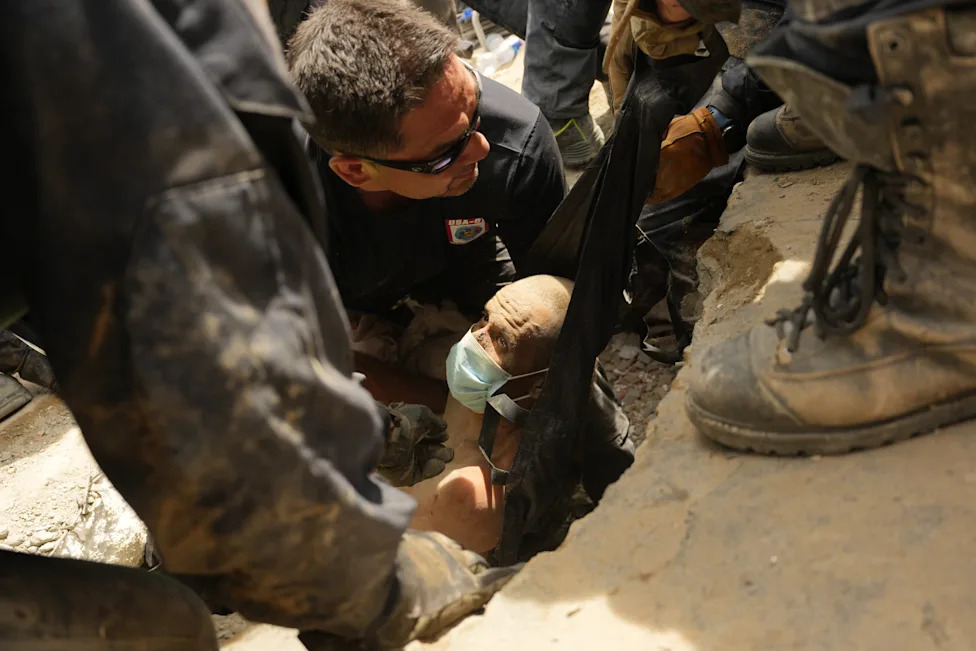
FILE - U.S. firefighters from Fairfax County pull a survivor from the rubble of a building that collapsed in twin earthquakes in La Guaira, Venezuela, June 28, 2026. (AP Photo/Matias Delacroix, File)(AP Photo/Matias Delacroix)
Height and resonance amplified shaking: Towers roughly 10–20 stories tall can have natural sway periods that match incoming seismic waves. When that resonance occurs, motion can amplify, forcing columns and joints to experience far greater stress and increasing collapse risk.
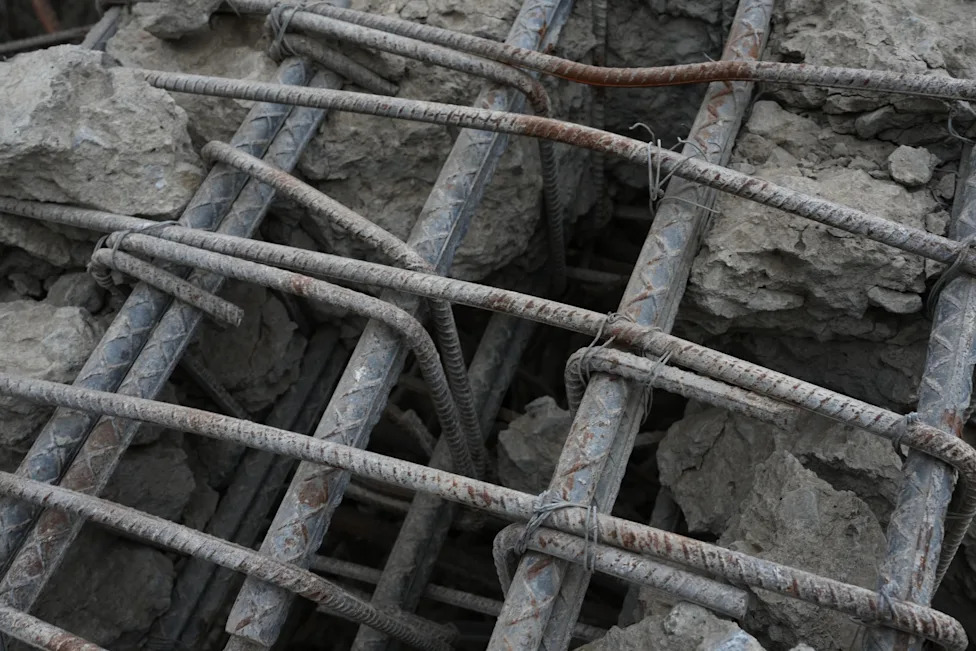
FILE - The rebar cage of a collapsed column is exposed at an O-P-P housing tower that was built as part of a government program, after it fell during twin earthquakes in La Guaira, Venezuela, July 22, 2026. (AP Photo/Ariana Cubillos, File)(AP Photo/Ariana Cubillos)
Near‑fault pulse delivered an especially destructive blow: The twin earthquakes (magnitudes 7.2 and 7.5) produced a near‑fault pulse as the rupture moved eastward, concentrating seismic energy at the rupture front. Central University of Venezuela geologist Michael Schmitz described the result as 'a very strong blow' to the base of buildings that left structures little ability to dissipate energy safely.
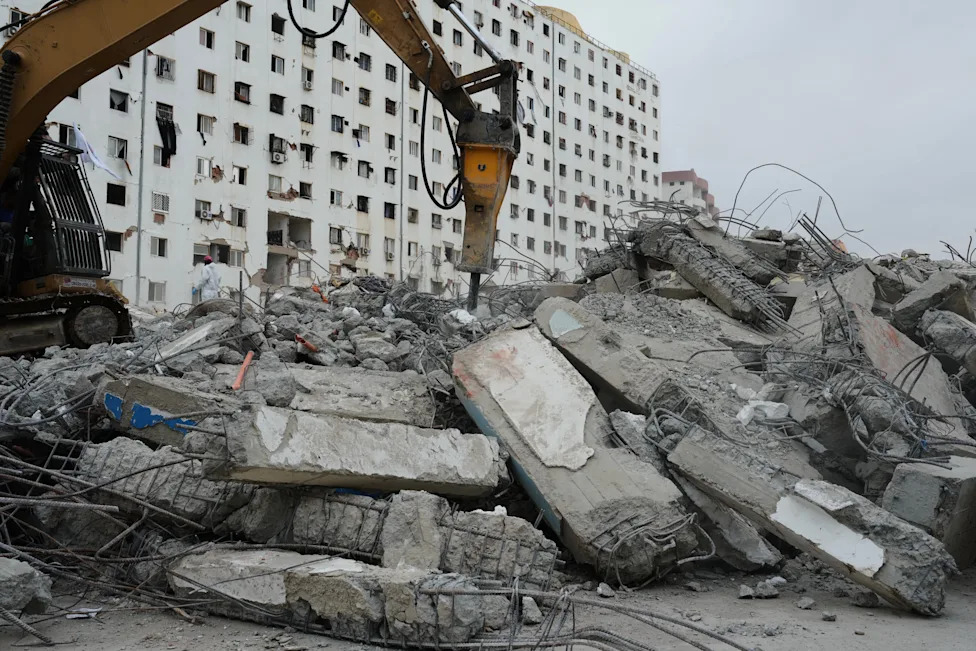
FILE - A hydraulic hammer breaks apart columns at an O-P-P housing tower that was built as part of a government program and collapsed during twin earthquakes in Caraballeda, La Guaira, Venezuela, July 17, 2026. (AP Photo/Ariana Cubillos, File)(AP Photo/Ariana Cubillos)
Video forensics revealed extreme ground motion: With local seismic stations largely inactive, Stanford Professor Eduardo Miranda and colleagues analyzed security‑camera footage from Caraballeda. Frame‑by‑frame reconstruction shows eight buildings collapsing nearly simultaneously in under a second and indicates one of the largest ground motions documented near a rupture. Their paper, under peer review in The Seismic Record, concludes the towers were pushed so far and for so long in one direction they reached breaking points.
Records and forensic data remain unavailable: It is unclear whether contractors followed Venezuelan building codes or whether geotechnical studies were performed or ignored; the government has not released blueprints, soil reports or inspection records. Acting President Delcy Rodríguez’s administration has also not shared on‑site forensic analyses experts say are essential to assign causes and responsibility.
Cleanup and rebuilding raise fresh risks: Demolition and site cleanup, including the use of explosives on damaged buildings, are underway and rebuilding plans have begun. Experts urge a cautious, evidence‑based approach because the additional engineering and construction costs needed to make high‑rises earthquake‑resistant in this setting will be substantial and may deter development in the most exposed areas.
In sum, the AP investigation highlights a convergence of geologic exposure, construction choices and institutional gaps — neglected seismic monitoring, missing public records and possible lapses in code compliance — that together produced a catastrophic loss of life and housing in La Guaira.
Contributors: The story draws on interviews with experts and former officials, AP reporting from Caracas and field reporting in La Guaira. Stanford researchers provided the motion‑analysis paper shared with the AP. Associated Press writers Michael Biesecker, Ryan Manzuk and Marshall Ritzel contributed.
Help us improve.