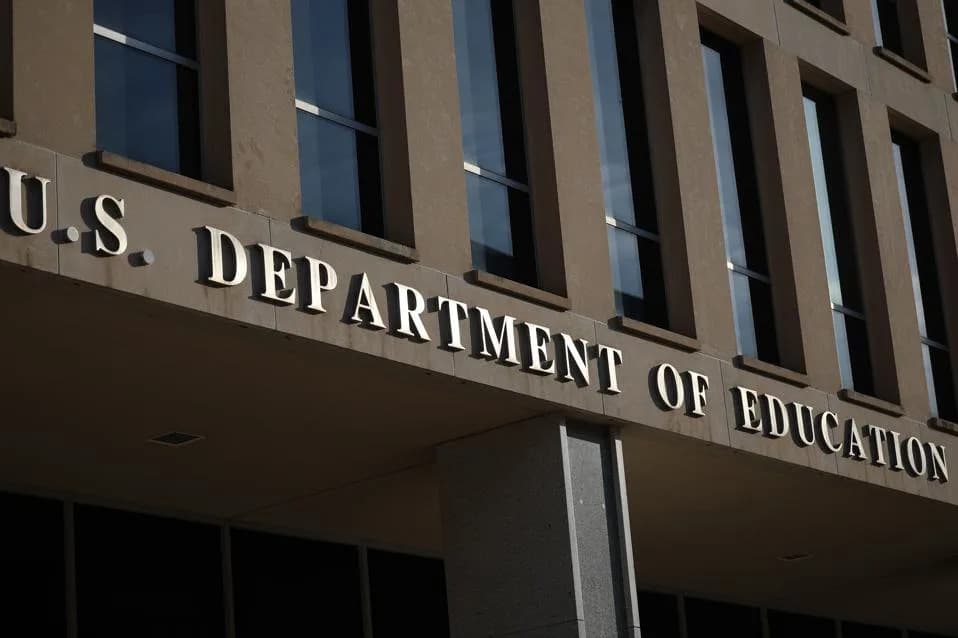
The Department of Education denied reports that it finalized a rule requiring colleges to prove degree programs raise graduates' earnings, while defending a proposed return-on-investment test meant to hold programs accountable. The policy would compare graduates' median earnings four years after graduation with those of recent high school graduates; programs that fall below that baseline could lose federal loan eligibility. Fields such as the arts, social work, religious studies, journalism and certain certification programs are seen as most at risk. The department says any new criteria would take effect in 2027.
DOE Defends ROI Test For Student Loans, Denies It Finalized Rule; Critics Warn Of Impact On Social Work And The Arts
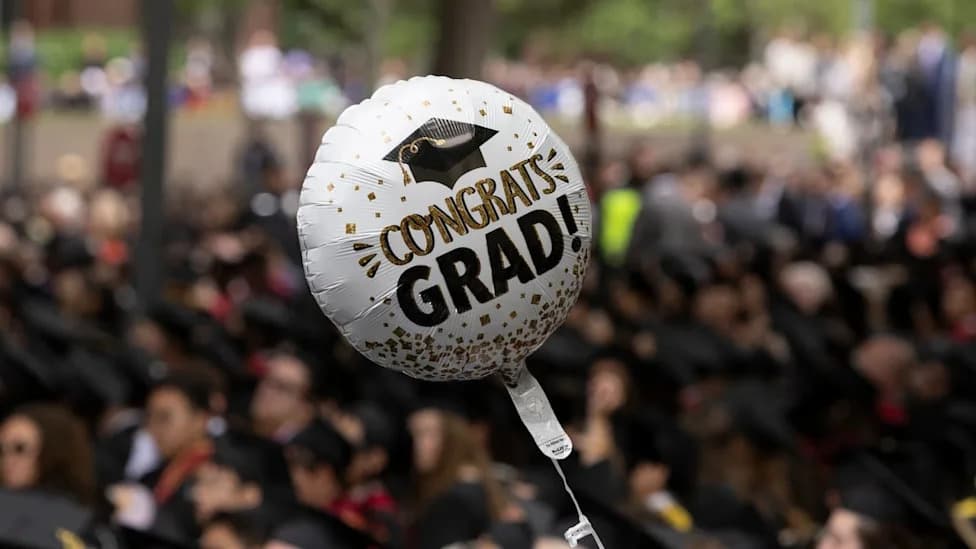
CAMBRIDGE, MASSACHUSETTS – MAY 29: A balloon reading "Congrats Grad" floats above the crowd during Harvard's commencement ceremony on May 29, 2025, in Cambridge, Massachusetts. The joyous occasion unfolds amid escalating tensions between Harvard and the Trump administration, which has ordered the cancellation of federal contracts valued at approximately $100 million. (Photo by Libby O'Neill/Getty Images)
The U.S. Department of Education denied a Los Angeles Times report that it had finalized a rule forcing colleges to prove degree programs deliver better career earnings, calling the coverage inaccurate while reaffirming the administration's goal of holding programs accountable for poor outcomes.
The department said the effort is intended to prevent students from taking on debt for low-return programs. In statements responding to coverage in The Los Angeles Times and commentary in The New Republic, the department argued that 'too many graduates report delaying major life milestones like buying a home or starting a family' because some programs saddle students with debt that doesn't translate into sustainable careers.
How The Proposed ROI Test Would Work
Officials describe a test that would use Internal Revenue Service data to measure graduates' median earnings four years after completion and compare them with earnings of recent high school graduates. Degree programs whose graduates earn less than that high-school baseline could lose eligibility for federal student loans.
Proponents frame the change as an accountability measure aimed at aligning federal aid with labor-market outcomes. Critics counter that the approach risks penalizing humanities, public-interest, and lower-paid but socially vital professions whose societal value may not be reflected in short-term earnings.
Fields Most Vulnerable
Reporting and administration commentary indicate programs in the arts, social work, religious studies, journalism, and certain trade or certification programs (including cosmetic certification) would be among the most vulnerable under the proposed standard.
The Los Angeles Times cited estimates that roughly 3% of bachelor’s and advanced degree programs at public and nonprofit institutions would fail the test, nearly one-third of programs at for-profit colleges could be ineligible, and about 5% of programs nationwide might not meet the threshold.
Anthony Estreet, CEO of the National Association of Social Workers: 'Social work is a profession. It requires a graduate degree, supervised clinical hours, and state licensure. When you make it harder for people to afford that education, you don't just thin out a workforce; you leave real people without care.'
In May, the administration curtailed some student loan access for social work degrees — a move the NASW said would aggravate shortages of qualified providers during an ongoing opioid and mental-health crisis.
Some conservatives have also questioned the department's motives, while the Department of Education reiterated its position on the social platform X, stating:
'Federal student loans are not a welfare program for failing college programs.'
The department says any new loan-eligibility criteria would take effect in 2027, giving institutions and students time to prepare, challenge, or adjust programs to meet the earnings threshold.
Observers note the policy is part of a broader agenda since President Trump's return to office that has scrutinized humanities and cultural institutions — from proposals involving the Kennedy Center to actions seen as critical of the Smithsonian — and that those larger efforts provide context for the administration's push to reshape how federal support ties to measurable workforce outcomes.
Whether the rule produces better returns on taxpayer investment or narrows educational opportunity will depend on implementation details, appeals processes, and how policymakers weigh short-term earnings against long-term social value.
Help us improve.