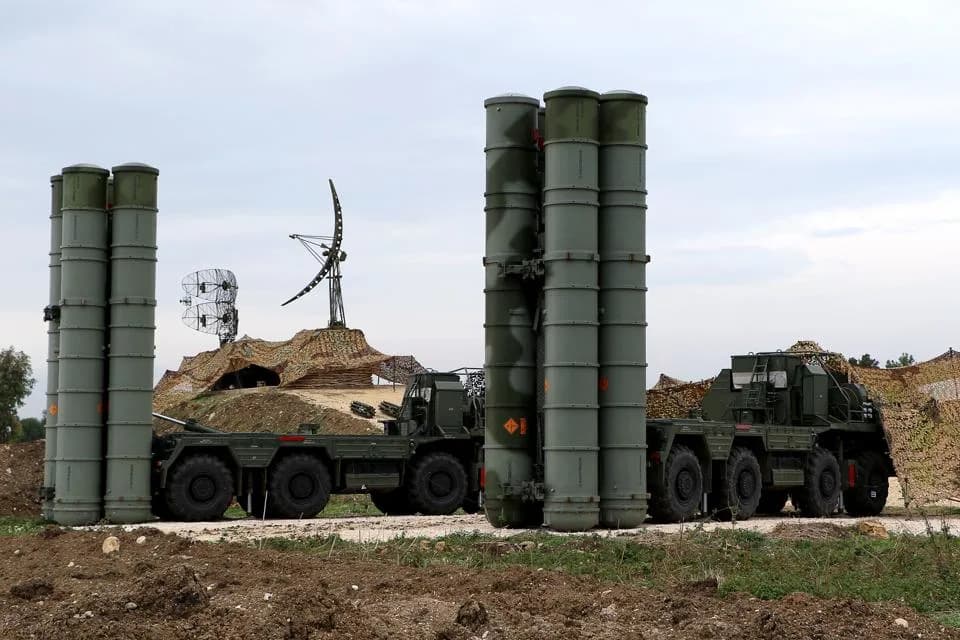
Israeli officials have reportedly urged the United Arab Emirates to decline any purchase of Turkey’s Russian-made S-400 air-defense batteries — a move that would keep the systems effectively immobilized in Ankara and preserve the barrier to Turkey rejoining the U.S. F-35 program.
Background
Turkey ordered the Russian S-400 system in 2017 and received the first shipments in July 2019. Washington responded by removing Ankara from the F-35 Joint Strike Fighter program and blocking further purchases of the stealth jet, while imposing sanctions under the Countering America’s Adversaries Through Sanctions Act (CAATSA). Six F-35s built for Turkey remain in the United States.
Russia’s Position On A Transfer
Russian Foreign Minister Sergey Lavrov said on the sidelines of the UN General Assembly on September 26 that Moscow would not necessarily oppose a third-country transfer of the S-400s under specific conditions. Lavrov emphasized that the original contract requires Russian consent and that any prospective buyer would have to assure Moscow it would not re-transfer the systems, for example, to Ukraine.
“There is such a possibility when a country where these S-400 systems will be moved to is responsible and maintains friendly relations with Russia.” — Sergey Lavrov
U.S. Constraints And Turkey’s Options
U.S. sanctions and congressional requirements complicate any resolution. Analysts note Turkey has few realistic ways to reverse penalties other than removing the systems from its territory entirely, neutralizing them, or destroying them — steps Ankara has been reluctant to take. Reports in July and subsequent coverage by The Wall Street Journal described a proposal to sell the S-400s to the UAE as one possible way to resolve the impasse.
Reports Of Israeli Lobbying
Turkish outlets, including Haber7 columnist Mehmet Acet, have reported that Israel has lobbied Abu Dhabi to reject a Turkish offer. The claim — which cites an unspecified source — suggests Israel fears that a sale would allow Turkey to clear the major obstacle to regaining eligibility for F-35 purchases. Independent confirmation of active Israeli-UAE lobbying on this specific transaction remains limited, but the reports align with known Israeli concerns about Turkish access to advanced fifth-generation fighters.
Regional Context And Implications
Israel and the UAE have strengthened security ties in recent years. In response to Iranian missile and drone threats, Israel deployed an Iron Dome battery and operators to the UAE to help protect Emirati territory. Separately, Israel has taken steps to limit Turkish military activity in Syria, including strikes on Syrian airbases it said were linked to Turkish basing plans. Reuters also reported that Israel had urged the U.S. to tolerate a Russian presence in Syria as a counterweight to Turkey — suggesting Israel values any measure that constrains Ankara’s military options in the region.
What This Means
If the UAE declines the purchase under Israeli pressure, the S-400s could remain unused in Turkey, effectively maintaining the status quo that prevents Ankara from re-entering the F-35 program. If a transfer proceeds, it would require Russian consent and clear political guarantees; it could also prompt new diplomatic and congressional scrutiny in Washington.
Note: This story synthesizes reporting from Turkish outlets, The Wall Street Journal, Reuters and other media, and was originally published on Forbes.com.