A new analysis of 197 countries finds global food-system emissions are about 75% higher than recommended, and no country is closing that gap fast enough. Water scarcity — worsened by drought and heat — is a key pressure point, driving commodity-price swings such as a near-75% share of annual variation in global wheat prices (2000–2021). Nearly half of the U.S. faces drought conditions this year, and the report calls for accelerated reform to make food more affordable and reduce emissions.
Water Shortages Are Quietly Driving Up Your Grocery Bill, New Global Report Warns
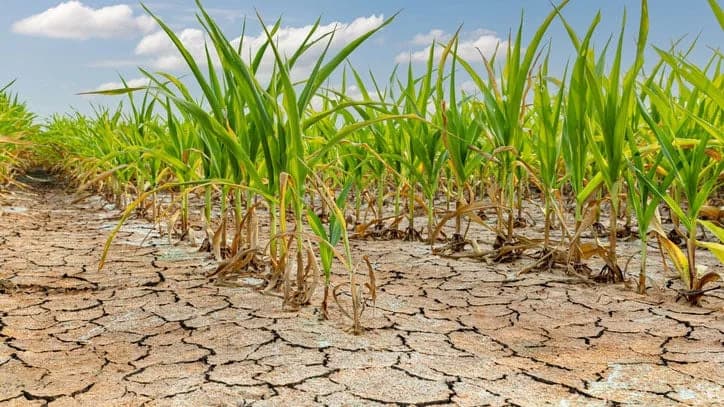
Young corn plants growing in cracked, dry soil under a blue sky with clouds.
Your grocery bill is higher this year for many visible reasons — inflation, tariffs and weaker harvests — but a new global analysis highlights a quieter driver: water scarcity.
Researchers from the Food Systems Countdown Initiative reviewed food systems in 197 countries and found that food-system emissions worldwide are roughly 75% above recommended levels. The analysis, published in Nature Food, also warns that no country is closing that emissions gap quickly enough.
Water sits at the heart of the problem. Agriculture withdraws vast volumes of water from rivers, reservoirs and aquifers to irrigate crops and sustain livestock. Water-intensive crops such as almonds, rice and cotton place particularly heavy demands on supplies, worsening stress in regions already short of water — including parts of the western U.S.
(MORE: Lake Mead now at record-low level)
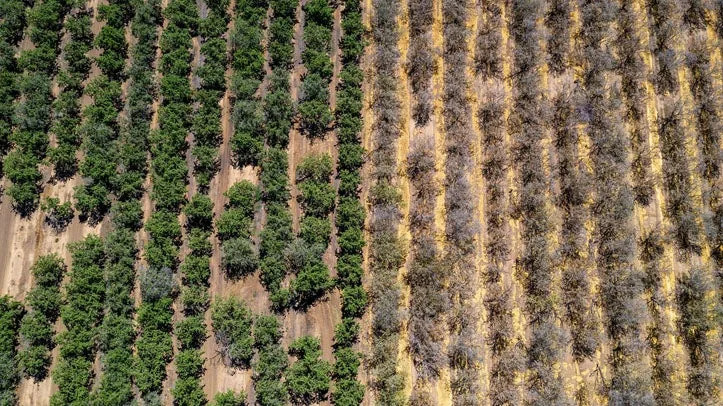
Aerial view of orchard rows split between healthy green trees and dry, dead brown trees.
Those supply strains can ripple into consumer prices. A separate study covering 2000–2021 found that water scarcity alone explained nearly 75% of year-to-year swings in global wheat prices, showing how drought in one region can nudge up the price of bread in stores thousands of miles away.
That dynamic is unfolding this year: nearly half of the U.S. is currently experiencing drought after a summer of below-normal rainfall and above-normal temperatures. Satellite and aerial imagery in affected areas sometimes shows orchard rows split between healthy green trees and dead, brown sections where trees have failed.
The Food Systems Countdown Initiative's report urges governments and food-system stakeholders to recommit to faster, deeper reform. Its dual goals: make food more affordable for consumers while cutting emissions from production and distribution.
"Accountability for food systems transformation requires accelerated progress — without it, efforts risk becoming performative rather than transformative. We can no longer afford to continue at the present pace," said Mario Herrero, Professor at the Ashley School of Global Development and the Environment, Cornell University.
What this means for shoppers: Expect more price volatility for staples if water shortages persist. Policy changes, better water management and shifts in production practices are needed to reduce both costs and emissions over the long term.
Help us improve.