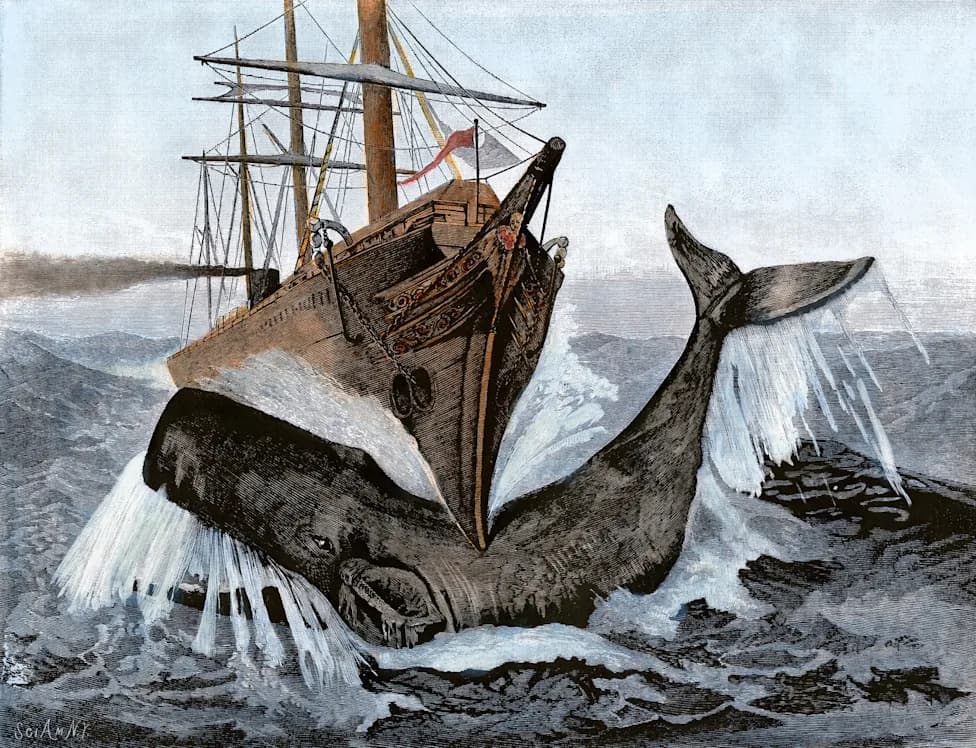
Drone footage has provided the first systematic evidence that sperm whales deliberately headbutt each other, confirming century-old accounts from the sinking of the Essex that inspired Moby-Dick. Researchers link the strikes to the spermaceti-filled forehead, which may function as a powerful battering ram. Estimates suggest full-grown sperm whales can deliver strikes near 1,200 kN — roughly the force of a 40 mph bus impact. Scientists say much remains unknown and emphasize conservation.
Drone Footage Proves 'Moby-Dick' Account: Sperm Whales Ram With Devastating Force
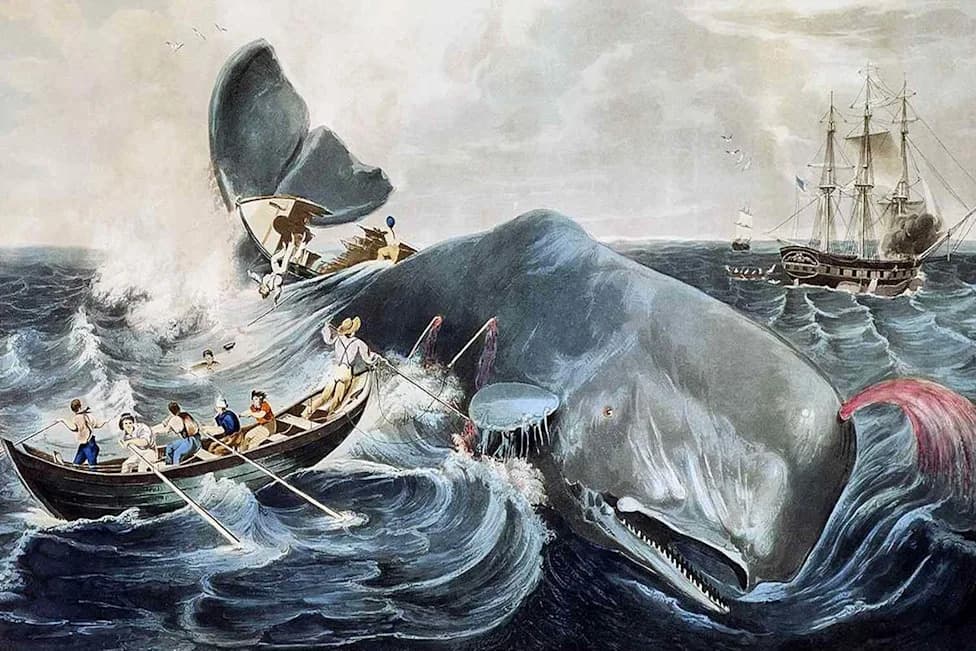
'Capturing a Sperm Whale', coloured engraving by J. Hill, 1835Credit: History/Universal Images Group via Getty
More than two centuries after a sperm whale sank the whaleship Essex, new drone footage has provided the first systematic visual evidence that these giants deliberately ram one another — and can deliver tremendously powerful blows. The finding supports 19th-century whalers' claims and modern hypotheses that the spermaceti-filled forehead functions as a battering ram.
From the Essex to Modern Science
On Nov. 20, 1820, 15-year-old Thomas Nickerson was a crewman aboard the Essex when a large sperm whale struck the ship, swam away about 900 feet, then turned and rammed the bow again. The repeated strikes sank the vessel and left 20 men stranded roughly 1,300 miles from land. The disaster — recounted by survivors such as first mate Owen Chase — helped inspire Herman Melville's Moby-Dick.
Whalers' Intuition Confirmed
For generations, biologists debated whether a whale's massive forehead could be used as a weapon. Retired evolutionary biologist Dave Carrier argued in a 2002 study that the spermaceti organ — a large, oil-filled structure that occupies much of a sperm whale's head — could have evolved to function as a battering ram. Carrier compared this behavior to ramming seen among terrestrial mammals such as deer and rams.
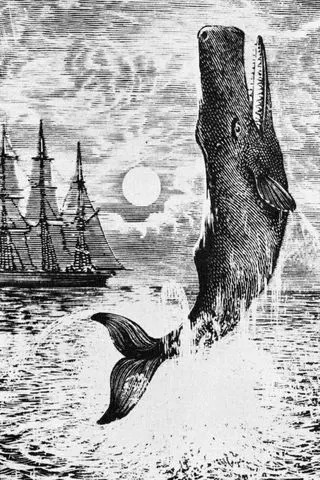
An image from Herman Melville 's 'Moby-Dick'
Drone Evidence And New Measurements
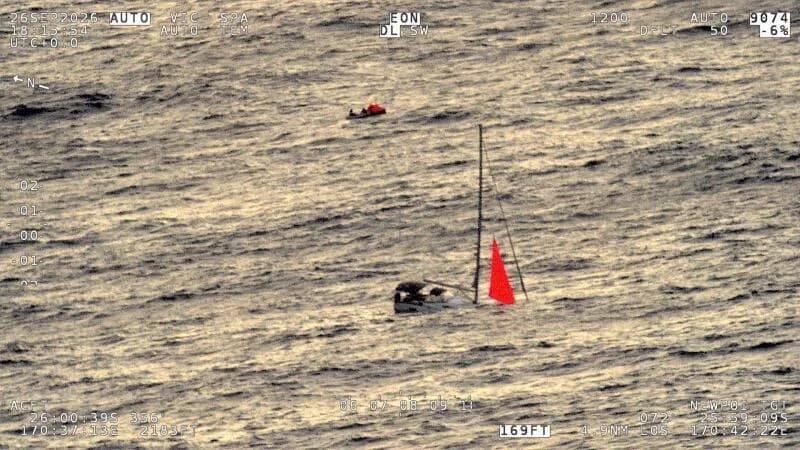
In a 2026 study published in Marine Mammal Science, ecophysiologist Alec Burslem used drones to record sperm whales headbutting one another near the Azores and Balearic Islands. These recordings represent the first systematic documentation of the behavior in the wild.
Burslem and colleagues estimated that a fully grown sperm whale charging at top speed could deliver on the order of 1,200 kilonewtons of force — roughly equivalent to the impact of a bus traveling about 40 mph. That scale of force is consistent with historical accounts of whales damaging or sinking wooden ships.
"We have a huge amount still to learn about these animals," Burslem said. "This behavior highlights both their power and the importance of conserving sperm whales."
What We Still Don't Know
Despite these advances, scientists caution that many aspects of sperm whale behavior remain poorly understood. Researchers still need to determine how often whales use head strikes in social, sexual or defensive contexts, and whether the behavior varies by age, sex or population. The new footage opens questions about the evolutionary pressures shaping the spermaceti organ and the biomechanics of ramming.
Conservation Implication: The study underscores the complexity of sperm whale biology and the importance of protecting these animals and their habitats so researchers can continue to learn from them.
Help us improve.