How Deep Is Your Love follows director Eleanor Mortimer and marine biologists into the Clarion-Clipperton fracture zone to spotlight little-known deep-sea life. The film uses playful nicknames—like "Barbie Pig," the Ping Pong Sponge and the Headless Chicken Monster—to engage viewers while revealing that ~90% of underwater species are unnamed. It raises urgent questions about industrial seabed mining and shows the difficult ethics of collecting specimens for scientific study.
Meet the Deep-Sea "Barbie Pig": A New Documentary Reveals Strange Creatures and the Threat of Seabed Mining
“The abyssal plain covers half of the surface of the Earth, but far less than one percent of it has ever been seen,” the trailer for the new documentary How Deep Is Your Love reminds viewers. Director Eleanor Mortimer and a team of marine biologists bring one remote corner of that vast world into focus, revealing bizarre, beautiful and largely unknown animals.
A Glimpse Into the Abyss
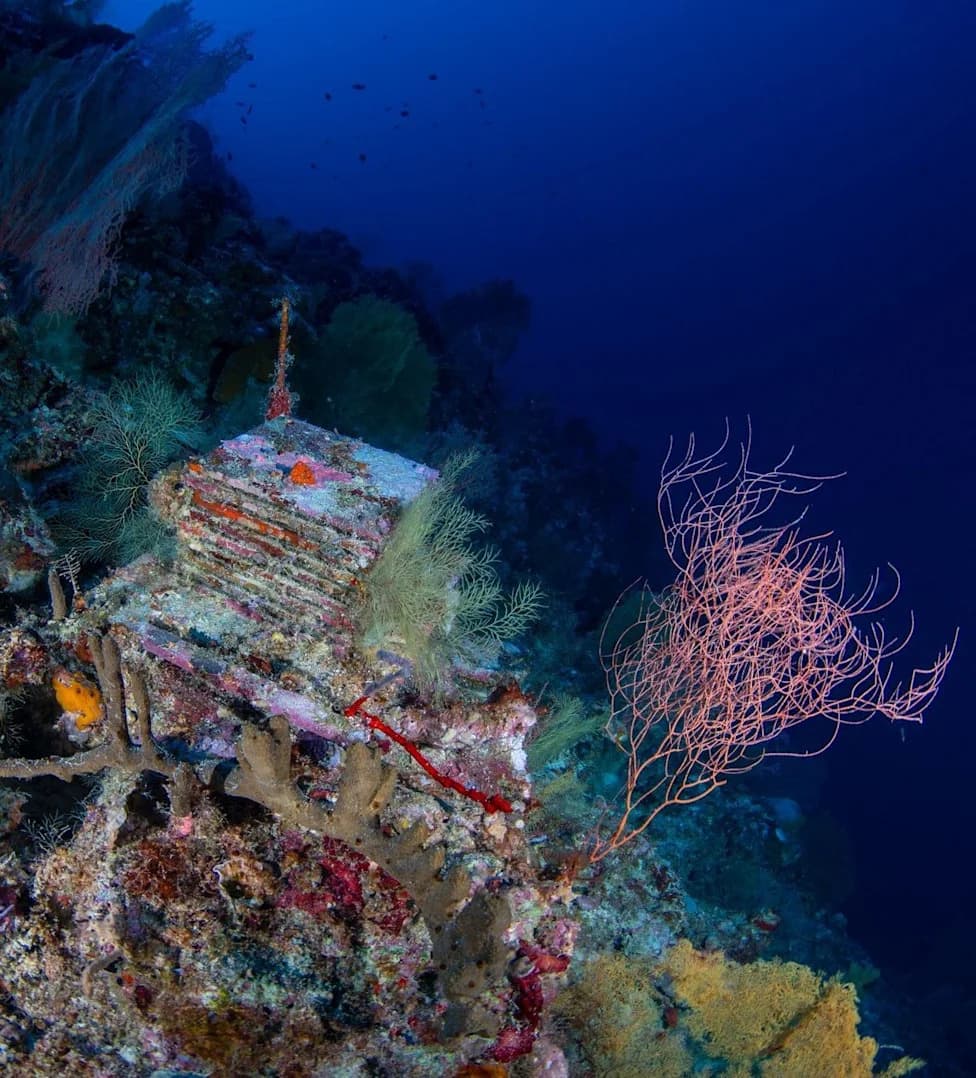
Filmed in the Clarion-Clipperton fracture zone in the Pacific—at least a 12-day voyage from any shore—the footage explores an oceanographic treasure trove. The documentary highlights that roughly 90% of underwater species remain unnamed or undescribed, and that formal taxonomic work can take years.
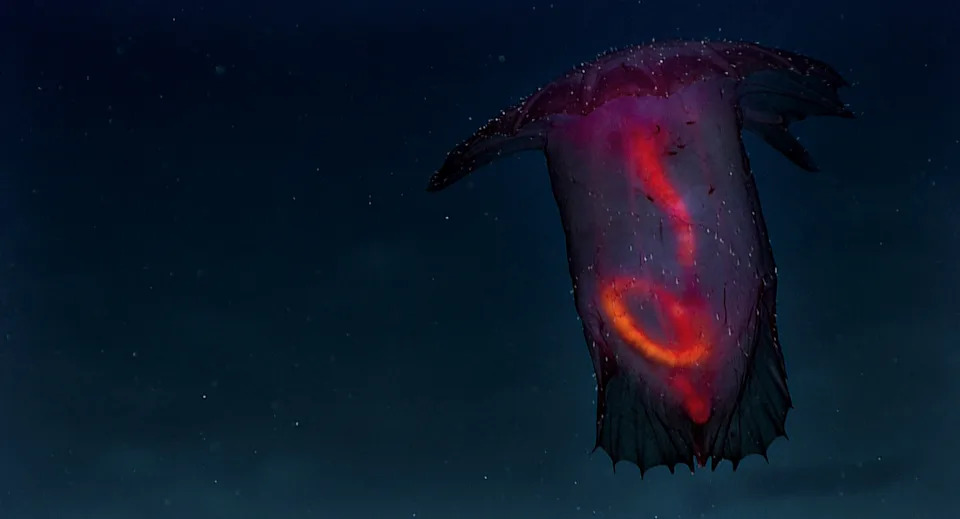
The so-called Headless Chicken Monster.Credit: Luna Films
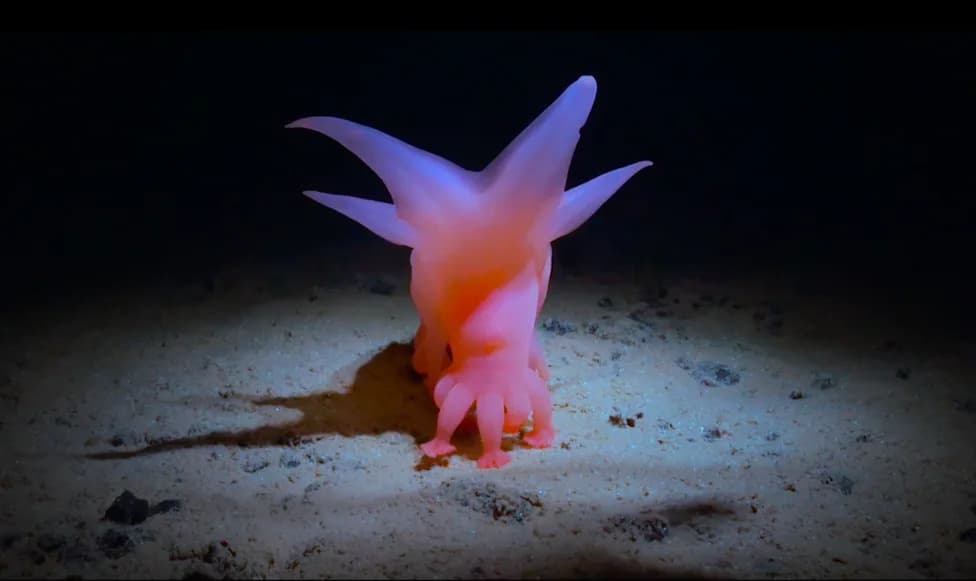
To help audiences connect with these unfamiliar animals, the filmmakers and scientists gave many specimens informal nicknames. Among the most memorable is "Barbie Pig," a bright-pink sea cucumber with short, stubby appendages and spiky bumps along its back. Other evocative monikers include the Ping Pong Sponge (a balllike form on a stalk), the Headless Chicken Monster (a translucent, floating sac packed with coiled, colorful internal structures) and Caspar the Ghost Octopus, named for its pale, spectral appearance.
Some creatures captured on camera are already known to science but were still given playful names to aid engagement. The sea cucumber Psychropotes semperiana, recognisable by a raised, sail-like dorsal structure, is dubbed the "gummy squirrel." A stout, purplish species, Psychronaetes hanseni, is referred to as "The King." Credit for much of the footage goes to Luna Films.
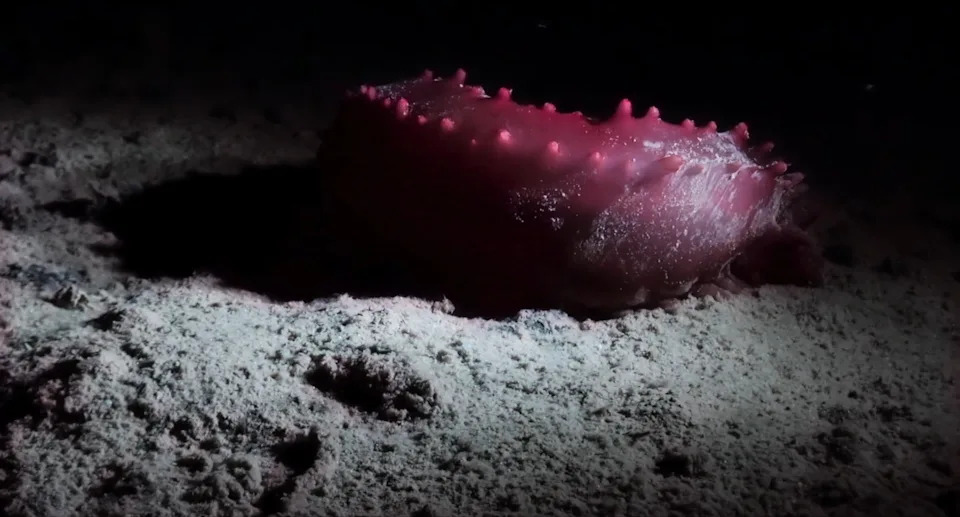
The sea cucumber Psychronaetes hanseni, also known as The King.Credit: Luna Films
Serious Questions Beneath the Whimsy
Beyond the charm of quirky nicknames, Mortimer's film delivers a stark message: the deep-sea floor—roughly three miles down in these regions—is fast becoming a target for industrial-scale mining. The documentary asks whether the potential economic gains outweigh the environmental costs to ecosystems we barely understand.
The film also confronts the difficult realities of deep-sea science. Many species can only be properly examined and described after being collected, preserved and brought to the surface—a process the documentary handles with sober reflection on ethical and scientific trade-offs.
“It’s the challenge of the deep sea,” Mortimer told The Guardian. “Most people never go there, and yet it’s a huge part of our planet we need to connect with. That was the motive behind the film. I want people to fall in love with the deep sea, I want people to connect with it.”
By putting charismatic and strange animals like the "Barbie Pig" center stage, How Deep Is Your Love seeks to spark curiosity and concern about an unseen world now under commercial pressure.
Lead Image: Luna Films
Help us improve.