The GHSA survey finds that 46% of school bus riders and 36% of all school-age children have experienced near-misses with reckless drivers at bus stops or in school zones. Parents overwhelmingly support stronger measures—92% back public safety campaigns, 91% support automatic ticketing for drivers who ignore bus arms and flashing lights, 90% want visible enforcement, and 88% favor speed cameras. The report and parents' firsthand accounts highlight the need for education, enforcement, and technology to keep children safe on their trips to and from school.
Nearly Half of School Bus Riders Report Close Calls With Drivers Who Ignore Flashing Lights

Inside Creative House/Getty Images
A new survey from the Governors Highway Safety Association (GHSA) reveals that dangerous driving around schools and school buses is a frequent and serious threat to children. The report’s findings underscore widespread parental concern and strong support for enforcement and safety measures to protect students traveling to and from school.
Key findings: The survey found that 46% of children who ride school buses experienced a near-miss with a reckless driver at a bus stop or in a school zone. Among all school-age children (not only bus riders), 36% reported a similar close encounter, and 43% of parents said they personally know another child who nearly got hit.
Krblokhin/Getty Images
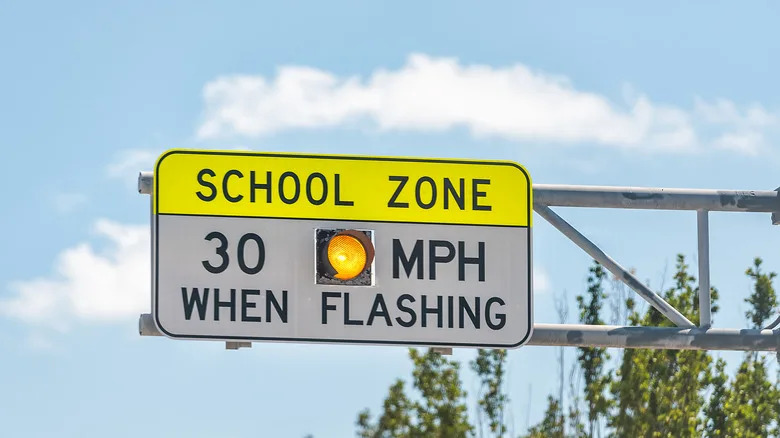
When asked why so many motorists behave dangerously near children, 53% of parents said they believe drivers act that way because they think they won’t be caught. That perception helps explain why motorists sometimes speed through school zones, ignore bus flashing lights, or pass stopped buses with their stop-arms extended.
Strong support for countermeasures: Parents backed a wide range of safety steps. No proposed measure polled below 88% approval. Specifically, 92% supported a public safety campaign to improve driver behavior, 91% backed automatic ticketing for motorists who ignore bus crossing arms or flashing lights, 90% favored visible police enforcement in school zones and at bus stops, and 88% supported speed cameras to deter speeding near schools.

Brandon Woyshnis/Shutterstock
"Parents are telling us that dangerous driving around school buses and school zones is not an abstract concern but something their children are experiencing firsthand. Educating motorists about safe driving around school buses and in school zones is essential to safer streets, but these findings confirm that parents also want meaningful accountability when drivers put children at risk. With another school year underway, communities are encouraged to use every proven tool and technology available to help make the trip to and from school safer." — Jonathan Adkins, GHSA CEO
Firsthand Accounts
"A couple of years ago, my neighbor's child was stepping off the bus and starting to cross the two-lane residential street. The bus had its red lights flashing and the stop sign arm fully extended. A distracted driver in an SUV completely ignored the bus signals and sped right past the driver's side of the bus. Luckily, the bus driver honked the horn loudly, which made the child freeze in place just in time as the car flew by."
"My child was getting on the bus and someone tried passing on the side my child was walking on and almost struck my child."
"[A] child was crossing in front of the bus while the lights were flashing and the stop sign was out. A car swerved and came within feet of the child."
These anecdotes underline how quickly a routine school commute can become dangerous. Even when a collision is avoided, close calls can be deeply traumatic for children and families.
Barriers And Accountability
Despite strong public support for enforcement and technology, implementation faces legal, political, and practical resistance in many places. The report also notes concerns about some advanced driver-assistance systems (ADAS) that have in some cases failed to detect or stop for stopped school buses. Parents and safety advocates are calling for clearer manufacturer responsibility, stronger regulation where needed, and broader use of proven tools such as automated ticketing, speed cameras, bus-mounted cameras, and visible enforcement.
Whether through education, engineering, enforcement, or technology, the GHSA urges communities to deploy every effective tool available to reduce risky driving and protect children. When motorists ignore laws designed to keep kids safe, meaningful accountability—along with public awareness and safer infrastructure—can save lives.
Help us improve.