Milan is a city of extremes: one in 12 residents is a millionaire while many locals struggle with rising rents and strained public services. Lorenzo Pacini, a 30-year-old PD member, is campaigning for mayor on a platform he calls "municipal socialism," combining neighborhood "anguriate" events with an online participatory platform, MiDecido. Though trailing in early polls, Pacini has attracted national attention and tapped a strong desire among Milanese for radical change.
Millionaires and Watermelons: Lorenzo Pacini’s Push to Reinvent Milan with “Municipal Socialism”
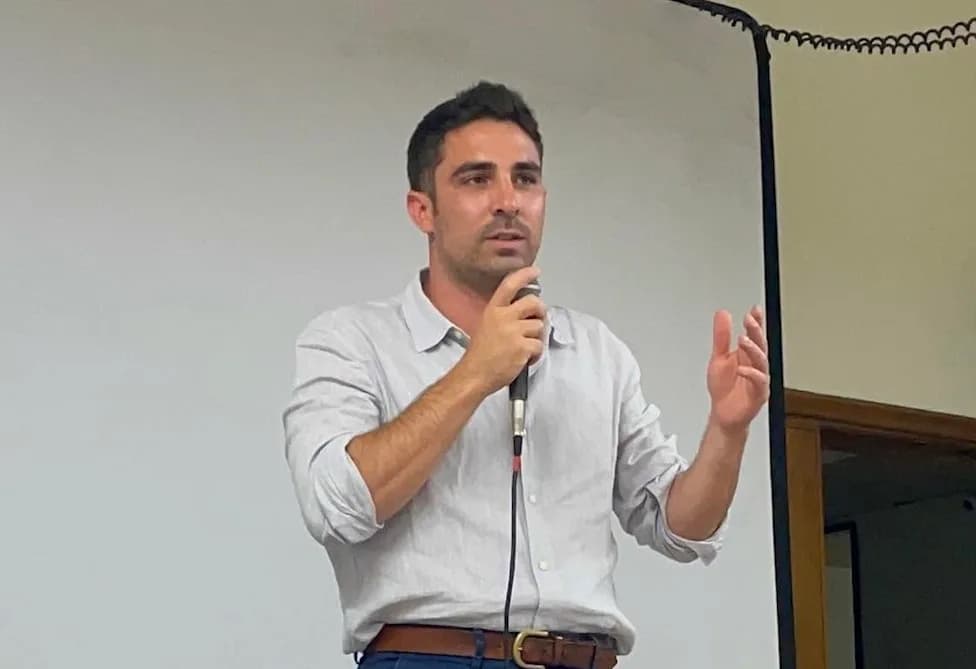
Milan is Italy's richest city, and its least affordable. While local center-left politicians share much blame for this situation, Democratic primary candidate Lorenzo Pacini is pushing for a return to working-class politics. (Facebook)
Milan is a city of sharp contrasts. A new Henley & Partners report finds that one in every 12 residents is a millionaire — a higher concentration than in New York City — even as many Milanese face soaring rents, strained public health services, and displacement to the suburbs. These twin realities — concentrated wealth and widening hardship — frame a heated mayoral contest ahead of the spring 2027 election.
Under uninterrupted center-left rule since 2011, Milan’s leadership has overseen a period of economic dynamism and deep inequality. The national right-wing coalition, led by parties including Matteo Salvini’s Lega and Forza Italia, argues the city has become unsafe, a claim that clashes with police data showing declines in violent crime. At the same time, disagreements within the ruling coalition at the national level have left the right without a unified Milanese candidate.
Enter Lorenzo Pacini
Lorenzo Pacini, 30, a law graduate and member of the Partito Democratico (PD), is campaigning well to the left of his party under the banner "La Rivoluzione di Milano" (Milan’s Revolution). A local executive in the historic center, Pacini has branded his platform "municipal socialism," promising to tackle housing costs, strengthen public services, and tax wealthier residents and newcomers more fairly.
Pacini’s campaign blends old-fashioned grassroots organizing with modern digital outreach. He has held neighborhood anguriate (open-air "watermelon parties") to collect proposals and complaints, launched MiDecido, an online participatory platform for policy ideas, and built a sizable social audience — more than 100,000 followers on Instagram and multiple videos exceeding a million views.
Controversy and Rhetoric
Pacini’s frank language — openly invoking "socialism," "the working class," and "class struggle" — breaks with decades of centrist drift in Italy’s mainstream left. He provoked national controversy after saying, in the context of Italy’s anti-fascist history, that fascists had been fought "with rifles" by partisans; his point emphasized the historical role of armed resistance but the comment prompted condemnation from right-wing leaders and a public distancing from some PD figures.
"It's those who still push essentially centrist ideas who shouldn't feel at home in a left party," Pacini told a major weekly, summarizing his view of the PD's current identity struggle.
Pacini cites historic local figures — such as Emilio Caldara, Milan’s Socialist mayor elected in 1914 — and personal influences, including his grandmother from the Partito Comunista Italiano and, more controversially, Ho Chi Minh, whom he admires as a strategist and revolutionary. These references underscore his effort to reconnect contemporary politics with Italy’s municipal socialist tradition.
The Race Ahead
Winning the expected center-left primary will be difficult. The establishment favorite is Mario Calabresi, a centrist and high-profile media figure backed by much of the PD, while Pierfrancesco Majorino represents another mainstream PD option aligned with party leader Elly Schlein. An early-August hypothetical primary poll put Pacini at 7 percent — modest for an insurgent without a party machine, but enough to register as a political force.
Pacini’s campaign points to recent surprises elsewhere — notably Zohran Mamdani’s unexpected traction in New York — and argues that a compelling local message can overcome long odds. Italy’s own history of municipal socialism, from pre-fascist Socialist administrations to decades of Communist-led local governance (notably in Bologna), gives his platform domestic precedents that he hopes will resonate with voters confronting rising costs and fragile public services.
Whether Milanese voters will embrace a revival of municipal socialism remains uncertain. Polling suggests broad appetite for change: a recent survey found 95% of residents want the city run differently, and 54% favor "radical" change. Pacini’s challenge is to translate energy, neighborhood gatherings, and online engagement into broad electoral support without alienating moderate voters or his own party’s leadership.
What’s next: A center-left primary, likely in early 2027, will decide the coalition’s nominee. If Pacini can make municipal socialism feel practical and rooted in Milan’s history rather than an ideological novelty, he may turn a long-shot bid into a credible path to citywide influence.
Help us improve.