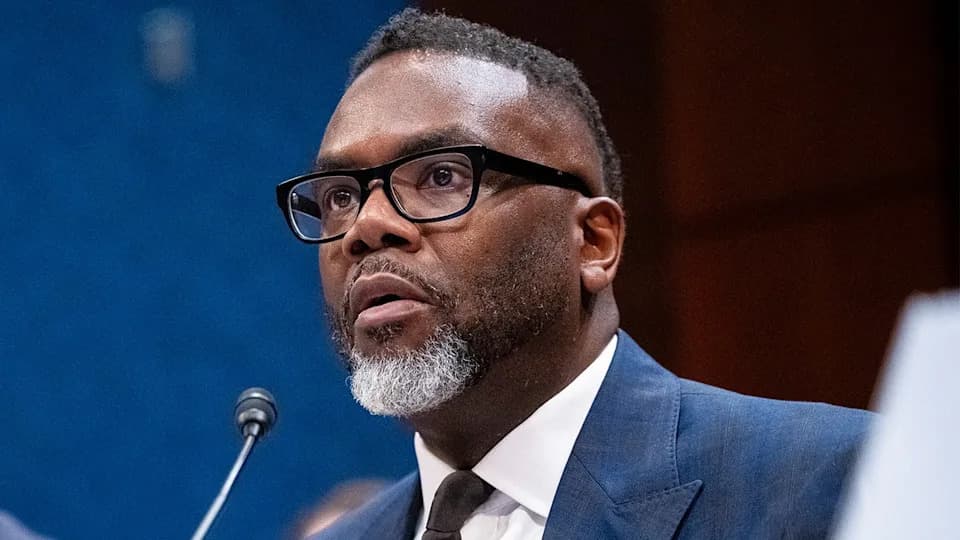
Chicago Mayor Brandon Johnson launched his reelection campaign at the DuSable Black History Museum, arguing his administration has delivered on investments in affordable housing, infrastructure and mental health while citing declining crime. He faces steep challenges — just 13.6% support in a recent University of Chicago Mansueto Institute poll and better-funded opponents such as Alexi Giannoulias, who has nearly $22 million versus Johnson’s under $1 million. Johnson is betting on renewed progressive energy and potential union backing, including from the Chicago Teachers Union and the DSA’s organizing, to build a stronger City Council majority and advance his agenda.
Mayor Brandon Johnson Launches Reelection Bid, Betting on Progressive Base Despite Low Polling
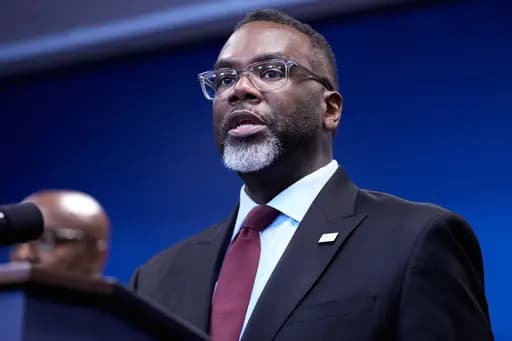
Chicago mayor bets progressives will turn out for him in announcing reelection bid
Chicago Mayor Brandon Johnson on Sunday formally launched his campaign for a second term, announcing plans at the DuSable Black History Museum and Education Center on the city’s South Side and confirming details to POLITICO ahead of the event.
Platform and Record
Johnson said his first-term priorities focused on investments in affordable housing, infrastructure and mental health clinics and pointed to falling crime as evidence of progress. "I made a promise four years ago that I would work every day to build the safest, most affordable big city in America by investing in people, and that's exactly what we've done," he said.
Political Headwinds
Still, the mayor faces steep political challenges. A recent University of Chicago Mansueto Institute poll found just 13.6% support for a prospective reelection bid. He will also contend with a competitive Democratic primary field that includes Illinois Secretary of State Alexi Giannoulias, U.S. Representative Mike Quigley and Illinois Comptroller Susana Mendoza — all of whom position themselves closer to the political center.
Money and Organization
Financial disparities complicate Johnson’s path: Giannoulias, backed by a coalition of labor unions and prominent business and civic leaders, begins the race with nearly $22 million on hand, while Johnson’s political operation reports under $1 million according to the latest campaign filings. Johnson is counting on energized progressive activists and potential union support — notably the Chicago Teachers Union, which helped him in 2023 — to narrow those gaps. The CTU told POLITICO its endorsement process has not yet begun.
Progressive Momentum
Sean Duffy, co-chair of Chicago Democratic Socialists of America (DSA), said recent victories by progressive and socialist candidates nationwide have energized organizing that could benefit Johnson. While Johnson is not a DSA member, he is widely seen as an ally; supporters point to far-left wins around the country as evidence that progressive voters could carry him through a February primary and a possible April runoff.
"People are tired of politicians who don't deliver and who side with corporations over working-class people," Duffy said. "There's a palpable energy around candidates and organizations that are offering a real alternative."
Council Battles and The Budget
Johnson’s term has included contentious moments and mixed public response — from criticism of his handling of the city's response to federal immigration enforcement to repeated clashes with City Council. The city also faces long-term fiscal challenges, with a projected budget shortfall of $882 million in 2027. Johnson has sometimes struggled to assemble the 26-vote majority he needs in the 50-member council to pass major legislation, most visibly during bruising budget fights.
Giannoulias has criticized Johnson’s disputes with aldermen and is campaigning as a coalition-builder. Johnson, by contrast, has defended confrontations he sees as necessary to advance policies he calls pro-worker: "If we're fighting over whether we should raise wages for working people or whether corporations should pay more, those are fights worth having," he said.
DSA Strategy And Local Races
The local DSA chapter reports more than 3,200 members — roughly 1,000 new members in the last year — and has adopted a strategy framed as a choice between "tax the rich or austerity." The chapter has not endorsed a mayoral candidate, focusing instead on City Council races where it believes it can have the most immediate impact. It has already endorsed six aldermanic candidates and plans additional endorsements this fall.
DSA leaders say electing sympathetic aldermen who back stronger tenant protections, public financing of elections and higher taxes on wealthy residents and large corporations would make it easier for a second-term Johnson to pass progressive priorities.
Outlook
As Johnson opens his reelection campaign, he signaled he will stay the course and continue to wage political fights over economic priorities. "If I don't have that fight, then what's the whole point of me being here?" he asked, framing his candidacy as a continuation of his progressive agenda and willingness to engage in tough political battles.
Help us improve.