The UK is integrating battlefield data from Ukraine into the Challenger 3 main battle tank program, converting Challenger 2 hulls into a digital, NATO‑compatible platform. Key upgrades include a 120mm L55A1 smoothbore gun, modular systems for drone defence, enhanced armour and modern electronics. Seven prototypes exist and an eighth is in production; crewed live‑firing trials are complete and deliveries are expected in the coming year after a delay from the original 2025 schedule. The tank underpins a new “20-40-40” layered protection concept that relies more on cheaper drones and unmanned systems to protect high‑value assets.
UK Feeds Ukraine Combat Data Into Challenger 3 — A Digital, Drone-Ready Main Battle Tank
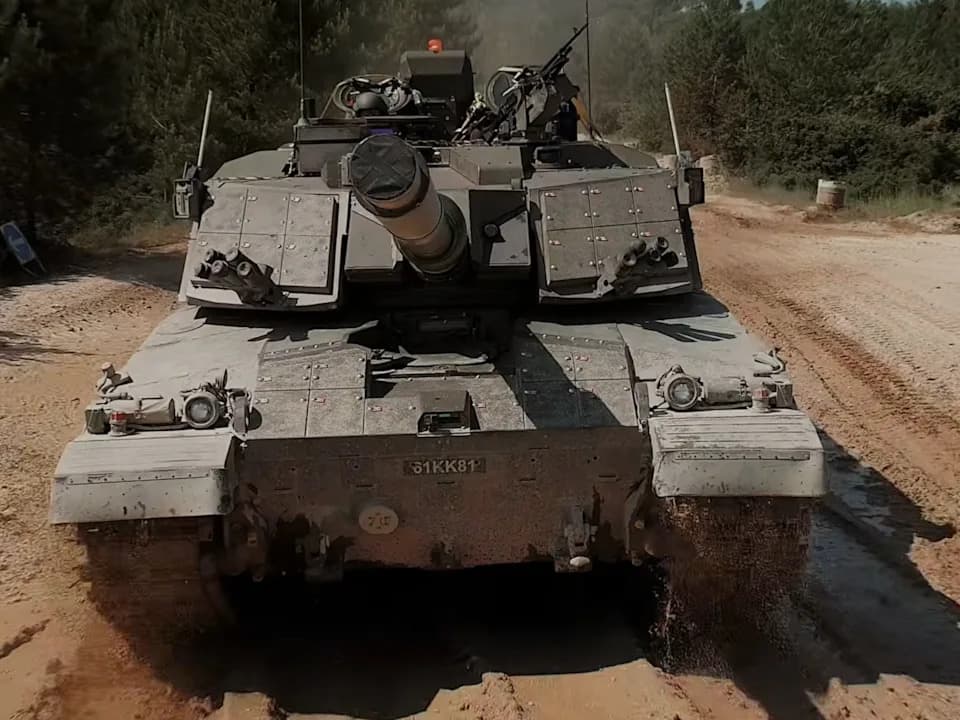
The Challenger 3 is the successor to the decades-old Challenger 2.Rheinmetall BAE Systems Land/Screengrab via YouTube
Britain is using combat lessons from Ukraine to shape the development of its next-generation main battle tank, the Challenger 3. The vehicle is a thorough modernization of the long-serving Challenger 2 and is being reworked as a digital, NATO‑compatible fighting platform with enhanced survivability and modular systems for evolving threats.
What Has Changed
The Challenger 3 program replaces key legacy systems with modern equivalents designed for interoperability and adaptability:
- Main armament: A new 120mm L55A1 smoothbore gun that fires NATO-standard ammunition replaces the Challenger 2's unique rifled gun.
- Digital upgrades: State-of-the-art targeting, fire-control, surveillance and situational-awareness systems create a networked, digital fighting vehicle.
- Modularity: Systems are modular and swappable, allowing mission-specific packages such as drone-defence kits to be fitted as required.
- Protection and mobility: Enhanced armour (including explosive reactive armour), improved thermal imaging, and upgrades to the turret, engine, suspension and core systems.
“We're taking a load of data from Ukraine” and feeding it into the Challenger 3 development, a UK Defence Ministry spokesperson said at a recent industry exhibition.
Testing, Production And The 20-40-40 Concept
Rheinmetall BAE Systems Land won a roughly $1 billion contract in 2021 to upgrade about 150 Challenger 2 tanks into Challenger 3s. There are seven prototypes with an eighth in production; crewed live‑firing trials have already taken place and further testing is ongoing ahead of deliveries expected in the coming year, after a delay from the original 2025 schedule.
The Challenger 3 sits at the heart of a new layered protection concept often described as the “20-40-40” model. This approach uses cheaper drones and unmanned systems to help screen and neutralize threats before they reach high‑value assets such as tanks and helicopters — a tactic informed by observations from the war in Ukraine, where low-cost drones have proven capable of destroying expensive armoured vehicles.
Why It Matters
While the war in Ukraine has prompted debate about the battlefield role of tanks, British military planners continue to view armoured vehicles as essential when upgraded for modern threats. The Challenger 3 aims to combine robust physical protection with digital systems and modular kit to remain relevant and survivable in evolving combat environments.
Status: Development and testing continue; the platform is explicitly described by British officers as not final and subject to further upgrades as battlefield data and technology advance.
Help us improve.