Researchers studied 113 children aged 3–6 and found that higher blink rates were linked to more focal activity in the upper‑right frontal brain region and to better performance on a card‑sorting test of mental flexibility. Younger children showed broader frontal activation, while older children exhibited more localized right‑upper frontal specialization. The blink‑rate association with brain activation and task performance persisted after controlling for age, and blink frequency normally rises between about 1 and 5 years.
Could Blink Rate Reveal Early Brain Development in Children?
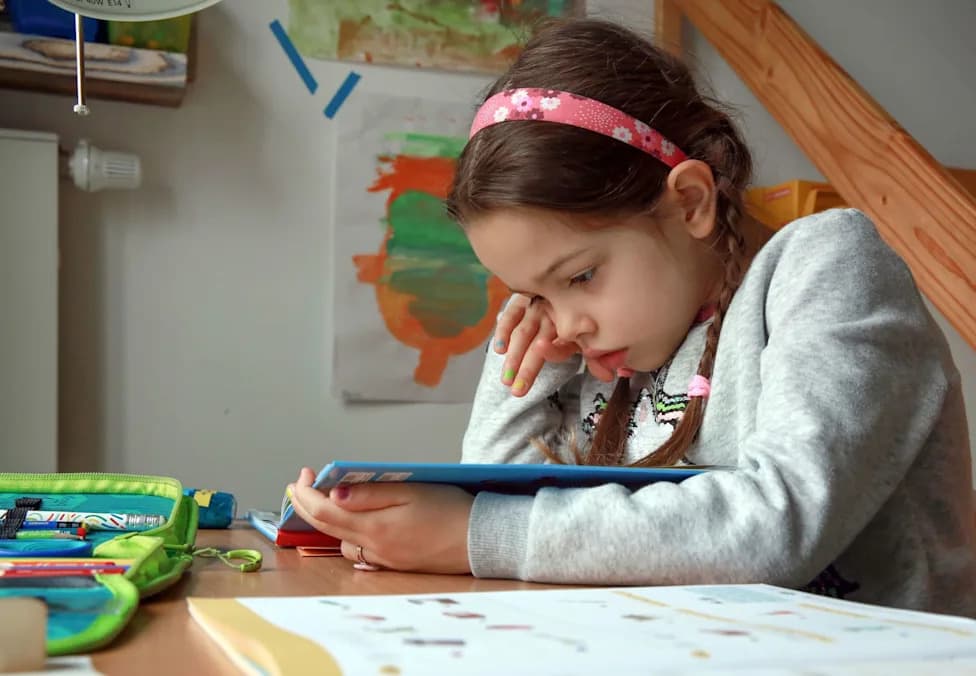
Can blinking tell you how your child is developing? Researchers examined whether blinking frequency in young children is linked to the development of brain skills involved in flexible thinking and self-control. Mascha Brichta/dpa-tmn
Researchers have found a surprising — and simple — behavioral marker that may reflect early brain development: how often young children blink. A new study links blink frequency with patterns of frontal‑brain activity and with performance on a test of flexible thinking.
Study Design
The research, published in Communications Psychology, evaluated 113 children aged 3 to 6 from two preschools in Japan, with an almost equal mix of boys and girls and a mean age near five. Each child completed a card‑sorting task that measures mental flexibility: for example, sorting cards by color and then switching to sorting by shape, requiring the child to change the rule mid‑task.
How the Brain Was Measured
While children performed the task, the team used a noninvasive, light‑based brain imaging method (near‑infrared spectroscopy) to monitor blood‑flow changes in frontal brain regions. A camera recorded each child’s face so researchers could count blink frequency later.
Key Findings
As expected, older children generally performed better on the card‑sorting test and showed age‑related shifts in frontal activation. Younger children displayed more distributed activation across frontal areas, while older children showed more focal activity concentrated in the upper‑right frontal region — a pattern the authors interpret as increasing functional specialization within the prefrontal cortex.
Importantly, children with higher blink rates had stronger activation in that same upper‑right frontal area and performed better on the mental‑flexibility task. That association remained even after statistically controlling for age.
Developmental Context and Implications
The researchers note that blink rates normally rise during early childhood: infants blink very rarely, with rates increasing markedly between roughly one and five years. The association between blink frequency, frontal specialization, and task performance suggests blink rate could serve as a noninvasive indicator of emerging brain functional differentiation.
"The discovery could ultimately improve understanding of why some children experience profound challenges with cognitive control and adaptation," said senior authors Dr. Atsuko Yamashita and Dr. John‑Paul J. Yu. "By identifying this simple indicator of brain functional differentiation, we hope to gather additional evidence from pediatric clinical studies to determine whether these findings can be translated to the early detection of neurodevelopmental conditions."
Caveats
These results are correlational and based on a community sample from two preschools in Japan. More research, including longitudinal and clinical studies, is needed to determine whether blink rate can reliably signal atypical development or be used as a screening tool.
Bottom line: Blink rate shows promise as an easy, noninvasive behavioral sign linked to frontal‑brain specialization and cognitive flexibility in early childhood — worth following up in future studies.
Help us improve.