On Sept. 23 Azerbaijani President Ilham Aliyev pardoned French national Martin Ryan, who was serving a 10‑year sentence for espionage. The pardon came one day after the EU removed sanctions on oligarch Alisher Usmanov — a delisting diplomats say increased pressure on Baku over detained Europeans. A second French detainee, Anass Derraz, was not pardoned. The Usmanov and Mikhail Fridman delistings exposed divisions within the EU and drew criticism from Ukraine's president.
Azerbaijan Pardons Frenchman Martin Ryan After EU Delists Oligarch Usmanov, Sparking Diplomatic Questions
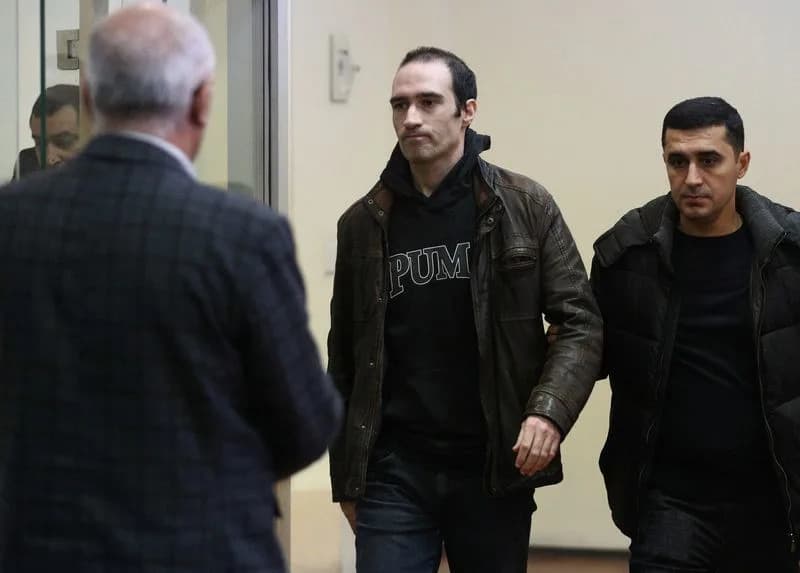
FILE PHOTO: French national Martin Ryan, accused of espionage, attends a court hearing in Baku, Azerbaijan January 6, 2025. REUTERS/Aziz Karimov/File Photo
On Sept. 23 in Baku, Azerbaijani President Ilham Aliyev issued a pardon for French national Martin Ryan, who had been serving a 10‑year prison sentence after a March conviction for espionage. The pardon came one day after the European Union removed sanctions on Russian billionaire Alisher Usmanov — a move diplomats say increased pressure on Baku over detained Europeans.
Who Is Martin Ryan? Ryan was arrested in December 2023 and accused of gathering information about Azerbaijan's military cooperation with Turkey and Pakistan. He was convicted in March and sentenced to 10 years. Aliyev's office said Ryan was pardoned alongside 14 Azerbaijani citizens, two Turkish nationals, a dual Russian‑Israeli national and a Pakistani citizen, but it was not immediately clear whether Ryan had been released from custody following the pardon.
Diplomatic Context — Three European diplomats told Reuters that Paris had privately indicated Baku was using the controversy around Usmanov's delisting to press France over two French citizens detained in Azerbaijan. French weekly Challenges identified the second detainee as Anass Derraz, an employee of the French water‑management company Saur, who was sentenced in 2025 to 12 years on corruption charges and was not listed among those pardoned on Sept. 23.
An Azerbaijani diplomat rejected claims of a pressure campaign as "categorically unfounded," saying Baku had publicly supported removing Usmanov from Western sanctions lists because it considered the measures unjust.
EU Delisting and Wider Repercussions
The EU's delisting of Alisher Usmanov and fellow billionaire Mikhail Fridman marked the first time the bloc removed sanctions on some of Russia's wealthiest oligarchs who had not publicly condemned the war in Ukraine. The decision exposed divisions among EU member states and prompted criticism from Ukraine's president, Volodymyr Zelenskiy, who said the move undermined Western unity in supporting Ukraine.
"Maybe these two oligarchs are now very happy. But they do not know us, they do not know me. I come with the same surnames to Europe again," Zelenskiy said at a New York press conference after meeting U.S. President Donald Trump.
Both Usmanov and Fridman built their wealth after the Soviet Union's collapse — Fridman in oil and banking, Usmanov in metals and telecoms. The Organization of Turkic States (including Azerbaijan, Uzbekistan, Kazakhstan and Turkey) sent letters to EU leaders and the U.S. president urging sanctions be lifted, and Usmanov has leveraged personal ties across the post‑Soviet region in efforts to secure delisting.
Regional Ties and Tensions — Relations between Baku and Paris have been strained by France's support for Armenia, while ties between Azerbaijan and Russia cooled after Russian forces accidentally downed an Azerbaijani passenger jet in December 2024. The Usmanov delisting has therefore become entwined with broader regional diplomacy and bilateral tensions.
What Comes Next — The pardon reduces immediate pressure on diplomatic relations but leaves unresolved questions: whether Ryan has been freed and returned to France, whether Derraz or other nationals will be released, and how the EU will manage internal divisions over sanctions policy going forward. The episode underscores how sanctions, oligarch influence and prisoner cases can intersect in high‑stakes diplomacy.
Help us improve.