Hikmat Hajiyev, Azerbaijan’s top foreign policy adviser, told Newsmax that then‑President Donald Trump’s personal intervention was pivotal to the Aug. 8, 2025 White House declaration aimed at ending decades of conflict with Armenia. Hajiyev framed the agreement as a historic breakthrough, highlighted Azerbaijan’s strategic geography and growing energy role, and said Baku supports diplomatic engagement with Iran. He also emphasized Azerbaijan’s close ties with Israel and its willingness to help mediate regional crises, including aspects of the Russia‑Ukraine conflict.
Azerbaijan Adviser Says Trump Brokered South Caucasus Peace; Baku Offers Diplomatic Role on Iran
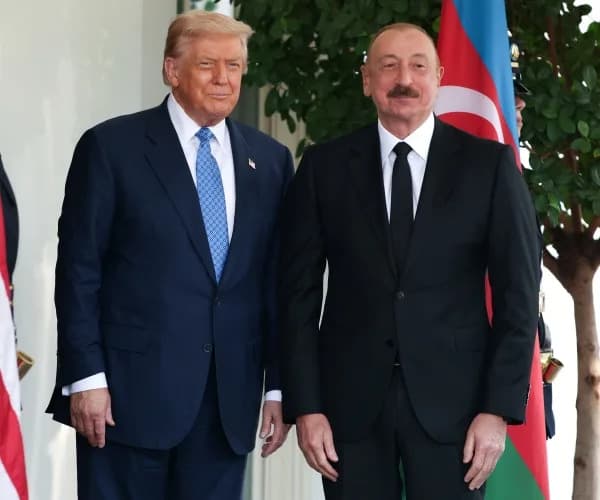
President Donald Trump (L) welcomes Azerbaijani President Ilham Aliyev (R) to the White House on Aug. 8, 2025, in Washington, D.C. (Samuel Corum/Getty Images)
BAKU — Hikmat Hajiyev, the principal foreign policy adviser to Azerbaijani President Ilham Aliyev, told Newsmax CEO Christopher Ruddy in a recent interview that then‑President Donald Trump’s personal intervention was decisive in producing the Aug. 8, 2025 White House declaration intended to end decades of conflict between Azerbaijan and Armenia. Hajiyev said the agreement has reshaped the strategic landscape of the South Caucasus and accelerated U.S.‑Azerbaijan ties.
Trump's Role and the White House Declaration
Hajiyev, who leads the Presidential Administration's Foreign Policy Affairs Department and has served as an assistant to the president since 2019, credited Trump’s direct engagement with achieving results that years of diplomacy had not. Referring to the meeting in Washington, he described the signing as "a historical moment," saying "President Trump's leadership . . . brought his political weight into this process and brought Armenia and Azerbaijan into that ultimate peace." He likened the agreement’s potential regional significance to the Camp David Accords.
Geography and Strategic Importance
Azerbaijan's location on the Caspian Sea places it between Russia and Iran and links Central Asia with European markets. Its Nakhchivan exclave borders NATO member Turkey. "Geography is our destiny," Hajiyev said, noting Baku sits roughly 200 kilometers from both the Russian and Iranian borders. That geography positions Azerbaijan at the center of several international priorities: Iran, Russia’s war in Ukraine, European energy security, and the rising strategic importance of Central Asia.
Diplomacy With Iran
Despite regional tensions, Hajiyev emphasized Baku's preference for diplomacy. He said Azerbaijan believes there remains a strong possibility for the peaceful resolution of outstanding issues and that Baku could help de‑escalate tensions. He suggested a memorandum of understanding between the United States and Iran could still provide a framework for predictability in the region. Hajiyev also stressed Azerbaijan’s policy of noninterference in Iran’s internal affairs and expressed a desire for "peace and tranquility and stability" for its neighbor, noting deep cultural and historical ties with ethnic Azerbaijanis in Iran.
Relations With Israel and the Jewish Community
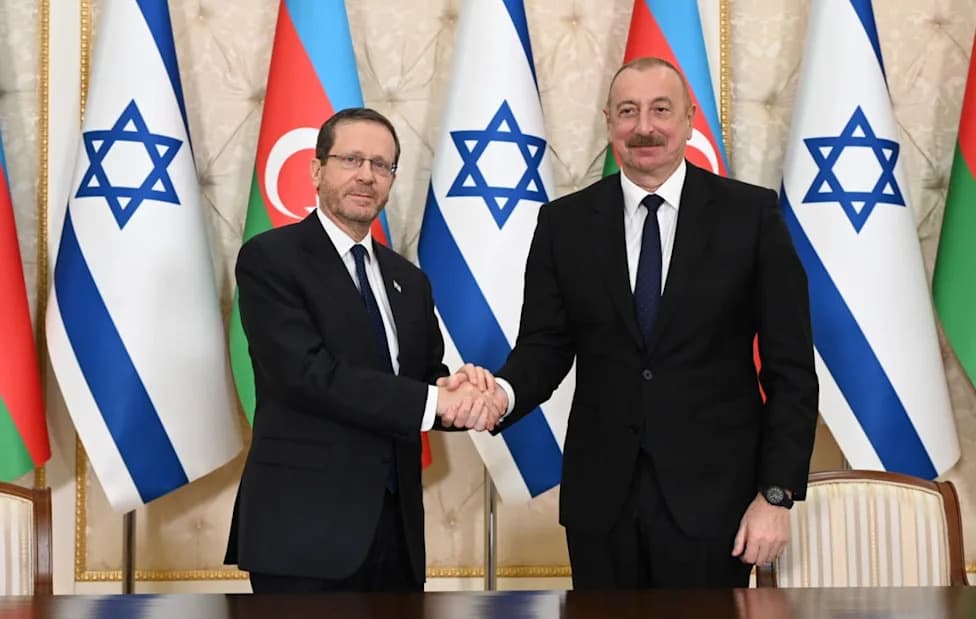
Hajiyev described Azerbaijan's relationship with Israel as a "strategic partnership" that spans defense, technology, education and agriculture. He highlighted the country's longstanding Jewish community and said Azerbaijan prides itself on religious tolerance, noting that Jewish life in Azerbaijan is "vibrant and dynamic." The Foreign Ministry likewise frames ties with Israel as based on mutual trust and shared interests.
Russia, Ukraine, and Mediation Offers
On Russia’s war in Ukraine, Hajiyev characterized the conflict as a tragedy and said Azerbaijan maintains longstanding relations with both Moscow and Kyiv. He praised efforts—he attributed to Trump—to seek negotiated settlements and suggested that President Aliyev’s ability to communicate with both Presidents Vladimir Putin and Volodymyr Zelenskyy could make Azerbaijan a constructive interlocutor if asked.
Energy and the West
Energy remains a central element in Azerbaijan’s engagement with Europe and the United States. According to Azerbaijan’s Energy Ministry, the country now supplies natural gas to 16 countries, with the Southern Gas Corridor providing a significant pipeline route to Europe outside of Russian supplies. Hajiyev said Baku aims to expand gas exports while respecting OPEC+ constraints on oil production.
Deepening U.S.‑Azerbaijan Ties
Hajiyev framed bilateral relations as increasingly aligned, saying the administrations of Trump and Aliyev have ushered in a "new era" of strategic partnership. He praised the administration for waiving Section 907 restrictions on certain U.S. assistance to Azerbaijan and recalled Azerbaijani troops having served alongside American forces in Afghanistan. He also noted that the White House followed through when Vice President JD Vance visited Baku and signed a strategic partnership document.
"United States and Azerbaijan strategic friendship and strategic cooperation and partnership is on a strong foundation," Hajiyev said. "It will continue to grow. In this geopolitical strategic area, Azerbaijan remains a reliable and trustful partner of the United States."
Overall, Hajiyev presented Baku as a pragmatic regional actor seeking to leverage its geography, energy resources and diplomatic channels to promote stability and greater cooperation with Western partners.
Help us improve.