Peronism is divided and weakened by Cristina Fernández de Kirchner’s enduring influence from house arrest, complicating efforts to build a unified challenge to President Javier Milei. Milei’s austerity measures have sharply reduced inflation but left many Argentines facing economic hardship, creating both political risk and opportunity for the opposition. Axel Kicillof and other Peronists must resolve leadership disputes and broaden their appeal to present a credible alternative ahead of next year’s election.
Cristina’s Shadow: Peronism’s Leadership Crisis Complicates Effort To Unseat Milei
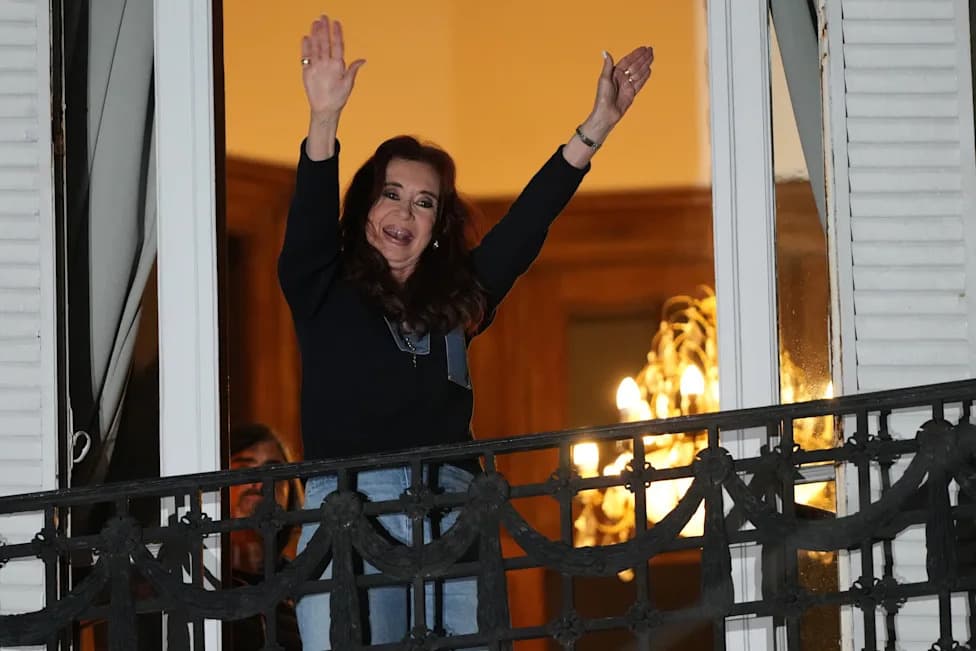
Former Argentine President Cristina Fernandez, who is serving a prison sentence under house arrest for corruption, waves from the balcony of her home during a rally marking the fourth anniversary of the assassination attempt against her in Buenos Aires, Argentina, Tuesday, Sept. 1, 2026. (AP Photo/Natacha Pisarenko)(AP Photo/Natacha Pisarenko)
Outside the Parisian‑style apartment where former president Cristina Fernández de Kirchner remains confined under house arrest, supporters gather several nights a week — beating drums, tooting trumpets and chanting her name. After about an hour, Fernández appears on the third‑floor balcony — the closest she can come to the crowd while serving a six‑year corruption sentence — and waves to the crowd below.
More than a year after Argentina’s Supreme Court upheld her conviction and imposed a lifetime ban on holding public office, Fernández remains a dominant and polarizing force within Peronism. For her supporters she is a political prisoner; for many critics she symbolizes the corruption and economic mismanagement that have long plagued Argentina.
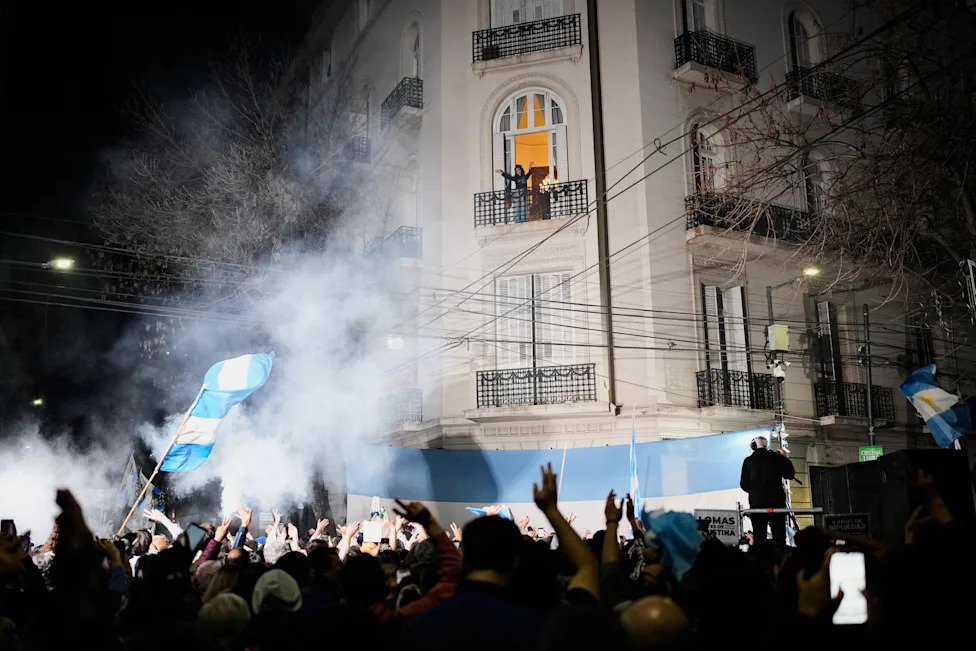
Former Argentine President Cristina Fernandez, who is serving a prison sentence under house arrest for corruption, waves from the balcony of her home during a rally marking the fourth anniversary of the assassination attempt against her in Buenos Aires, Argentina, Tuesday, Sept. 1, 2026. (AP Photo/Natacha Pisarenko)(AP Photo/Natacha Pisarenko)
Peronism’s Internal Rift
The movement that has shaped Argentine politics for decades is now strained by a leadership vacuum. Fernández’s ongoing influence from house arrest has repeatedly blocked the emergence of a clear successor, leaving hopeful figures such as Buenos Aires Province Governor Axel Kicillof in political limbo. That division comes as Peronists try to mount a credible challenge to libertarian President Javier Milei, who is seeking reelection.
“The opposition is in a big mess. And they now have a big opportunity,” said Marcelo J. García, Americas director at risk consultancy Horizon Engage. How Peronism resolves its narrative and leadership questions will be decisive for next year’s presidential contest.
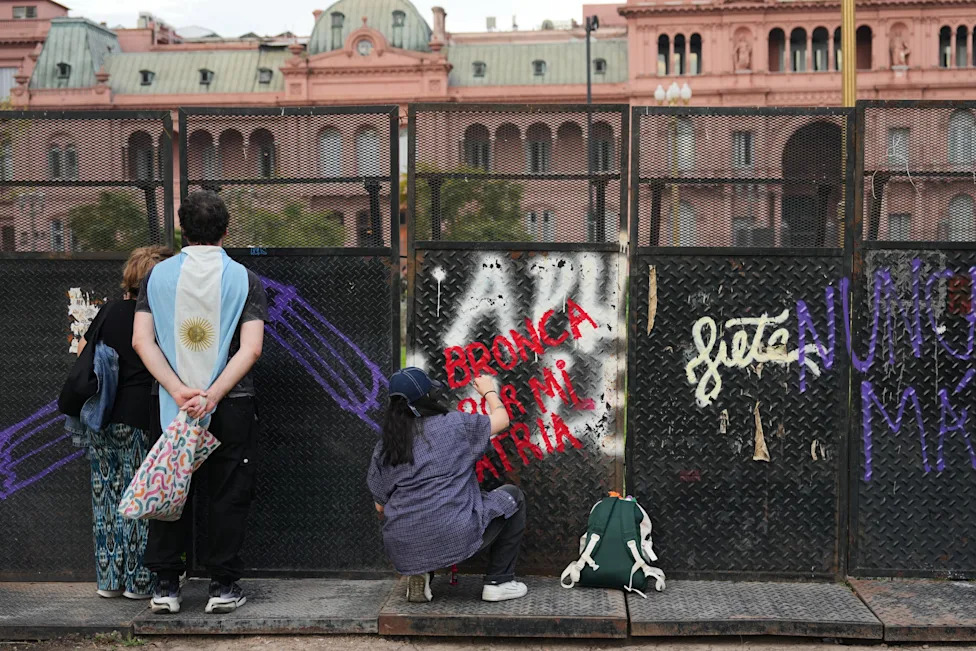
An anti-government protester writes "Anger over my country" in Spanish on a fence outside the government house in Buenos Aires, Argentina, Saturday, Sept. 19, 2026. (AP Photo/Rodrigo Abd)(AP Photo/Rodrigo Abd)
Milei’s Economic Reset And The Political Fallout
Through sweeping budget cuts, President Milei has stabilized Argentina’s currency and sharply reduced annual inflation — from figures reported near 300% in 2024 to just over 30% this year. But many citizens have not yet felt a tangible recovery: paychecks buy less, utilities have risen, and job losses and cheap imports continue to strain local industry.
Peronists seized on widespread economic pain during recent rallies to reiterate the movement’s traditional pillars — free education, universal public health care and workers’ rights — and to argue for an alternative economic vision. Yet critics point out Peronism’s recent association with inflationary policies, which makes it harder to reassure markets and moderate voters.
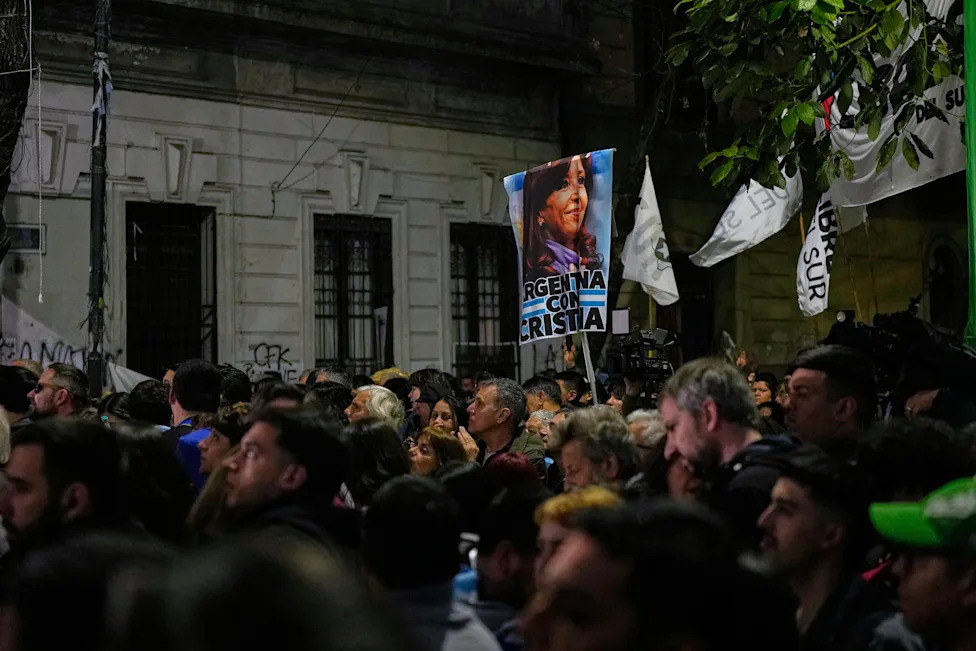
Supporters watch as former Argentine President Cristina Fernandez, who is serving a prison sentence under house arrest for corruption, waves from the balcony of her home during a rally marking the fourth anniversary of the assassination attempt against her in Buenos Aires, Argentina, Tuesday, Sept. 1, 2026. (AP Photo/Natacha Pisarenko)(AP Photo/Natacha Pisarenko)
Leadership Prospects And Political Strategy
Kicillof has tried to rebuild Peronism’s appeal without immediately declaring a personal candidacy, arguing the party must first construct a national alternative that can attract new social sectors. Still, Fernández’s continued sway — and her supporters’ pledge to follow her directives — complicates reconciliation and leadership consolidation.
Supporters continue to press Fernández’s case at international forums: her legal team has appealed to the U.N. Human Rights Committee to challenge her conviction and lifetime ban as politically motivated. Even if the U.N. were to issue a favorable finding, Argentine courts would still need to lift the disqualification for her to return to the ballot.
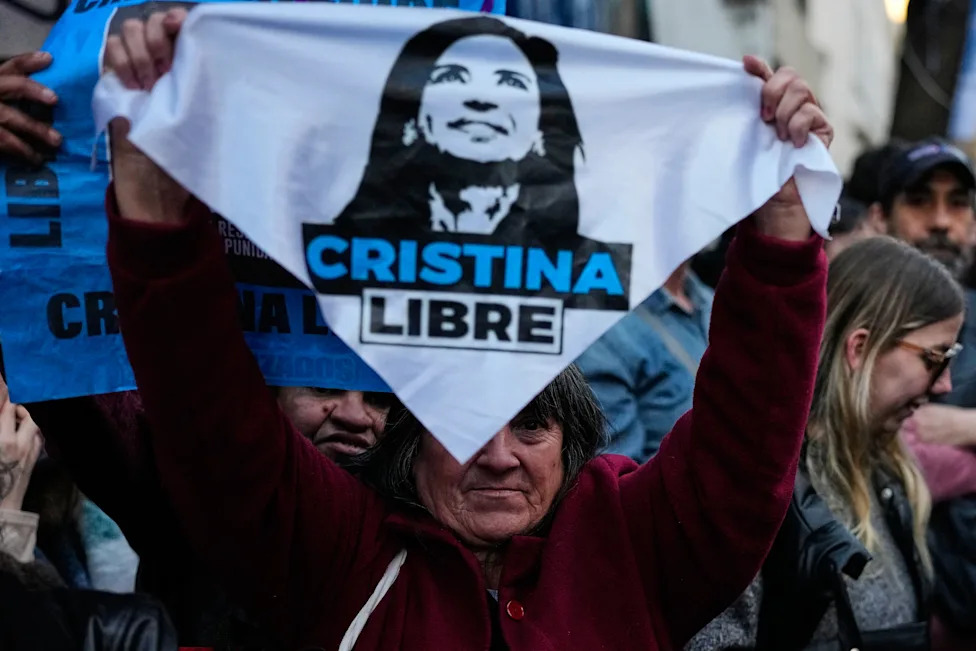
A supporter of former Argentine President Cristina Fernandez, who is serving a prison sentence under house arrest for corruption, holds a sign reading "Cristina Free" outside her home during a rally marking the fourth anniversary of the assassination attempt against her in Buenos Aires, Argentina, Tuesday, Sept. 1, 2026. (AP Photo/Natacha Pisarenko)(AP Photo/Natacha Pisarenko)
What’s At Stake
The next election will test whether Peronism can overcome factionalism and present a credible alternative to Milei’s free‑market overhaul. If the opposition remains fragmented and overly centered on Fernández’s personal comeback, it risks squandering an opening created by popular discontent with ongoing austerity and social pain.
“If the leader next year isn’t her, it will be whoever she says,” said a Cristina Libre activist, underscoring how personal loyalty inside Peronism complicates democratic leadership renewal.
How Peronist leaders reconcile these internal tensions — and whether they can persuade moderates and investors they offer a stable economic course — will be crucial as Argentina heads toward a high‑stakes presidential contest.
Help us improve.