Rising household debt in Argentina is hitting young people hardest: borrowers under 25 have the highest delinquency rate at 37.6%, and more than 5 million people are behind on payments. Small emergency loans taken via digital apps can balloon with high interest, forcing students and young workers to borrow for basics after subsidy cuts and high living costs. The crisis is testing President Javier Milei's support among young voters and has prompted opposition lawmakers, unions and debtor groups to push for emergency relief measures ahead of the 2027 election.
Ballooning Debt Among Young Argentines Tests Milei's Grip Ahead of 2027

Demonstrators protest with their hands tied outside the Economy Ministry, demanding government action over a household debt crisis, in Buenos Aires, Argentina, Thursday, Aug. 20, 2026. (AP Photo/Victor R. Caivano, File)(AP Photo/Victor R. Caivano)
At 18, Martín Taborda enrolled in law school at the University of Buenos Aires, hoping to become the first graduate in his family. Two years later, unemployment and mounting bills have put that aspiration out of reach.
Taborda is now out of work and owes about $1,300 after a small mobile-payment app loan in 2024 ballooned as missed payments accrued interest. He can no longer afford bus fares from his suburb or the textbooks he needs to continue studying at a tuition-free university that historically helped many Argentines rise into the middle class.
Young Borrowers Hit Hardest
Nearly half of Argentina's 45 million residents carry some form of debt, and more than 5 million are behind on payments, according to the Center for City Studies, which analyzes central bank data. Borrowers under 25 have the highest delinquency rate of any age cohort, at 37.6% — a trend advocates say is reshaping life choices for students and young workers.
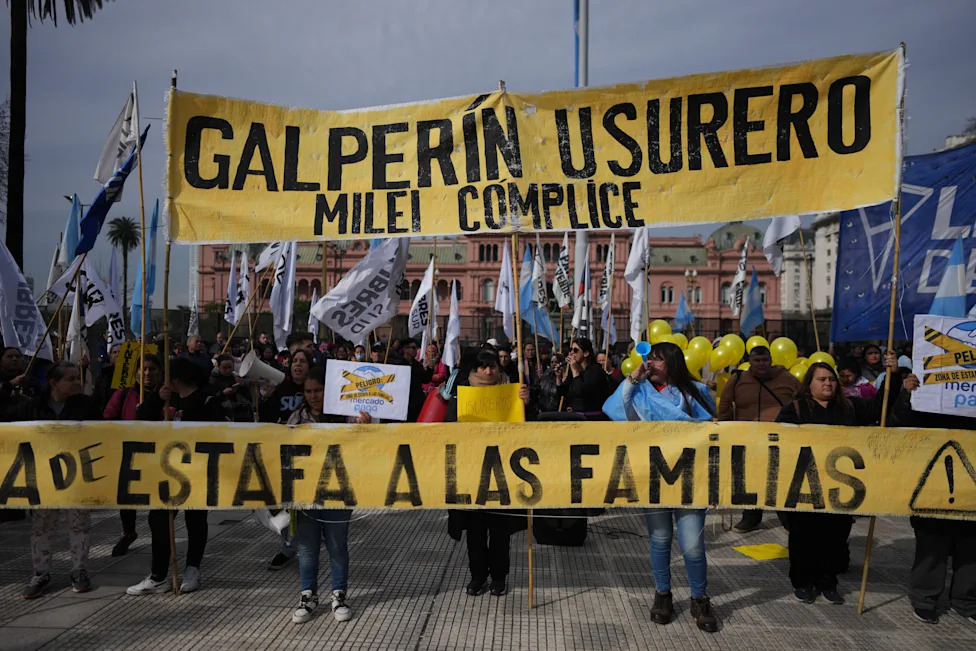
Demonstrators hold a banner with a message that reads in Spanish: "Galperin loan shark, Milei an accomplice" outside the Economy Ministry to demand government action over a household debt crisis in Buenos Aires, Argentina, Thursday, Aug. 20, 2026. (AP Photo/Victor R. Caivano, File)(AP Photo/Victor R. Caivano)
'There's hardly any work for anyone in this country right now,' Taborda said, describing how reliance on friends and family can leave people feeling 'like a parasite.'
Political Flashpoint
The surge in household debt is becoming a political test for President Javier Milei, particularly among the young voters who helped elect him. Opposition lawmakers have called a special congressional session to debate emergency measures such as caps on interest rates and new mechanisms for renegotiating loans. Labor unions and debtor groups planned protests outside the legislature during the debate.
Left-wing lawmaker Nicolás del Caño and co-sponsors described their proposal as 'an emergency measure to address the crisis,' arguing that households took on debt to survive and now cannot repay it.
President Milei has rejected calls for broad government relief, saying unpaid loans are contractual matters between borrowers and lenders. Economy Minister Luis Caputo said banks were offering eased repayment options but cautioned, 'We shouldn't confuse empathy with public policy.' Milei has also publicly blamed some delinquencies on irresponsible spending.
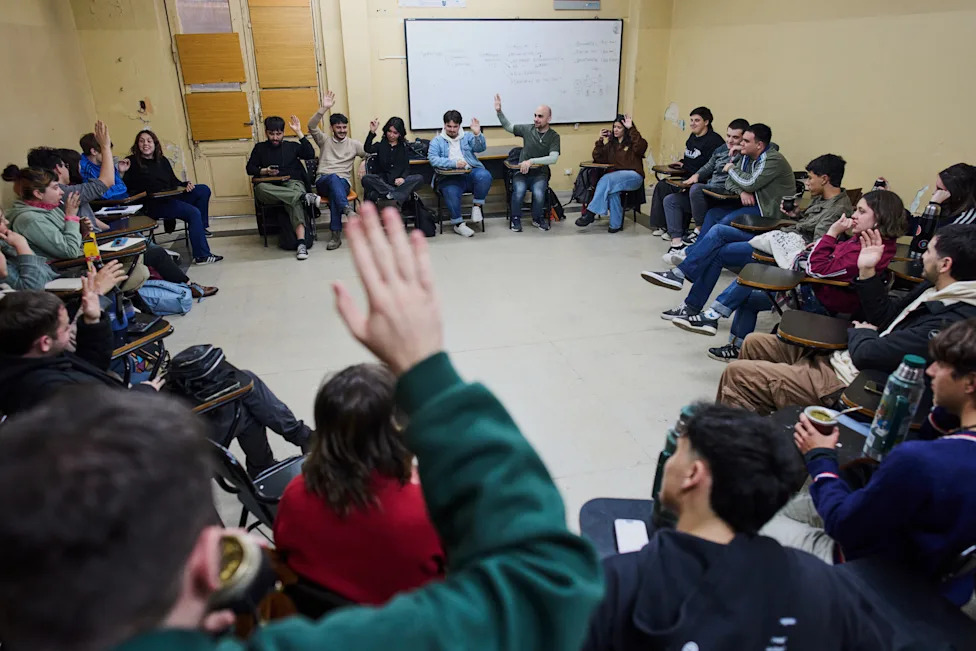
University students meet in a classroom to discuss debt in Buenos Aires, Argentina, Wednesday, Aug. 26, 2026. (AP Photo/Rodrigo Abd)(AP Photo/Rodrigo Abd)
Economic Forces Behind the Squeeze
Since taking office in late 2023, Milei's administration has cut the budget deficit and helped bring annual inflation down from a peak of 289% in early 2024 to roughly 34% by July. That macroeconomic stabilization encouraged banks to lend more, but steep cuts to subsidies for gas, electricity and public transport have pushed household bills higher than incomes.
At the same time, borrowing costs remain high under tight monetary policy. Digital payment apps, which often require less paperwork than traditional banks, can charge triple-digit annual interest to offset risk, turning small emergency loans into crushing balances for people with unstable incomes.
'There was a time when people took out loans to buy a house, an apartment, a car,' said Vanesa Bittoco, spokesperson for Organized Debtors. 'Now people take out loans to buy food to make it to the end of the month.'
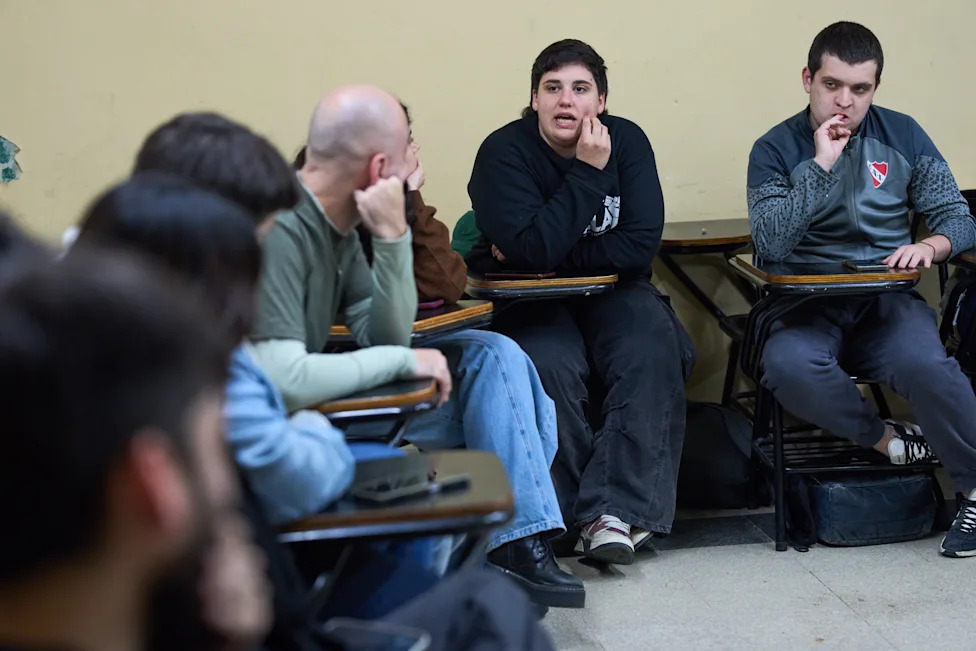
University students meet in a classroom to discuss debt in Buenos Aires, Argentina, Wednesday, Aug. 26, 2026. (AP Photo/Rodrigo Abd)(AP Photo/Rodrigo Abd)
Societal Impact and Outlook
Students who met anonymously at the university described feelings of shame, helplessness and anxiety over their futures. In an April survey of adults in Buenos Aires and its suburbs, more than 80% said economic problems had strongly affected their mental health, according to the university's Applied Social Psychology Observatory.
Analysts warn that growing financial strain among young people could erode Milei's support ahead of his potential 2027 reelection bid. Public opinion consultant Ana Iparraguirre said the model appears to be hitting young Argentines harder than other groups and that continued hardship could jeopardize Milei's backing among the electorate that helped bring him to power.
The debate over whether and how to provide relief — through caps, income-linked repayment plans or other measures — is likely to intensify as lawmakers, unions and advocacy groups press for solutions. For many young Argentines like Taborda, the question is immediate: how to keep studying and living while buried under mounting debt.
Help us improve.