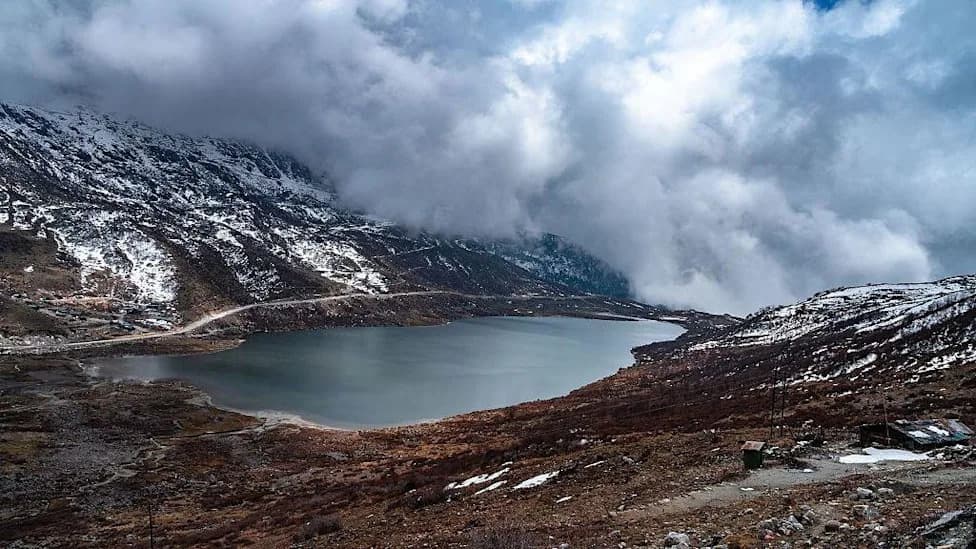
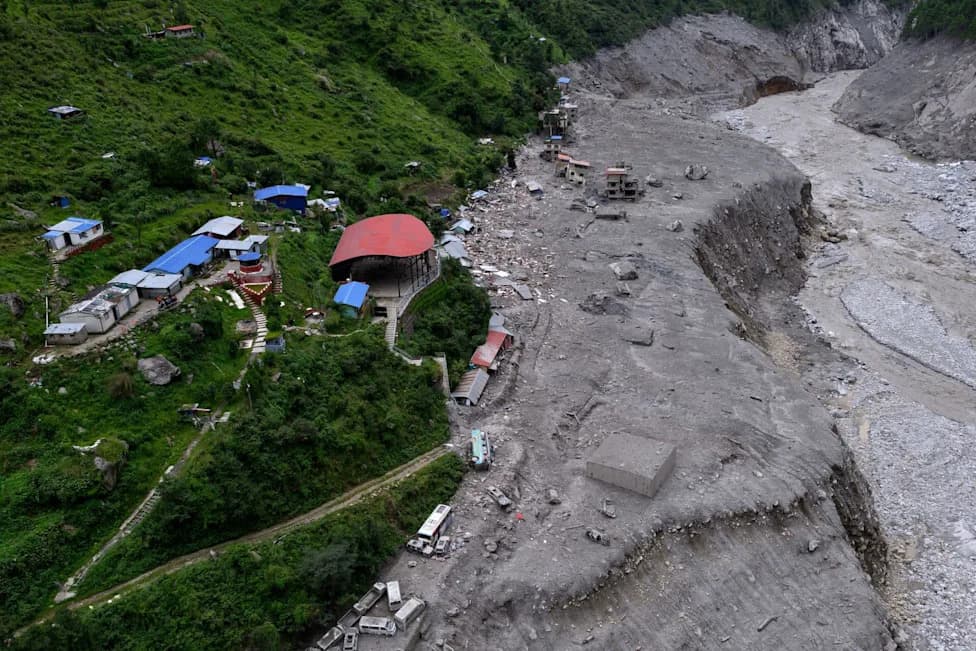
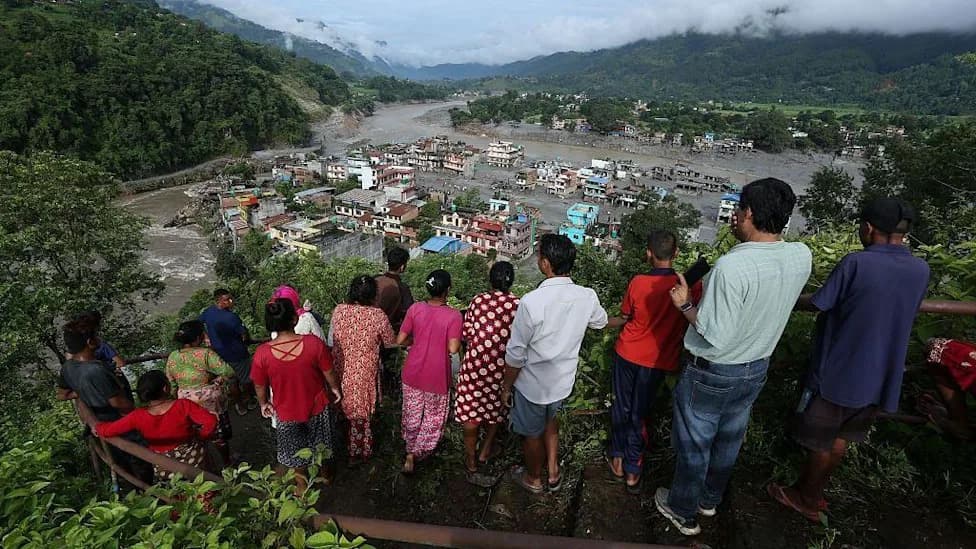
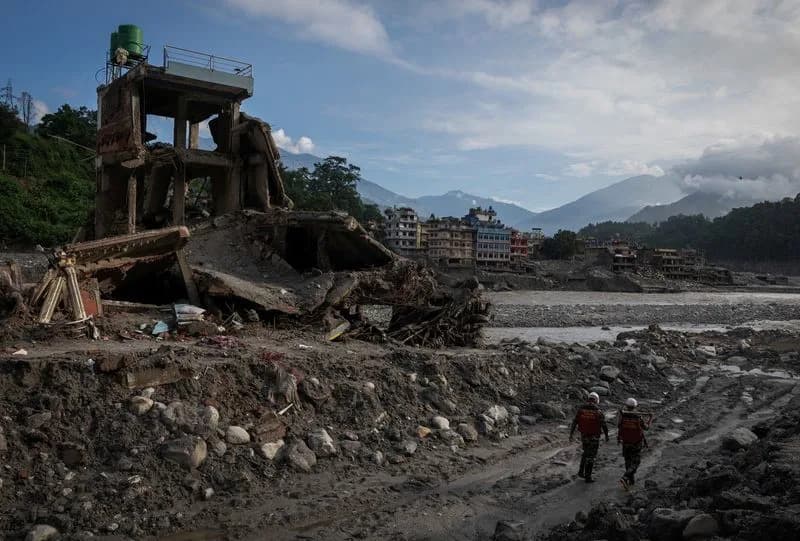
The Himalayan region is facing accelerating glacier melt, shifting monsoon patterns and growing threats from floods, landslides and glacial lake outburst floods (GLOFs). Key programs such as SERVIR-Hindu Kush Himalaya lost USAID funding in January 2025, curtailing satellite-based monitoring, daily forecasts and cross-border data sharing. Experts warn that aid contractions, rising debt burdens in the Global South and reduced long-term monitoring will deepen vulnerability and increase avoidable losses across the region.
Climate Funding Cuts Leave Millions in the Himalaya Exposed to Greater Disaster Risk
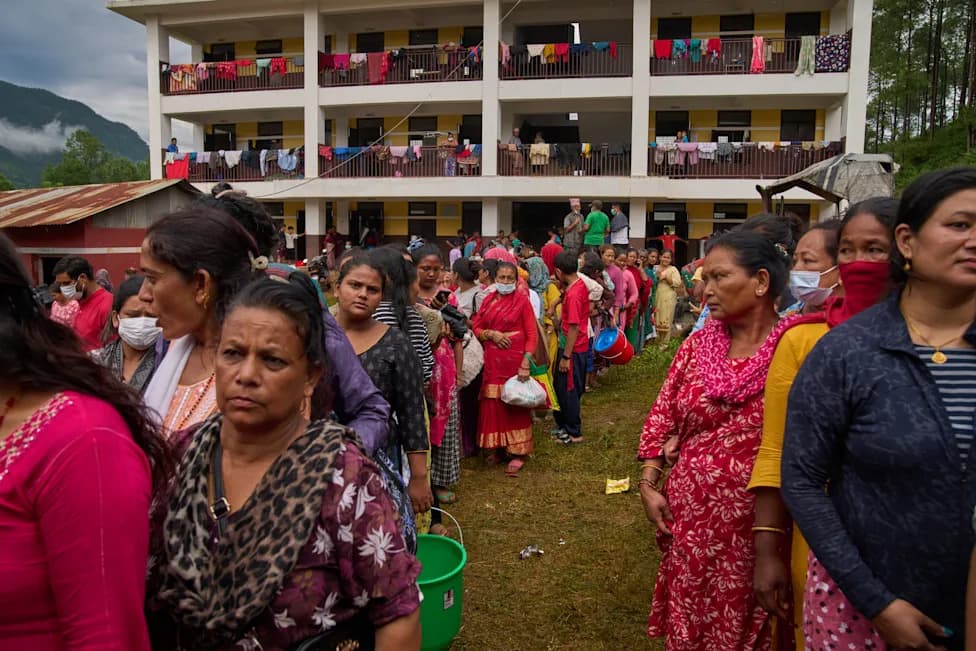
FILE - People affected by recent flash floods line up to receive aid at a school turned into a shelter in Nuwakot district, Nepal, Sept. 3, 2026. (AP Photo/Dar Yasin, File)(AP Photo/Dar Yasin)
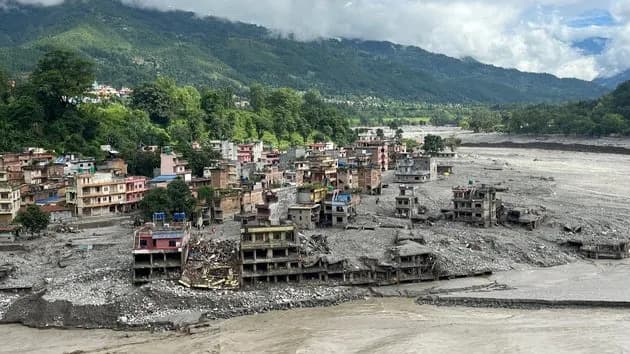
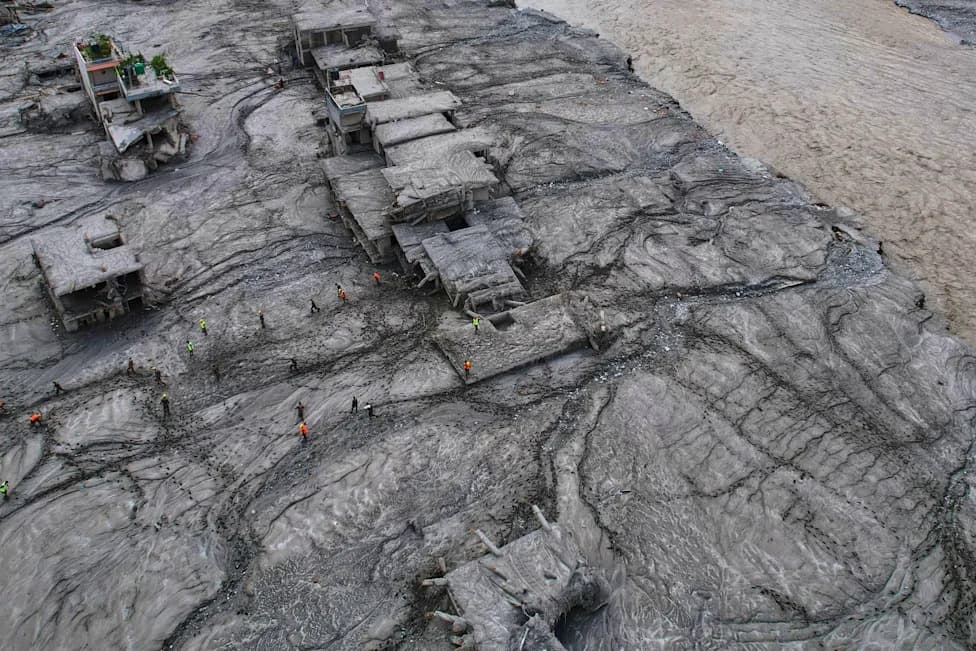
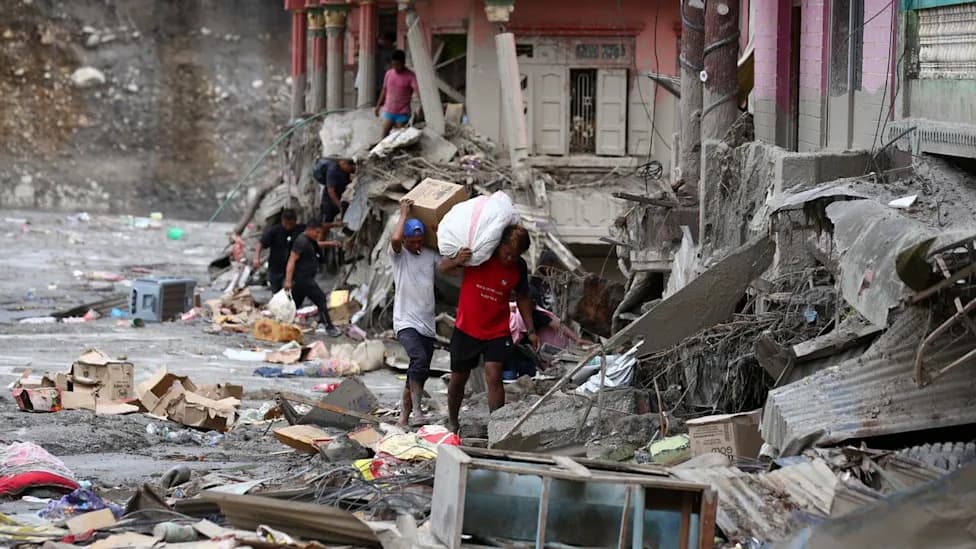
Sitting on the floor of a makeshift shelter in Kathmandu after Nepal's devastating recent floods, survivor Tenzin Dolma Ghale said she had nothing left but the clothes she wore. Her entire village and many relatives were swept away by a surge of water and debris that officials say killed more than 1,450 people and left over 6,000 missing.
She spoke quietly, then looked down and gestured toward the ground. "It's all finished," she said.

FILE - Former USAID staff and supporters rally to mark one year since USAID was dismantled Feb. 27, 2026, in Washington. (AP Photo/Allison Robbert, File)(AP Photo/Allison Robbert)
Funding Cuts, Programs Shut
As climate-driven hazards grow more frequent and intense, international programs that helped countries prepare for and respond to disasters have been sharply reduced. In 2025, abrupt cuts to U.S. foreign assistance under the Trump administration led to the elimination or severe curtailment of many initiatives that served millions worldwide. Reductions by other major donors have compounded a funding crisis for adaptation and disaster-preparedness work.
What Was Lost: SERVIR-Hindu Kush Himalaya
One prominent casualty was SERVIR-Hindu Kush Himalaya (SERVIR-HKH), a collaboration between the U.S. Agency for International Development (USAID), NASA and the International Centre for Integrated Mountain Development (ICIMOD) in Kathmandu. SERVIR-HKH supported five countries — Afghanistan, Bangladesh, Myanmar, Nepal and Pakistan — using satellite data and geospatial analysis to provide flood-risk services, land-cover monitoring and more than 170 public datasets on glaciers, disasters and vulnerability.
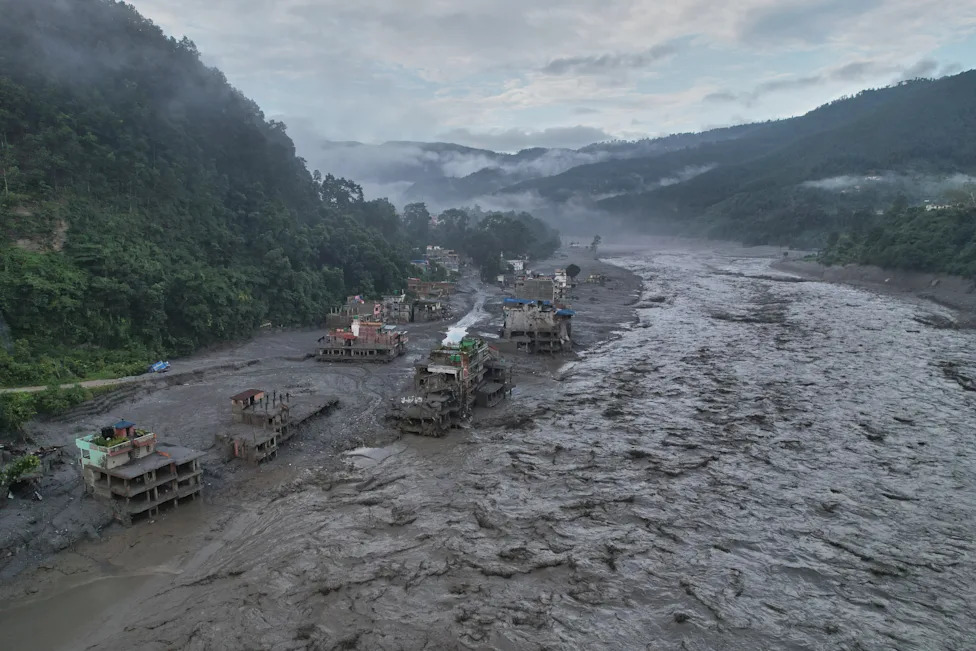
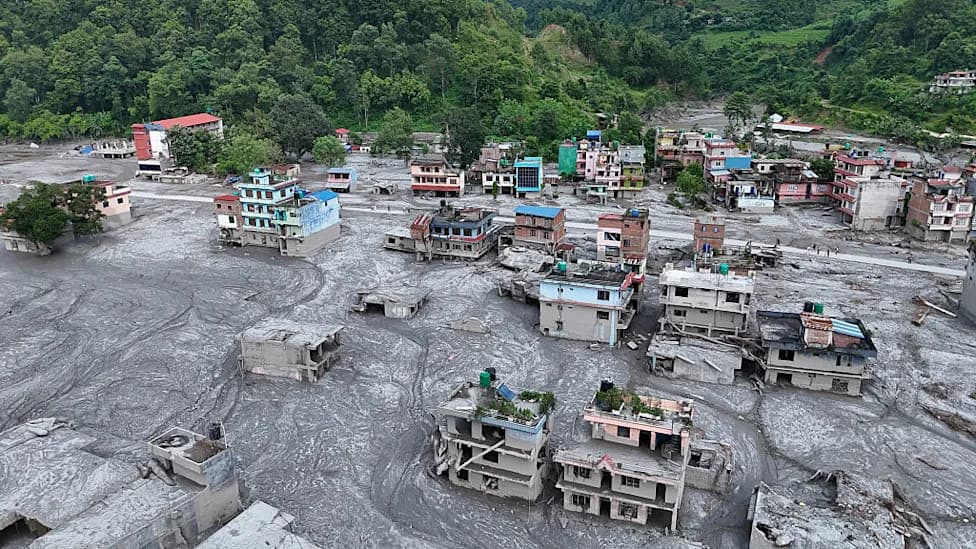
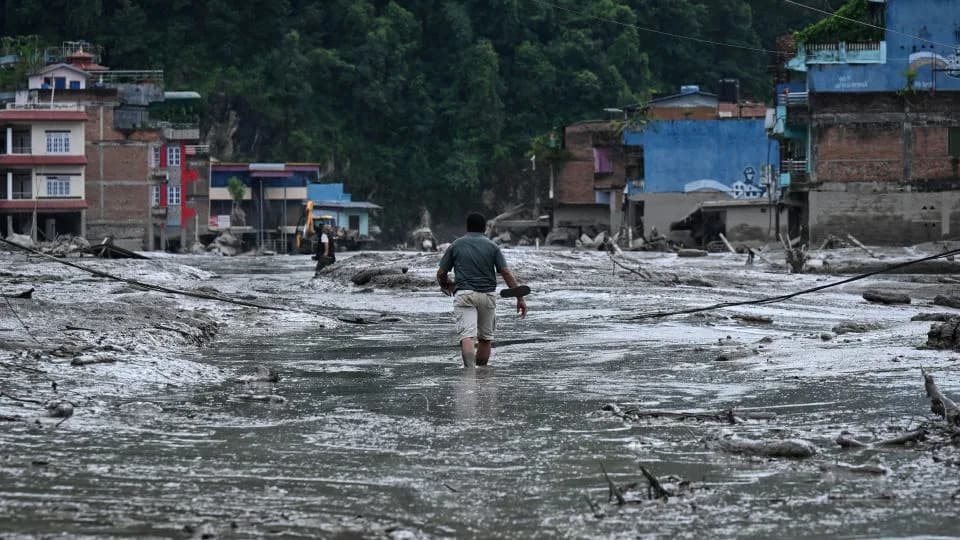
FILE - Homes sit damaged in the aftermath of flash flooding along the Trishuli River in the Trishuli Bazaar area of Nuwakot district, Nepal, Aug. 30, 2026. (AP Photo/Rajesh Kumar Singh, File)(AP Photo/Rajesh Kumar Singh)
Before USAID funding ended in January 2025, SERVIR-HKH supplied daily flood forecasts, landslide forecasting tools, training programs and cross-border data sharing that bolstered early warning systems and local preparedness. When funding ended, many of those services were halted or severely curtailed.
Escalating Climate Risks in the Himalaya
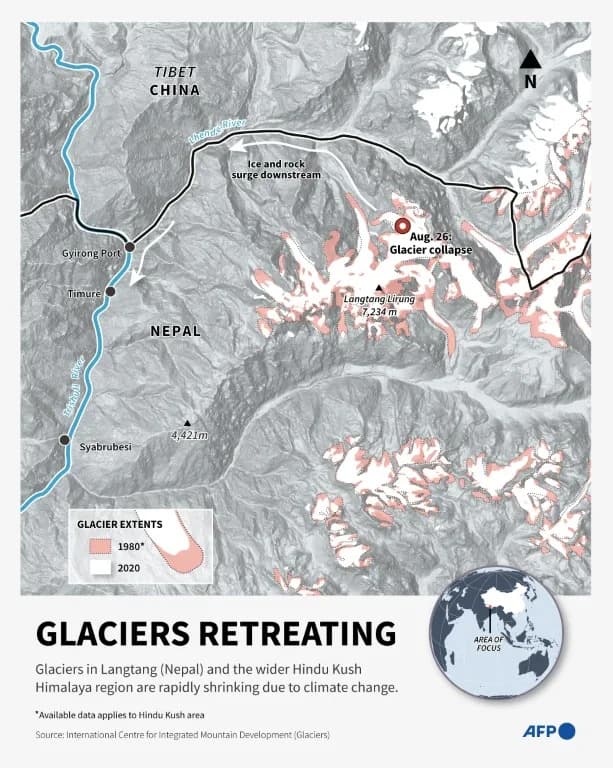
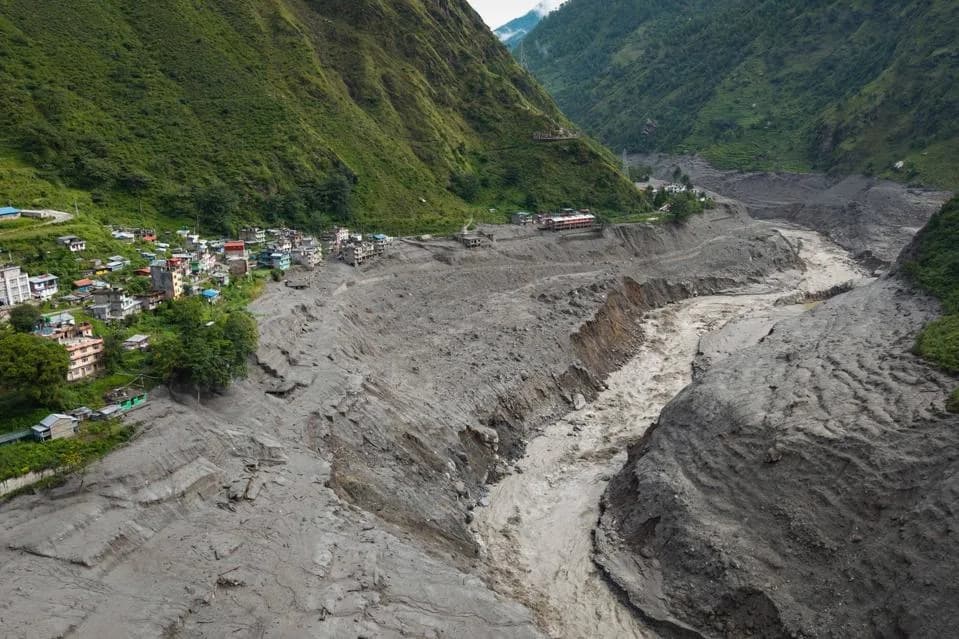
The Himalayan region is experiencing accelerating glacier melt, shifting monsoon patterns and an increase in floods, landslides and glacial lake outburst floods (GLOFs). A recent Systemiq report produced with ICIMOD found Himalayan glaciers are losing mass about 65% faster than a decade ago. Yet only roughly 0.1% of the region's estimated 40,000 glaciers are monitored in detail on a continuous basis.
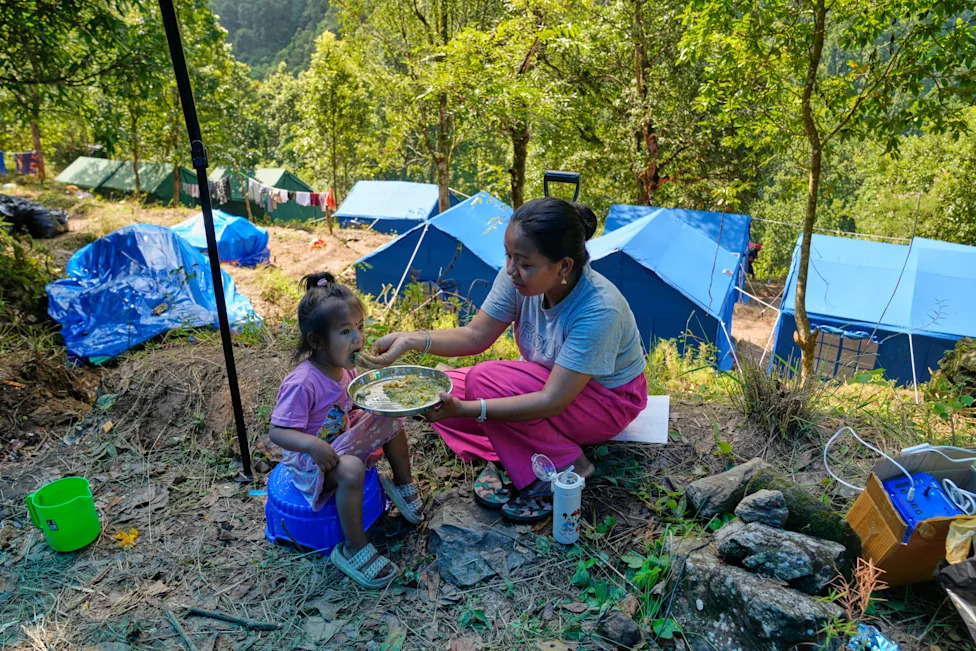
FILE - Parvati Taman, whose house was destroyed in recent flash floods, feeds her daughter Krishna Taman outside their temporary shelter on higher ground near Betrawati, Nepal, Sept. 8, 2026. (AP Photo/Dar Yasin, File)(AP Photo/Dar Yasin)
Melting has created thousands of glacial lakes: northern Pakistan alone has 3,044 glacial lakes, with more than 30 identified as likely to trigger destructive outburst floods in areas that house some 7 million people, the United Nations Development Programme reported. Research from the University of Lausanne highlights similar rising GLOF risks in Afghanistan, and India faces risk from more than 130 high-altitude lakes.
Real-World Impacts
South Asia has already faced devastating climate-related disasters: Pakistan's 2022 floods killed over 1,700 people and caused roughly $40 billion in damage. Nepal's 2025 floods killed multiple people and caused millions in losses. Over the past 15 years, cloudbursts, landslides, flash floods and extreme rainfall in the Indian Himalayas have been blamed for more than 12,000 deaths and billions in damage.
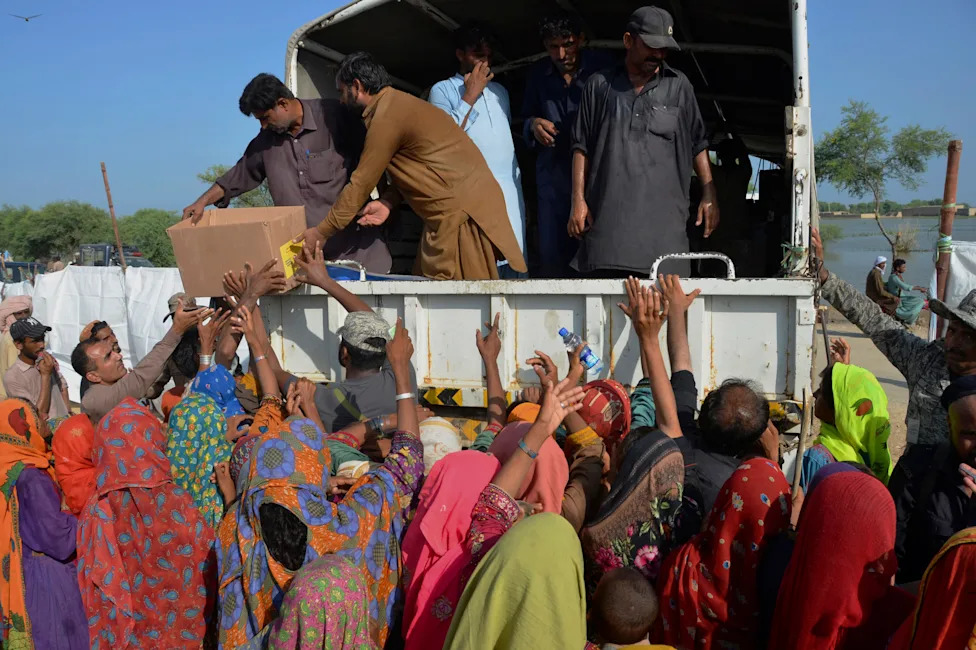
FILE - Displaced families, who fled their flood-hit homes, jostle to get relief aid distributed by soldiers of Pakistan rangers, in Dera Allahyar, in Jaffarabad, a district of southwestern Balochistan province, Sept. 17, 2022. (AP Photo/Zahid Hussain, File)(AP Photo/Zahid Hussain)
The region suffered at least $7 billion in climate-driven economic losses in 2025, according to the Emergency Events Database maintained by the University of Louvain, a resource now itself threatened by funding cuts.
Why Sustained Funding Matters
"The reality is that we need trillions of dollars every year, but developed countries have not met their obligation," said Harjeet Singh, founding director of the Satat Sampada Climate Foundation in New Delhi.
Experts warn that stopping long-term monitoring and cross-border programs risks reversing years of progress in early warning, hazard mapping and community preparedness. "Climate risk is also a generational challenge," said Neha Rai, a climate finance expert at ICIMOD. "You need long-term observations, expertise, institutions that cannot simply be switched off and on as short-term priorities."
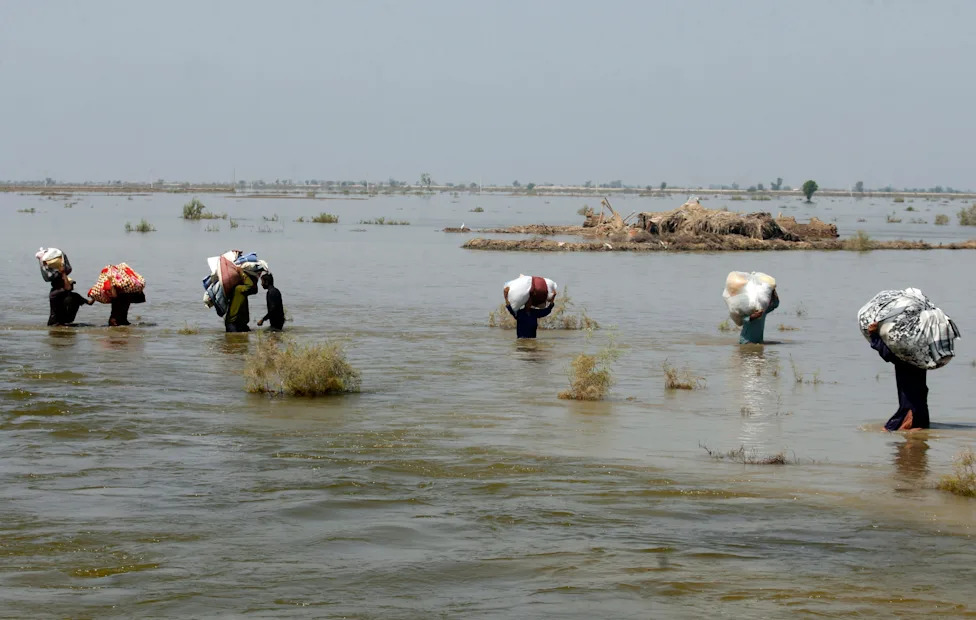
FILE - Victims of heavy flooding from monsoon rains carry relief aid through floodwaters in the Qambar Shahdadkot district of Sindh Province, Pakistan, Sept. 9, 2022. (AP Photo/Fareed Khan, File)(AP Photo/Fareed Khan)
Advocates also point to the broader financial squeeze on vulnerable countries. A report from ActionAid International found that nations in the Global South spend roughly 225 times more on debt repayments than they receive in grant-based climate finance, creating a cycle where countries borrow to rebuild and then cut investments in resilience to service debt.
Richard Sherman, a board member of the Fund for Responding to Loss and Damage, added: "There's plenty of money if it goes to certain priorities, but for climate change right now, we're witnessing a severe depreciation of the importance to act and make systems more resilient." He warned that existing disaster recovery funds are shrinking and are not scaled to meet a rising tide of extreme events.
What’s At Stake
The Himalayan region underpins agriculture, hydropower, tourism and household water supplies across multiple countries. Cuts to programs like SERVIR-HKH will have cascading effects for years: reduced early-warning capacity, weaker cross-border coordination and fewer public data resources for scientists, governments and communities trying to anticipate and reduce risks.
Maintaining and expanding long-term monitoring, shared datasets and support for local preparedness are widely seen as cost-effective investments that can reduce avoidable loss of life and economic damage. Without them, experts warn, millions of people will face higher and more avoidable risks from floods, landslides and GLOFs as the climate continues to change.
Reporting note: The U.S. State Department said that the United States continues to support Nepal's flood-warning capacity through partnerships with the World Meteorological Organization and NOAA, and that some SERVIR tools remain accessible via ICIMOD.
Help us improve.