The review led by Zhiping Zhu finds that farm manure can concentrate microplastics, leftover antibiotics and resistance genes, creating hotspots that may accelerate the spread of antibiotic resistance. Studies show animals can excrete 17%–80% of administered antibiotics and that manure may contain thousands of microplastic particles per kilogram. Biofilms on plastic surfaces can concentrate resistance genes (about sevenfold), and while high-heat treatments and anaerobic digestion reduce risk, more long-term on-farm research is needed to guide integrated mitigation.
Chinese Review Finds Microplastics in Manure Could Accelerate Antibiotic Resistance
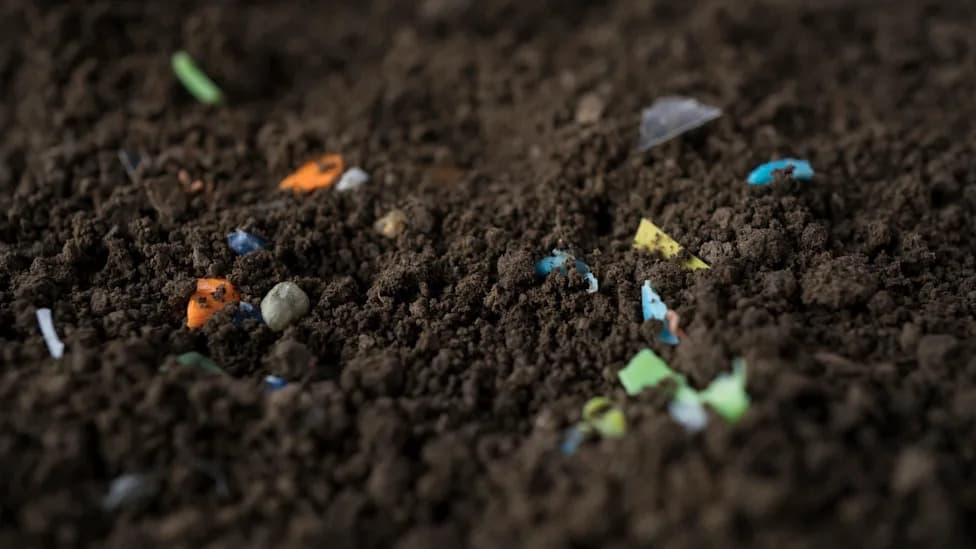
Photo Credit: iStock
A new review led by Zhiping Zhu at the Institute of Environment and Sustainable Development in Agriculture (Chinese Academy of Agricultural Sciences) warns that farm manure can act as a convergence zone for three interacting contaminants—microplastics, leftover antibiotics and antibiotic-resistance genes—potentially creating conditions that favor the spread of resistance.
Why Manure Matters
Farm animals consume the majority of the world’s antibiotics, and studies since 2010 indicate that roughly 17% to 80% of an administered dose can be excreted in urine and feces. That means manure commonly contains unmetabolized antibiotic residues together with bacteria that survived exposure.
Microplastics Amplify the Risk
According to surveys cited in the review, microplastic counts in manure can be high—about 1,250 particles per kilogram in pig manure and roughly 1,890 per kilogram in cattle manure. As plastic fragments age and weather, their surfaces can bind larger amounts of some antibiotics and become colonized by bacteria.
"Microplastics are not simply passive particles in livestock waste," Zhu said. "Their surfaces can provide places where antibiotics, bacteria and resistance genes come together, potentially creating favorable conditions for the spread of antibiotic resistance."
Biofilms, Gene Transfer and Spread
Microplastic surfaces in manure can be colonized by dense bacterial biofilms. Within these slimy communities, microbes live in close proximity, which facilitates horizontal gene transfer, including the exchange of resistance genes across species. The review reports resistance-gene levels on microplastic surfaces at roughly seven times the levels measured in surrounding material.
Environmental Pathways and Public-Health Concerns
When manure is applied as fertilizer, rainfall and runoff can transport microplastics, antibiotic residues and resistance genes into soils, waterways and groundwater, expanding both environmental and human-health risks beyond the farm boundary.
Mitigation: Partial Solutions and Promising Approaches
The review finds no single, universal fix. Mechanical separation of solids can remove larger plastic fragments and associated contaminants. Conventional aerobic composting reduced certain antibiotics by about 64.7% in one cited study, but quinolone resistance genes often persisted. In experimental settings, adding microplastics was associated with a 262.3% increase in total resistance genes and a 747% rise in a mobile gene that facilitates gene transfer.
Higher-heat treatments show greater promise: ultrahigh-temperature composting under a semipermeable membrane reduced resistance genes by roughly 92% and cut mobile genetic elements by about 93% in chicken manure. Anaerobic digestion also appears to lower resistance-gene abundance in some cases.
Research Gaps and Recommendations
The authors emphasize that direct, conclusive evidence for a synergistic, three-way effect (microplastics + antibiotics + resistance genes) is still limited. Outcomes vary with particle size, degree of weathering, composting or digestion conditions, and many studies examine only one or two of the factors rather than all three together. The review calls for longer-term, on-farm studies that directly compare single, double and triple contamination scenarios to better understand real-world risks and effective controls.
Bottom line: Manure may be a critical hot spot where plastics and antibiotics meet bacteria and resistance genes; addressing this issue will likely require integrated mitigation strategies and targeted, long-term field research.
Help us improve.