The EU-funded Minagris project found microplastics in all 227 agricultural fields it sampled across 11 European countries and published 22 peer‑reviewed studies. Microplastics form plastisphere hotspots that concentrate pollutants, microbes and antibiotic-resistance genes, and can change how pesticides and veterinary drugs behave in soil. Experiments showed microplastics reduce plant growth (e.g., lettuce) and worsen drought impacts; tyre-wear particles were linked to higher toxic chemical and metal levels. Researchers warn biodegradable plastics can still fragment into harmful microplastics and call for standardized monitoring, manufacturer transparency and broader risk assessments.
Microplastics in Soil Act as a 'Trojan Horse' — Spreading Toxins, Antibiotic Resistance and Harming Crops
Pexels
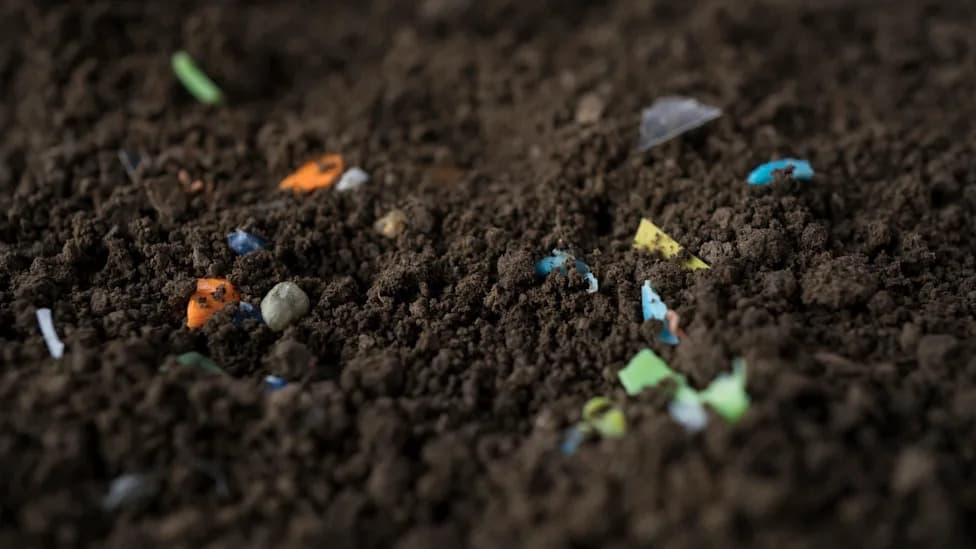
A five-year, EU-funded research programme has found that microplastics in agricultural soils can act like a "Trojan horse," ferrying pollutants, pesticides and microbes — including antibiotic-resistance genes — through soil ecosystems. The Minagris project, which has produced 22 peer-reviewed studies, detected microplastics in every one of the 227 agricultural fields sampled across 11 European countries, a discovery the researchers say represents a broader threat to soil health worldwide.
Key Findings
Microplastics were found to interact with other agricultural stressors, such as pesticides and veterinary medicines, changing how those chemicals behave and potentially increasing their mobility and persistence in soil. In one Swiss study, fields with the highest concentrations of tyre-wear particles also showed the highest levels of associated toxic chemicals and heavy metals.
The research highlights the formation of a "plastisphere": microplastic surfaces that become hotspots for microbial life and chemical interactions. These plastispheres frequently contained elevated levels of antibiotic-resistance genes compared with surrounding soil, and pesticide exposure appeared to amplify that effect.
“Smaller microplastic particles are more likely to adsorb pollutants, microbes and DNA, creating a Trojan horse effect that can increase the spread of pathogens and antibiotic-resistance genes,” said Professor Edoardo Puglisi, a project partner and microbiologist at the Catholic University of the Sacred Heart, Piacenza.
Ecological and Agronomic Impacts
Several studies in the project documented harm to soil organisms and plants. Microplastics disrupted key soil processes — including nutrient cycling — and negatively affected earthworms and other fauna that shape the soil microbiome and sustain soil functions. Plant experiments, including trials with lettuce, showed that higher microplastic concentrations reduced leaf area, chlorophyll content, photosynthetic efficiency and overall biomass. These negative effects intensified when drought stress was combined with microplastic exposure.
The project also evaluated biodegradable plastics and found they are not automatically a safe alternative: some biodegradable materials still fragment into small particles that persist in soils and can act as vectors for agrochemicals.
Policy Implications
Researchers urge policymakers to treat plastic contamination as part of a wider suite of soil degradation issues rather than as an isolated pollutant. Recommendations include standardized monitoring of plastics in soils, full transparency from manufacturers about plastic composition and degradation, and comprehensive risk assessments that evaluate how microplastics interact with co-pollutants across multiple species and environmental conditions.
“Once these plastics fragment into the ground, they're practically impossible to remove, acting as vectors for agrochemicals and altering critical soil ecosystems,” said Esperanza Huerta Lwanga, research associate in soil physics at Wageningen University.
Collectively, the Minagris findings underline the need for urgent action to protect long-term food production and soil health by addressing microplastics alongside other agricultural pollutants.
Source: Summary of reporting by Pippa Neill for The Guardian and results from the EU-funded Minagris project.
Help us improve.