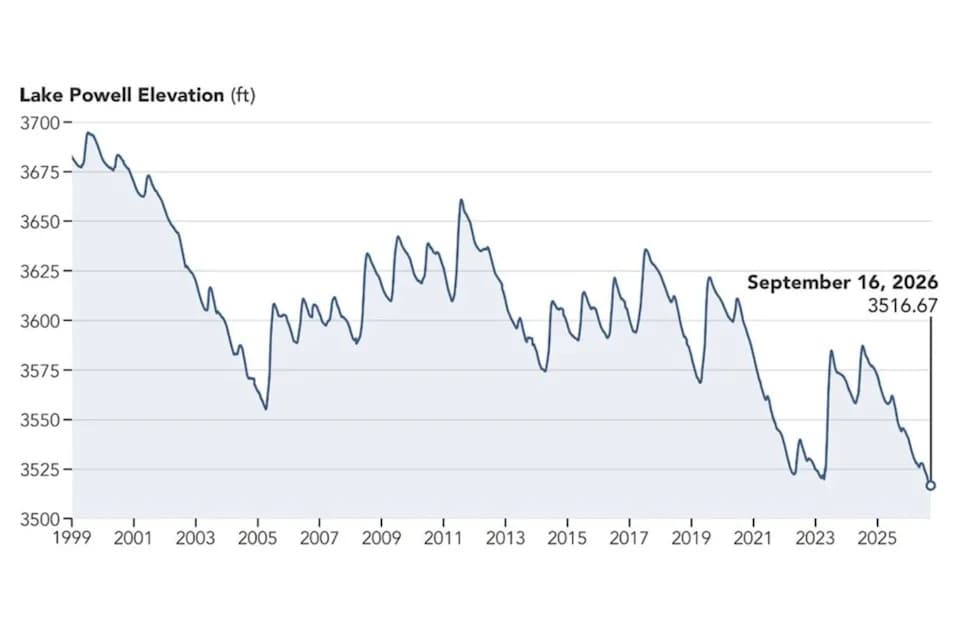
The Great Salt Lake is shrinking due to upstream diversions, prolonged drought and warmer temperatures, leaving more than 800 square miles of exposed lakebed that can produce arsenic-laden dust. Utah aims to raise the lake roughly 7 feet before the 2034 Winter Olympics under the Great Salt Lake 2034 Charter, backed by $200 million in private commitments. Restoration measures include irrigation upgrades, water meters, invasive-plant removal and voluntary water leasing, but experts warn recovery could cost billions and requires major reductions in water use.
Utah Rushes To Refill Great Salt Lake Before 2034 Olympics As Dust, Wildlife And Water Supply Hang In The Balance
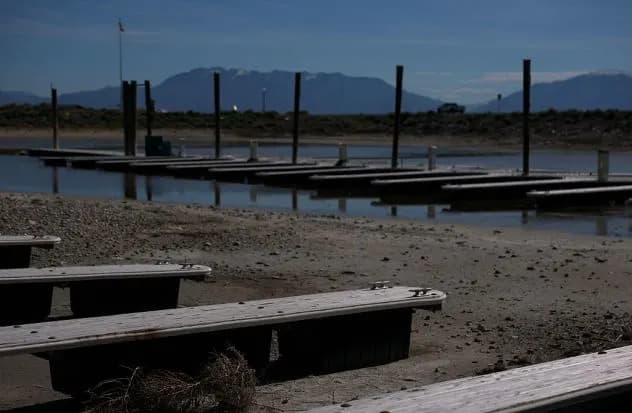
Boat docks sit on dry earth at the Great Salt Lake's Antelope Island Marina on April 08, 2026 near Syracuse, Utah. (Photo by Justin Sullivan/Getty Images)
State leaders in Utah are racing to send more water to the rapidly shrinking Great Salt Lake well before the 2034 Winter Olympics, a push with consequences for public health, wildlife and the region’s long-term water security.
Current Crisis
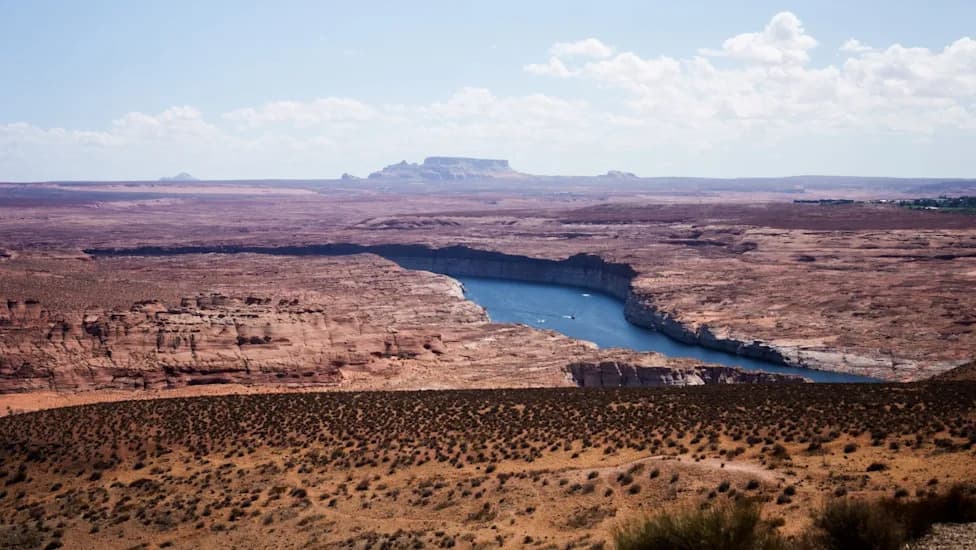
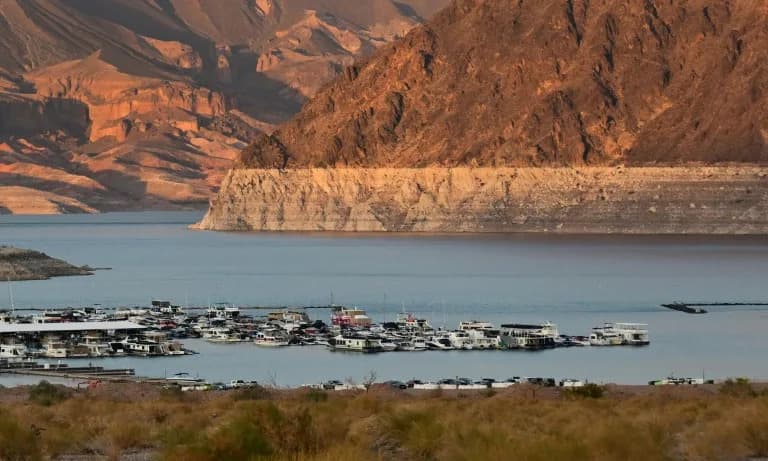
The Great Salt Lake — the largest saltwater lake in the Western Hemisphere — has receded dramatically. More than 800 square miles of former lakebed are now exposed and, when winds pick up, can release dust that university researchers have found to contain arsenic and other contaminants. That dust can affect air quality across communities that together house over two million people.
Why It’s Happening
Scientists point to a combination of factors: drought, rising temperatures and particularly upstream water diversions. Researchers estimate current diversions are roughly 30% higher than what the lake system can sustainably support. As water is used for agriculture, homes and industry before reaching the basin, inflows to the lake drop and the shoreline retreats.
Ecological And Public-Health Risks
The lake supports millions of migrating birds and a unique food web based on brine shrimp. As wet areas disappear, so do feeding and breeding habitats. Visitors and residents report stark changes: "As a kid, the lake was full," one visitor recalled. Another warned, "Once we have no water, we're done." The loss of surface water also raises concerns over toxic dust exposure and long-term respiratory and environmental health impacts.
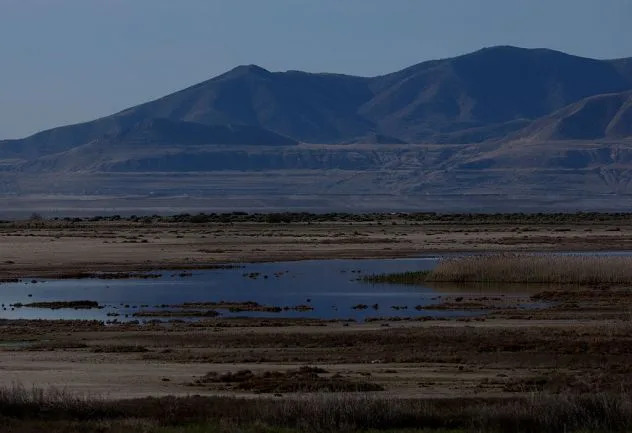
Low water levels are visible at the Great Salt Lake on April 08, 2026 near Syracuse, Utah. (Photo by Justin Sullivan/Getty Images)
What Utah Is Doing
Utah has launched a multi-pronged restoration effort that includes improving agricultural irrigation efficiency, installing water meters so communities can track consumption, removing invasive plants that consume large amounts of water, and using voluntary water-leasing programs to send more water downstream to the lake.
In September 2025, state leaders announced the Great Salt Lake 2034 Charter, securing $200 million in private commitments and setting a target to raise the lake roughly 7 feet by the time the 2034 Winter Olympics arrive. Officials say the deadline provided by the Games helps mobilize funding and public attention.
Costs And Outlook
Experts, including University of Utah atmospheric scientist Kevin Perry, say restoring the lake will likely cost billions of dollars and require sustained reductions in water use across the region. Perry emphasized both the scale of the challenge and a cautious optimism: "It is possible to save the lake," he said, while noting the work will demand long-term commitments from communities, agriculture and policymakers.
"The Olympics are useful because they give us a target date. The last thing anybody wants to see is global coverage about how the Great Salt Lake is an ecological disaster." — Kevin Perry, University of Utah
While drought and warming increase the urgency, conservation and targeted policy actions could slow or reverse some of the lake’s decline. The next decade will be critical for determining whether the Great Salt Lake can be brought back to healthier levels and whether the region can avoid broader environmental and public-health consequences.
Help us improve.