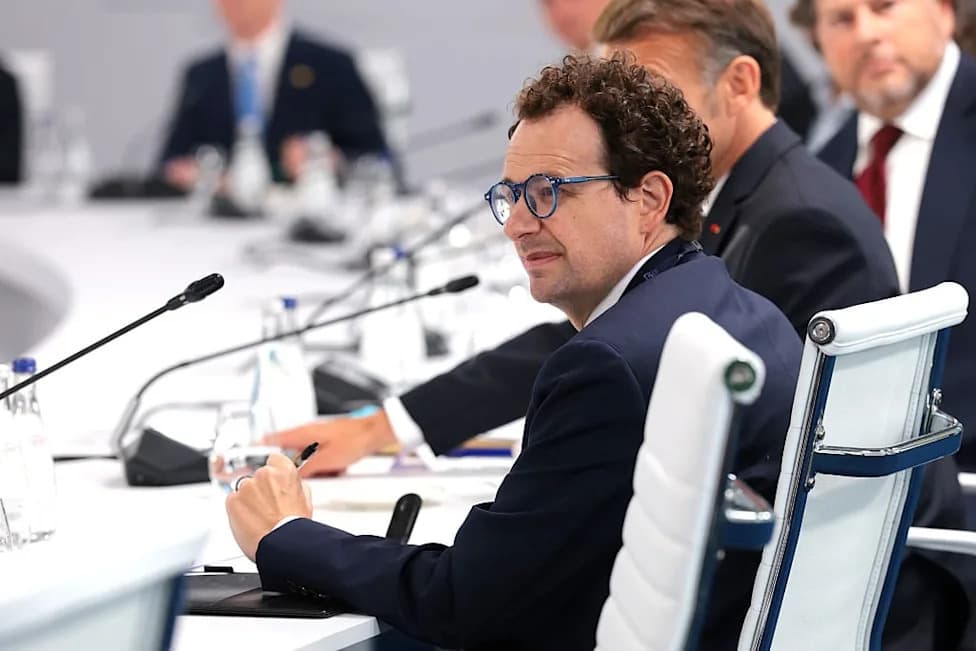
Tom Siegel, founder of Google’s trust and safety group, has joined Common Sense Media to lead its Youth AI Safety Institute and is calling for a slowdown in AI development to better protect children. He warns AI may present risks greater than social media, including suicide, psychosis and reduced critical thinking. Siegel urges stronger age verification, product controls to disable risky features, and independent safety standards akin to crash testing.
Ex-Google Safety Chief Urges Slowdown in AI, Warns Children Could Face Greater Harm Than From Social Media
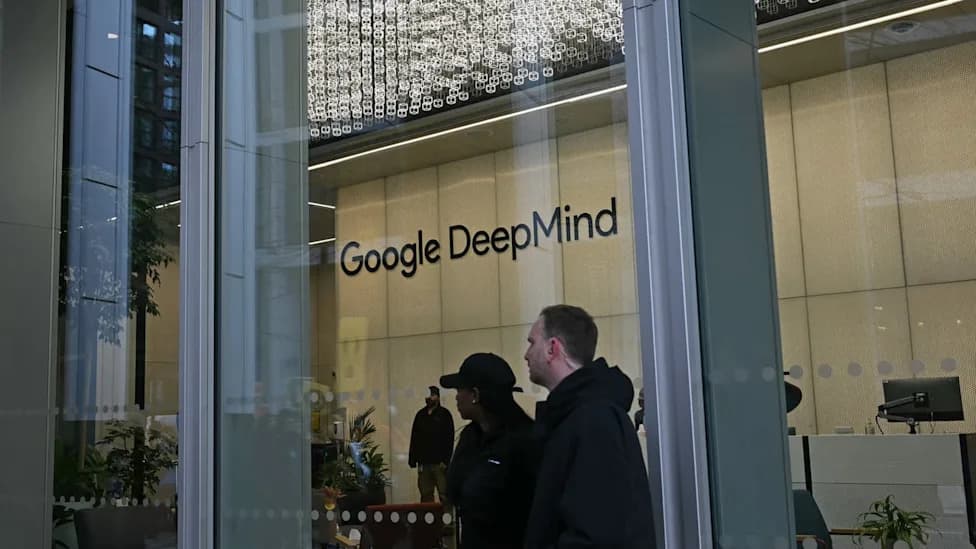
FILE PHOTO: A specially designed Google logo, during the opening of Google's new Artificial Intelligence (AI) centre in Berlin, Germany, March 5, 2026. REUTERS/Annegret Hilse/File Photo
SAN FRANCISCO — Tom Siegel, the founder of Google’s trust and safety team, this week urged a pause in parts of AI development, warning that the technology could inflict harms on children that exceed those caused by social media.
Siegel told Reuters he believes the industry is repeating mistakes from the social media era and that expecting companies to solve these problems without outside pressure is unrealistic. "We find ourselves in a really terrible situation in terms of what AI is doing to kids," he said.
New Role At Youth AI Safety Institute
Siegel announced he has joined Common Sense Media as executive director of the Youth AI Safety Institute, a research initiative launched in May to study how children use AI and to develop safety standards. Backers of the institute include Anthropic and the OpenAI Foundation.
After a long career at Google (2004–2019), Siegel co-founded TrustLab, a company that created tools to detect online safety threats. He stepped down as CEO earlier this month to take his new position at the institute.
Risks Identified
Siegel listed a range of potential harms from unfettered AI exposure for young people, including increased risks of suicide and psychosis, and "cognitive offloading" — a decline in critical thinking and problem-solving when children rely on AI to supply answers and make decisions.
"The idea that the industry will figure it out by itself without outside help is unrealistic," Siegel told Reuters.
Recommended Measures
He proposed immediate, practical steps firms could take to reduce risk: stronger age verification and detection systems to limit underage access to chatbots, and simple product controls such as toggles to disable AI Overviews or AI Mode in search. Siegel compared the institute’s proposed standards to independent safety testing, similar to automotive crash tests, to quantify risks from public AI tools.
Siegel acknowledged these measures could reduce short-term usage or revenue, but warned that companies that fail to act may face heavier legal and regulatory consequences down the line.
Industry Responses
Google said parents have controls to block a child’s access to search and described its AI Search features as an "incredibly useful way for kids and teens to learn, explore and make sense of information and the world." OpenAI said it uses account and behavioral signals in addition to self‑reported age and continuously tests and improves its safeguards. Anthropic did not immediately respond to requests for comment.
At Common Sense Media, Siegel said the institute will focus on creating independent, measurable safety standards and on working with companies when possible — while preparing for regulatory or legal escalation if industry cooperation falls short.
(Reporting by Kenrick Cai in San Francisco; Editing by Kenneth Li, Kevin Buckland and Matthew Lewis)
Help us improve.