Independent newsrooms are increasingly using WhatsApp, SMS, WeChat and native-language social media to reach immigrant communities that mainstream outlets often miss. Organizations such as Documented, El Tímpano and Conecta Arizona run chat groups, verification services and workshops that teach people to spot and respond to misinformation. Their hyper-local work has driven policy attention, expanded membership for outlets like LA Taco and helped thousands of immigrants access timely, verified information.
How Independent Newsrooms Use WhatsApp, SMS and Native-Language Social Media to Reach and Protect U.S. Immigrants
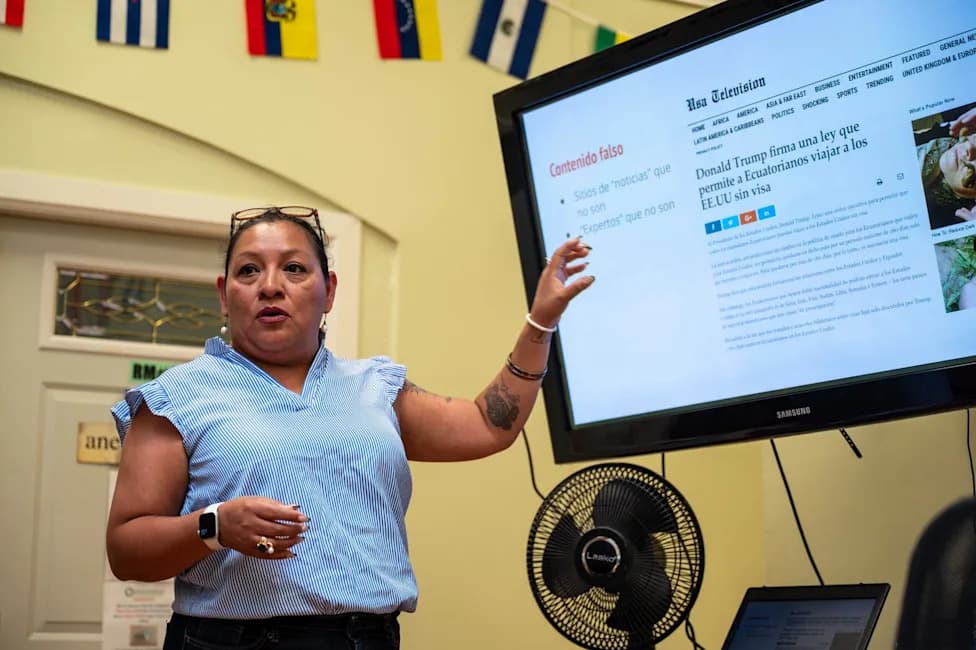
El Tímpano's community outreach coordinator, Etel Calles, leads a disinformation defense training in Oakland, California.Photograph: Hiram Alejandro Durán for El Tímpano/CatchLight Local/Report for America
When Allan Marrero, an asylum seeker from the Cayman Islands, was released after five months in immigration detention, he invited only one journalist to his celebration: Eileen Grench of the independent nonprofit newsroom Documented. Grench had covered Marrero's detention and, crucially, reported on his humanity and family story as well as the legal case.
That trust produced deep access and powerful reporting: New York City mayor Zohran Mamdani even amplified Grench's story when Allan was freed. Documented is part of a growing ecosystem of independent, immigrant-focused newsrooms that are filling gaps left by understaffed legacy outlets. These organizations are using chat apps, SMS and native-language social platforms to deliver timely reporting, verify rumors, and counter misinformation for communities that often do not get news from mainstream websites or push alerts.
Meeting Audiences Where They Are
Traditional distribution models assume audiences read websites or follow push notifications. But many immigrants prefer messaging apps like WhatsApp, region-specific platforms like WeChat, or short-form social media in their native languages. WhatsApp alone is used by more than half of Latinos in the U.S., making it a key channel for reaching Spanish-speaking communities.
To meet those audiences, Documented runs a Spanish-language WhatsApp group, a WeChat group for Chinese speakers and a TikTok presence in Haitian Creole aimed at fighting misinformation about ICE activity and predatory scams. Conecta Arizona created La Hora del Cafecito, a WhatsApp group launched during the pandemic that hosts weekly Q&A sessions with immigration attorneys, education experts and labor-rights specialists. As ICE activity increased, members shifted from public group chat to private one-on-one messages for safety and privacy.
Hyper-Local Listening, Training and Verification
El Tímpano, a Bay Area outlet whose name literally means 'eardrum,' combines SMS outreach with community workshops. The outlet's disinformation initiative, Comunidades Informadas, reaches more than 7,000 Spanish-speaking residents by text and has trained over 400 Latino immigrants to spot and respond calmly to rumors such as alleged ICE raids. Those trainings teach people to verify tips, check trusted sources and contact local rapid-response hotlines.
'Misinformation thrives when there is a vacuum of good information, and immigrant communities are so vulnerable because of the lack of alternatives,' said Madeleine Bair, founder of El Tímpano.
These newsrooms emphasize listening tours and direct community dialogue. As Conecta Arizona's Maritza Félix explained, listening closely to members means adapting quickly: what works one week may need to change the next if community sentiment or public-safety conditions shift.
Coalitions, Funding and Policy Impact
Last year Documented and Conecta Arizona launched the Immigrant News Coalition (INC) alongside the Listening Post Collective, El Tímpano and the Sahan Journal to share best practices and pool resources. The effort received a $1.5 million award from the Press Forward Foundation to test and scale revenue models for immigrant-serving newsrooms, with additional support from Democracy Fund.
These outlets have produced measurable results. Documented's Wage Theft Monitor—an investigation into wage theft that analyzed state and federal data over several years—helped spur New York legislators to introduce bills aimed at preventing and penalizing wage theft. In Los Angeles, LA Taco built trust through cultural reporting and then provided verified daily updates during ICE sweeps; reporter Memo Torres' Daily Memo helped grow LA Taco's membership from about 1,500 to 77,000.
Creative approaches also matter: LA Taco artist Ivan Ehlers uses political cartoons and short-form visuals to capture attention and prompt further engagement. One cartoon about Flock camera surveillance drew more than 7 million Instagram views and inspired fan translations in multiple languages.
Why This Matters
Independent immigrant-focused newsrooms operate hyper-locally, building trust through listening, verification and culturally relevant formats. They are not simply translating mainstream headlines; they create news with immigrant communities in mind, adapt to privacy concerns, and equip communities with tools to counter misinformation. That combination of trust and agility helps prevent panic during rumors, connects people to legal and social services, and occasionally drives policy change.
Key figures in this coverage include reporters and founders such as Eileen Grench, Mazin Sidahmed, Max Siegelbaum, Lam Thuy Vo, Maritza Félix, Madeleine Bair, Memo Torres and Ivan Ehlers, along with community partners like rapid-response groups and public libraries that host trainings.
Help us improve.