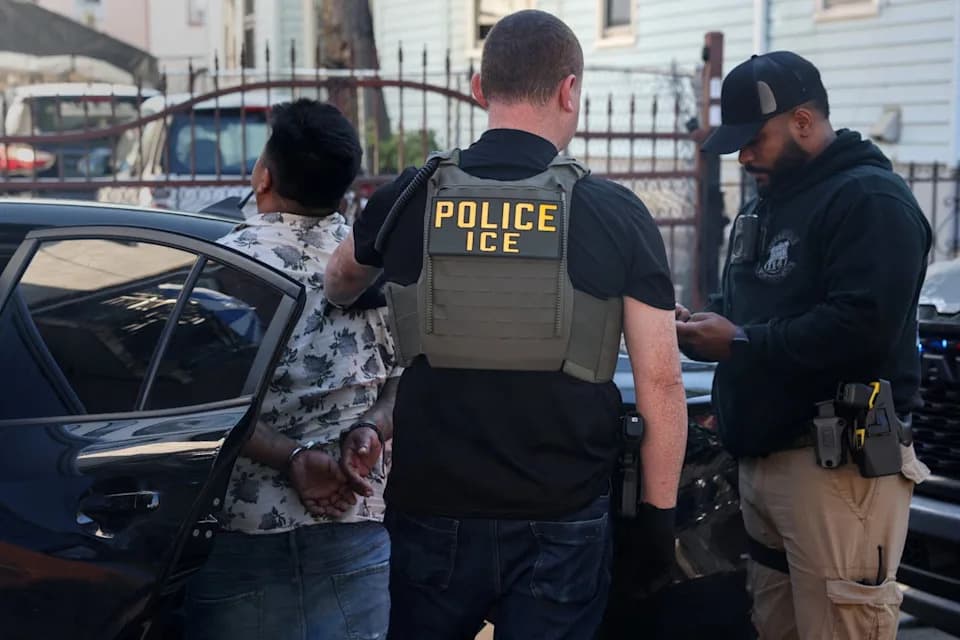
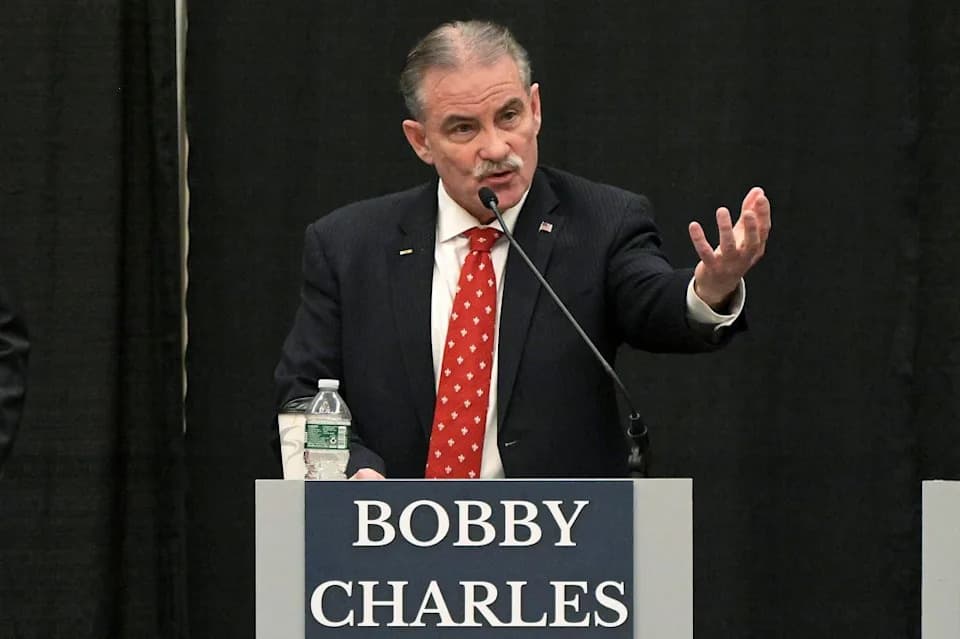
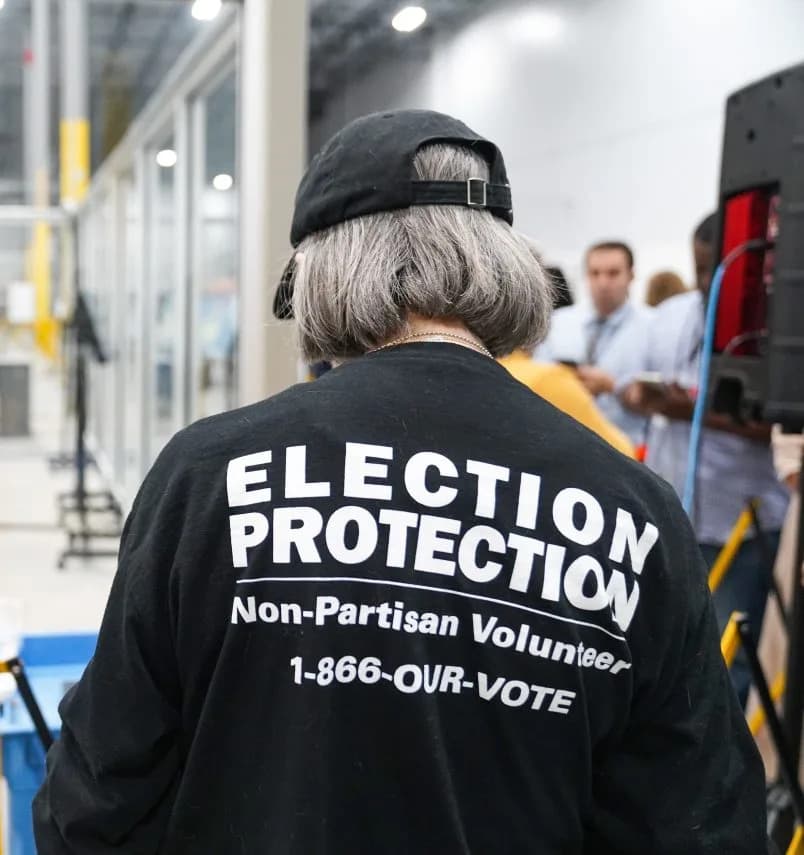
Arizona advocates with the Arizona Center for Empowerment are building an interactive map to report live sightings of ICE agents near polling places and to show historical enforcement in Maricopa and Pima counties. Advocates say increased ICE presence could suppress turnout; state and federal officials have offered competing statements. The Department of Homeland Security says ICE is not planning targeted operations at polling locations, while the Justice Department warned election officers they could face prosecution for knowingly retaining noncitizens on voter rolls.
Arizona Advocates Build Live Map Tracking ICE Sightings Near Polling Places
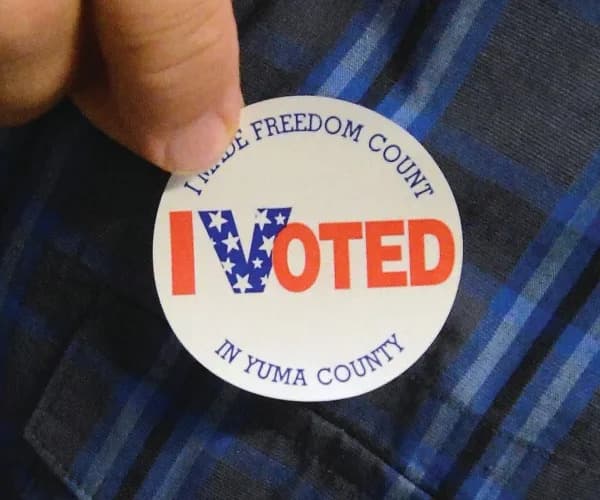
A man attaches his "I VOTED" sticker to his shirt after voting at the Martin Luther King Jr. Neighborhood Center, 300 S. 13th Ave., polling site Tuesday morning. (Randy Hoeft/The Yuma Sun via AP)
Arizona immigration advocates are developing an interactive online map to notify voters and community members when federal immigration agents are observed near polling locations this fall.
The project, led by the Arizona Center for Empowerment and first reported by Axios, will display live reports of U.S. Immigration and Customs Enforcement (ICE) sightings and include historical enforcement records for Maricopa and Pima counties, the state’s two most populous counties.
Why Advocates Say The Tool Is Needed
Karime Rodriguez, a spokesperson for the Arizona Center for Empowerment, said the group has noticed an uptick in ICE activity in those counties.
"Just the simple threat of ICE presence is enough to keep somebody from voting," Rodriguez said, adding that the activity appears to be "all a coordinated effort to keep people away from voting and to make voting more confusing and less accessible."
Federal And State Responses
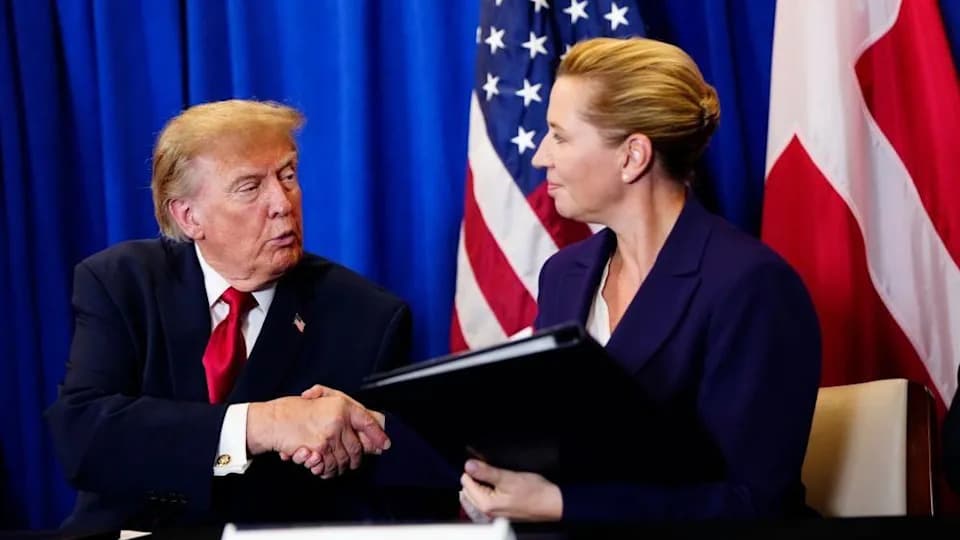
Officials and advocates have offered competing perspectives. In May, when asked whether he might send ICE agents or National Guard troops to polling places, President Donald Trump said he would "do anything necessary to make sure we have honest elections." Arizona’s Republican-led state Senate considered legislation that would have required county election officials to coordinate with federal immigration authorities to allow a federal presence at polling locations in November; that measure did not become law.
State Sen. Jake Hoffman defended the proposal in a news release: "When voters see the rules applied fairly and consistently, confidence in the outcome follows."
At his confirmation hearing, Homeland Security Secretary Markwayne Mullin dismissed some concerns about ICE at polling places, saying, according to coverage, that "if you're not a citizen, you shouldn't be voting anyways, so technically there shouldn't be illegals at the polling spot."
An unnamed Department of Homeland Security representative told Axios by email that "ICE is not planning operations targeting polling locations," and added that anyone posing an active public-safety threat at a polling place could be arrested through targeted enforcement.
Guidance And Legal Warnings
The Arizona secretary of state’s office advised county election officials to prepare for contingencies through trainings and by building relationships with local law enforcement. Separately, the U.S. Department of Justice sent a July 7 letter to Arizona’s secretary of state warning that election officers who knowingly retain noncitizens on voter rolls or count their ballots could face prosecution. Nearly identical letters were reportedly sent to other states.
In a three-page letter to Arizona Secretary of State Adrian Fontes, Assistant Attorney General Harmeet Dhillon, who heads the Justice Department’s Civil Rights Division, warned that "any election officer, including the chief election officer of the state, who knowingly retains noncitizens on the state's (statewide voter registration list) or facilitates noncitizens in receiving and casting ballots could be subject to criminal liability."
Outlook
The map initiative underscores tensions between efforts to protect voter access and concerns about immigration enforcement near polling sites. Advocates say the tool will help communities stay informed; officials emphasize that targeted enforcement, not broad operations at polls, is the department’s stated approach. The debate is likely to continue as elections approach and local groups prepare for potential incidents.
Help us improve.