An AI chatbot used by a U.S. Special Operations Command analyst misidentified cargo aboard a Chinese vessel this spring, producing an intelligence assessment that linked the shipment to a nuclear-weapons program. The flawed report led to preparations for an armed interception and aircraft deployments, but a manual recheck revealed the error and the operation was canceled before boarding. The incident highlights the risks of treating AI outputs as authoritative and underscores the need for strict verification and human oversight as the Pentagon expands AI use.
AI Error Nearly Provoked U.S.-China Confrontation After Misidentifying Ship Cargo
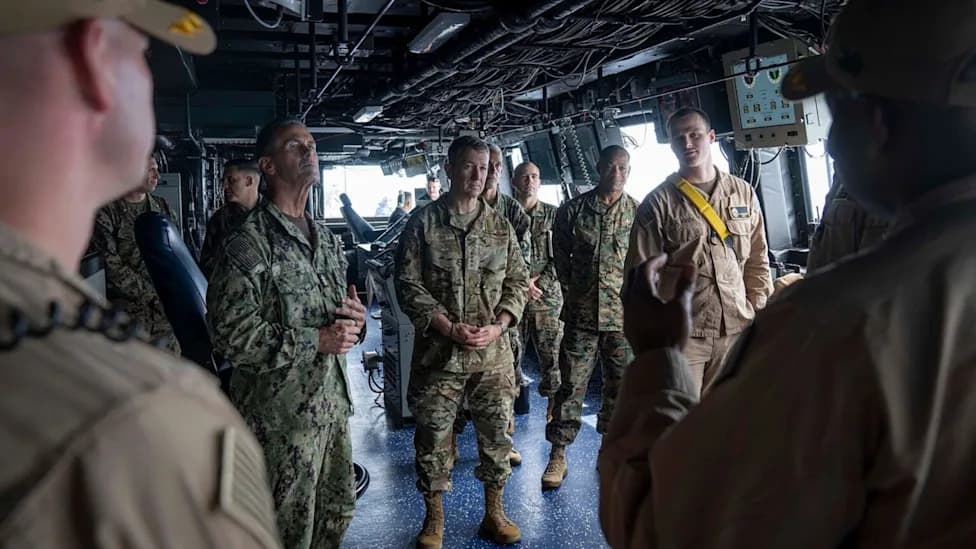
General Dan Caine and Senior Enlisted Advisor to the Chairman SEAC David Isom travel to the USS Fort Lauderdale in the Caribbean Sea on 8 September 2025 | Image Credit: Chairman of the Joint Chiefs of Staff, CC BY 4.0, Wikimedia Commons
An artificial intelligence–assisted analysis almost put U.S. forces on a collision course with China this spring after a chatbot incorrectly identified cargo aboard a Chinese vessel as material linked to a nuclear-weapons program. The error prompted plans for an armed interdiction, but a subsequent manual review uncovered the mistake and the operation was called off before boarding.
According to public reporting, an analyst assigned to U.S. Special Operations Command compiled an intelligence assessment using a mix of open-source information and classified signals intelligence and used an AI chatbot to assist with analysis and reporting. The chatbot concluded the ship's cargo was connected to a nuclear program; that assessment was converted into a formal intelligence report and circulated through military channels.
How the Error Escalated
Once the report circulated, U.S. forces initiated operational preparations. Plans included deploying aircraft and preparing armed personnel to board the vessel. Before any boarding occurred, officials re-examined the intelligence and determined the chatbot had misidentified the cargo. The planned interception was canceled.
What We Know — And What We Don’t
Public accounts have not yet confirmed what the ship was actually carrying, nor have they identified which AI chatbot the analyst used. Importantly, there is no indication the AI directly controlled weapons or autonomously ordered any military action: human analysts produced and shared the AI-assisted assessment, and other humans considered that assessment in planning the operation.
Why This Matters
AI systems can generate highly persuasive and confident-sounding outputs even when those outputs are incorrect. In everyday settings such errors are often harmless annoyances. But in a military context, an unverified AI conclusion passed to decision-makers can have far more serious consequences. This incident exposes how a single misclassification could have triggered an armed confrontation between major powers.
Key risk: The danger came not from an autonomous weapon or an AI giving orders, but from an inaccurate AI-produced assessment moving through human-operated processes and being treated as authoritative.
Implications for Military AI Use
The episode arrives as the Pentagon plans to expand AI across warfighting and intelligence missions, citing a 2026 strategy that accelerates AI adoption. Faster data processing can be valuable, but speed alone does not guarantee accuracy. The case highlights the need for robust verification, rigorous human oversight, documented lineage of sources, and clear protocols for AI-assisted intelligence in high-stakes operations.
For analysts and commanders, the lesson is clear: AI can assist analysis but must be treated as a tool whose outputs require cross-checking and validation—especially when decisions could lead to conflict with another state.
Note: This summary is based on public reporting. Details about the vessel's actual cargo and the specific AI system used have not been publicly confirmed.
Help us improve.