Singapore's Land Transport Authority now warns that passengers who eat on buses or prop their feet on seats can be fined up to Sg$500 (about US$390). More serious offences classified as "soiling"—including vomiting, urinating, spitting or smearing surfaces—can carry fines up to Sg$5,000 (about US$3,900). The changes align bus rules with the MRT network and aim to improve safety and cleanliness; authorities say they will exercise discretion for commuters with health conditions.
Singapore Imposes Fines Up To Sg$500 For Putting Feet On Bus Seats; Harsher Penalties For 'Soiling'
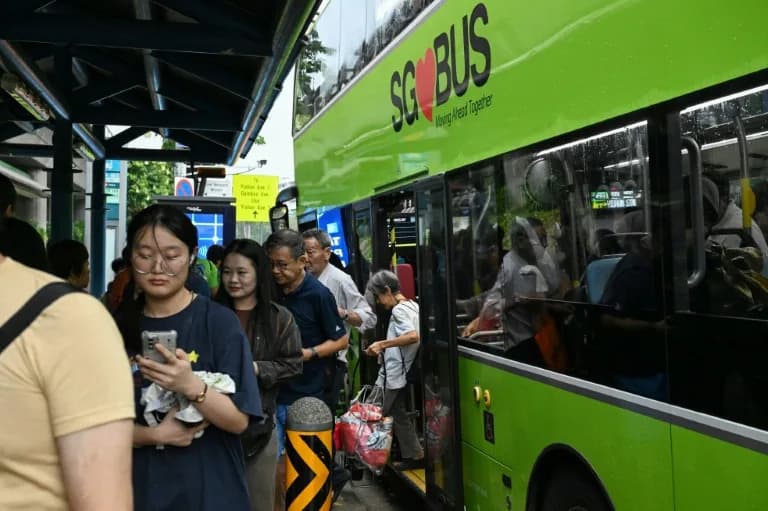
People alight from a public bus in Singapore on September 21, 2026. Riders who eat on public buses or put their feet on the seats now face a nearly Sg$500 ($392) penalty in Singapore, officials said September 21, a new example of no-nonsense rules in "Fine City". (Roslan RAHMAN)
Singapore's Land Transport Authority (LTA) has tightened conduct rules for public buses: passengers who eat on buses or rest their feet on seats may face fines of up to Sg$500 (about US$390), while more serious cleanliness or safety breaches classified as "soiling" can attract penalties of up to Sg$5,000 (around US$3,900).
The LTA said the move brings bus enforcement into line with standards on the Mass Rapid Transit (MRT) network and is aimed at creating a "safer, more considerate and pleasant public transport environment." Enforcement guidance clarifies the meaning of "soiling":
- Vomiting, urinating, spitting, or spilling bodily fluids on seats, floors or handrails;
- Smearing surfaces with food, mud, grease or similar substances;
- Other serious cleanliness breaches that risk hygiene or passenger safety.
The LTA emphasised that officers will apply "discretion and fairness" when enforcing the rules, particularly for commuters with physical or mental health conditions. Officials also note that enforcement will focus on more serious or deliberate incidents rather than minor, unintentional lapses.
Singapore’s strict approach to behaviour in public spaces—reflected in an extensive schedule of fines and the often-cited "Fine City" nickname—has a long history. A widely remembered example is the 1992 chewing-gum ban, introduced after discarded gum interfered with metro doors and caused delays.
LTA statement: "These updated rules aim to protect commuters and preserve a pleasant travel environment, while ensuring fair treatment for those with genuine health needs."
Passengers should expect clearer enforcement of existing social norms on buses, with penalties scaled to the severity of the offence and safeguards for vulnerable riders.
Help us improve.