Singapore has launched a five-year campaign that pays residents small sums for logging daily reading sessions, aiming to counteract shrinking attention spans and doomscrolling. The pilot rewards one 15-minute session per day with 20 virtual coins; 1,000 coins redeem for SG$1 (about US$0.80), requiring 50 qualifying days per payout. The initiative includes a charity goal of 7.5 million reading minutes (up to SG$150,000) and will be refined during the pilot. Experts are divided over whether financial nudges create lasting reading habits or only short-term behavior change.
Singapore Pays Citizens to Read — Can Cash Combat Doomscrolling?

A man reads a book in a public library in Singapore on March 19, 2020. - Suhaimi Abdullah/Getty Images
Singapore has launched a novel national push to rebuild sustained reading habits by offering small cash rewards to residents who log daily reading sessions on an official platform. The five-year initiative, led by the National Library Board (NLB), uses gamification and community goals to nudge people away from short-form feeds and toward longer-form reading.
How the Program Works
The pilot phase began this month and runs through the end of the year, with the broader campaign planned for five years. Participants record one daily reading session (minimum 15 minutes) on the government platform and earn 20 virtual coins per session. After collecting 1,000 coins, users can redeem them for SG$1 (about US$0.80). Because only one session can be logged per day, that equates to 50 qualifying days to earn the dollar reward.

A customer searches for a book in the shelves of used books at The Book Barn on September 26, 2025 in Niantic, Connecticut. - Robert Nickelsberg/Getty Images
Goals, Charity And Design
The NLB says the program is designed to turn reading into a repeatable habit by combining a points system with collective participation. A charity component aims to aggregate 7.5 million logged reading minutes this year, which the organization says could translate into up to SG$150,000 (about US$118,300) for nominated causes.
"While short-form content helps us stay informed, long-form reading strengthens attention, critical thinking and imagination," NLB chief Melissa Tam said. "Ultimately, we want to see a nation of readers who are curious, thoughtful, discerning and equipped to navigate an increasingly complex world."
Why Officials Are Betting On Gamification
Policymakers point to falling attention spans and global concerns about the rise of "doomscrolling" — endless, shallow consumption of short online clips and feeds — as reasons to intervene. International assessments have shown slipping reading scores among some countries, and educators warn that digital distraction is disrupting deep reading in classrooms.

A man reads a newspaper at Pek Kio Market and Food Center in Singapore on February 10, 2023. - Amrita Chandradas/The Washington Post/Getty Images
Loh Chin Ee of Singapore's National Institute of Education, who researches reading behaviour, says a 15-minute daily session offers a practical entry point: long enough to encourage deeper engagement but short enough to be achievable amid busy routines.
Local Reactions And Risks
Reactions in Singapore are mixed. Supporters welcome anything that gets people away from attention-sapping digital noise: "I would rather see people reading and miss their train stop or their bus stop than hear the constant sounds of TikTok," said Charmaine Lim, a content creator. Community organisers such as book-club leaders report renewed interest in leisure reading among adults.
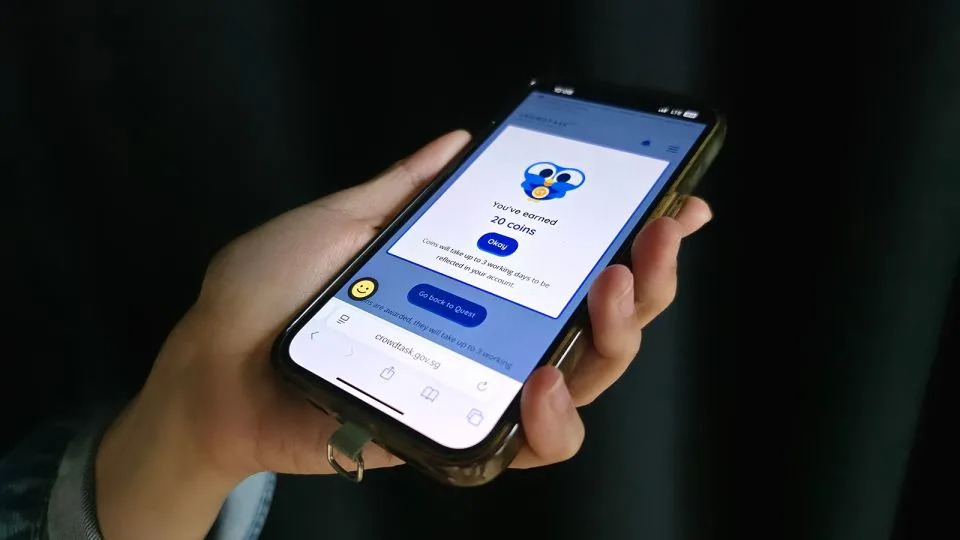
Singaporeans can log their daily reading session on the CrowdTask SG site as part of the country's multi-year national reading campaign. - CNN
Critics and some researchers caution that monetary rewards can undermine intrinsic motivation. "Monetary rewards work well for people who are already somewhat interested in reading, but for those with no existing interest at all, cash incentives may be a hard sell for cultivating a lasting, intrinsic motivation to read," said Charissa Ng, a clinical psychologist in Singapore.
What Comes Next
The pilot will introduce new features and collect user feedback before wider rollout. Whether modest cash payments can outcompete algorithm-driven dopamine loops is uncertain. Still, in a country with a track record of successful public campaigns — from cleanliness drives to civility initiatives — officials hope a small nudge plus thoughtful design will encourage more people to pick up longer-form texts.
Photo captions in the original article referenced bookshops and readers in Singapore and abroad.
Help us improve.