New geochemical analyses of Himalayan granite suggest previously unrecognized Gondwanan crustal fragments, increasing Gondwana’s estimated share of Earth’s continental mass from about 64% to roughly 80%. This revised 'Greater Gondwana' surpasses the 75% threshold commonly used to define a supercontinent. The authors link the larger landmass to the formation of a planet-spanning volcanic-arc system whose emissions of water vapor and CO2 likely warmed the planet and influenced environmental changes during the Ediacaran–Cambrian transition. The finding reframes how plate tectonics and volcanism may have helped pave the way for complex animal life.
Scientists Uncover ‘Greater Gondwana’: Missing 16% Found in Himalayan Rocks
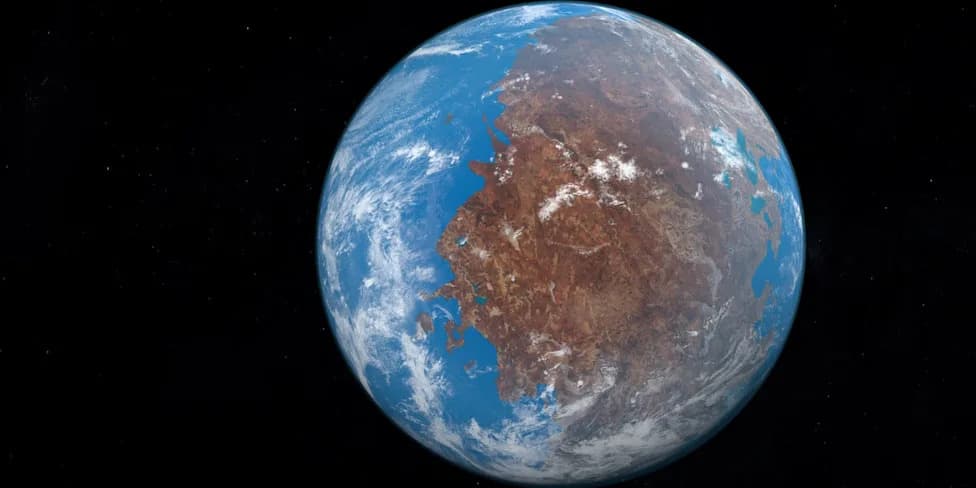
A Supercontinent Forever Changed Life on EarthIanm35 - Getty Images
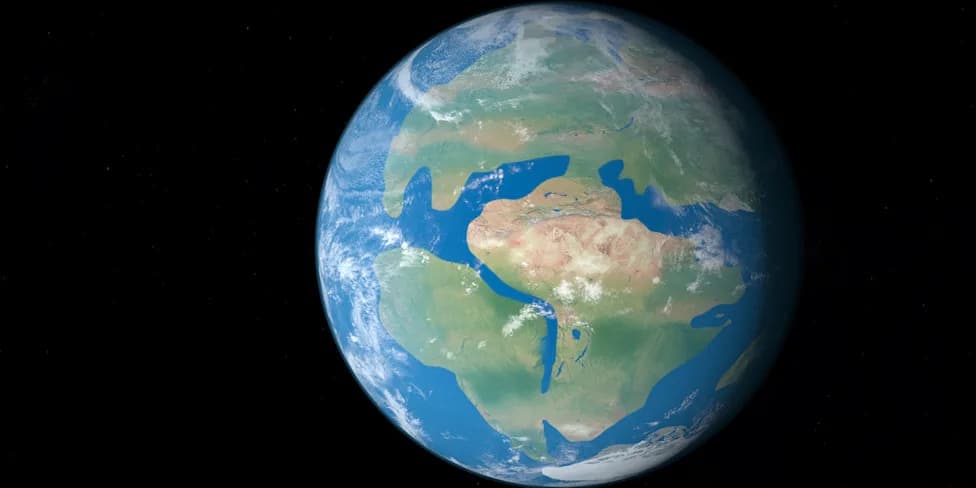
Researchers report that granite signatures preserved in Himalayan rocks reveal crustal fragments belonging to a larger-than-expected Gondwana—raising long-standing estimates of the supercontinent’s size and reshaping ideas about how tectonics influenced Earth’s early environment and the rise of complex life.
New Evidence from Granite Geochemistry
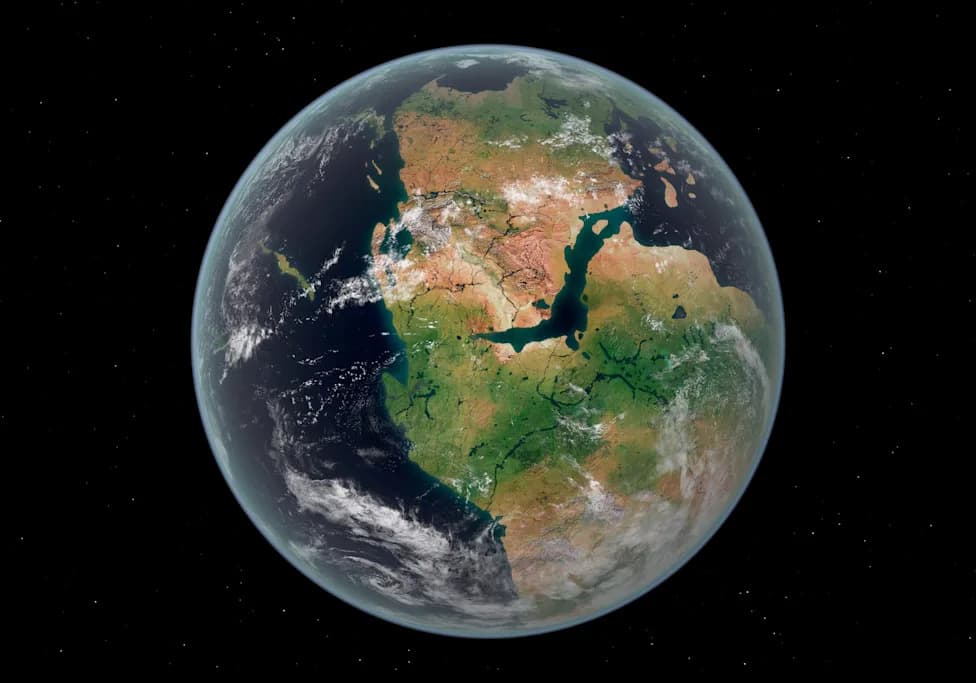
A team compiling a global granite database discovered Himalayan samples whose geochemical and isotopic fingerprints match continental material traced back to Gondwana. Although some Himalayan granites yielded ages of roughly 20–50 million years, their signatures indicate derivation from older continental fragments. By accounting for these previously unrecognized pieces of crust, the authors estimate that Gondwana encompassed about 80% of Earth’s continental mass—about 16 percentage points more than earlier estimates and above the common 75% threshold used to define a supercontinent.
Why Size Matters
The study argues that this 'Greater Gondwana' would have altered global plate configurations and driven the development of an extensive volcanic-arc girdle—an ancient precursor to a Ring-of-Fire-style belt. Such long-lived volcanic activity would have vented large volumes of gases, including water vapor and carbon dioxide, changing climate and ocean chemistry over geologic time. Those greenhouse effects, the paper suggests, may have helped warm and stabilize conditions that contributed to environmental changes around the Ediacaran–Cambrian transition, a critical interval for the emergence and diversification of complex animals.
"We have traced the original Gondwanan fragments from India and southeast Asia, through most of China into Kazakhstan," Curtin University co-author Bill Collins wrote in The Conversation. The new mapping revises previous interpretations that treated much of this region as ancient ocean floor.
Broader Context
Gondwana was one of several major ancient supercontinents—alongside Columbia, Rodinia, and later Pangea—that assembled and broke apart over Earth’s 4.5-billion-year history. Reconstructing the extent and configuration of these landmasses matters because continental assembly drives tectonics, volcanism, ocean circulation, and climate—key controls on Earth’s habitability and the evolution of life.
Study Source: The research appears in Science Advances and ties new granite data from the Himalayas to a revised tectonic map spanning India, southeast Asia, China and Central Asia.
Help us improve.