The Smithsonian's nationwide search for a new secretary is unfolding amid heightened political pressure from the Trump administration, which has ordered temporary signs at the National Museum of American History and criticized the institution's exhibits as overly 'woke.' Lonnie Bunch III will retire at the end of 2026 after defending the museum's independence. The Board of Regents faces multiple vacancies and a stalled appointments process, raising concerns the White House could reshape governance. Observers say the next secretary will need museum credentials plus political savvy and strong crisis-management skills.
Smithsonian Leadership Search Tests Independence as Trump Administration Escalates Culture War
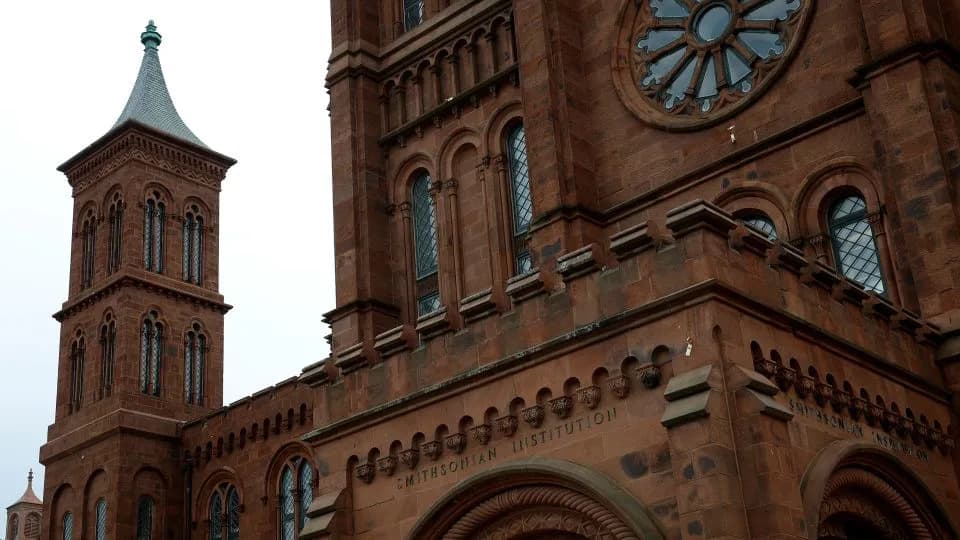
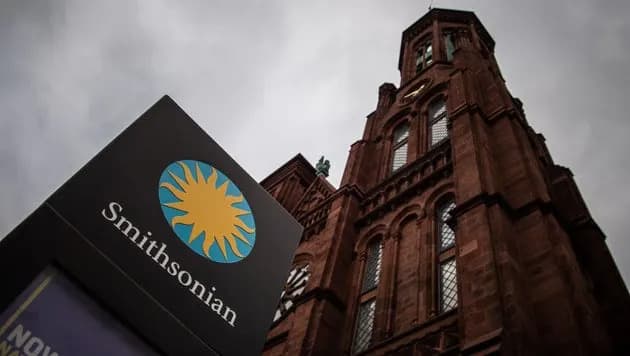
The Smithsonian Institution Building is seen on the National Mall on March 28, 2025 in Washington, DC. - Kevin Dietsch/Getty Images
The Smithsonian Institution's nationwide search for a new secretary has taken on unexpected urgency as political pressure from the Trump administration intensifies. The role — long regarded as a prestigious capstone for leaders in art, science and history — now comes with heightened scrutiny and potential interference from Washington.
A Contentious Moment for a Storied Institution
'Who wants to sign up to deal with the political pressure?' a person close to the Smithsonian Board of Regents asked, underscoring recruitment concerns as the board prepares to replace Secretary Lonnie Bunch III, who will retire at the end of 2026. Sources say the search may be among the most consequential in decades.
The administration this summer announced plans to place temporary signs outside the National Museum of American History to provide what it calls corrective context for exhibits it considers inaccurate or 'woke.' Interior Secretary Doug Burgum told Congress the signs — 12 temporary panels — will cost roughly $84,000 in taxpayer funds. The move was ordered by President Trump in July and described by the administration as a transparency measure.
Board Of Regents: Vacancies And Delays
The Board of Regents, which selects the Smithsonian's secretary and oversees the institution, is itself in flux. The board has 17 seats; the Smithsonian says three citizen regent seats are currently vacant and three more terms will lapse on October 2. The institution submitted names months ago to fill vacancies, but the White House has not acted, according to a source who requested anonymity.
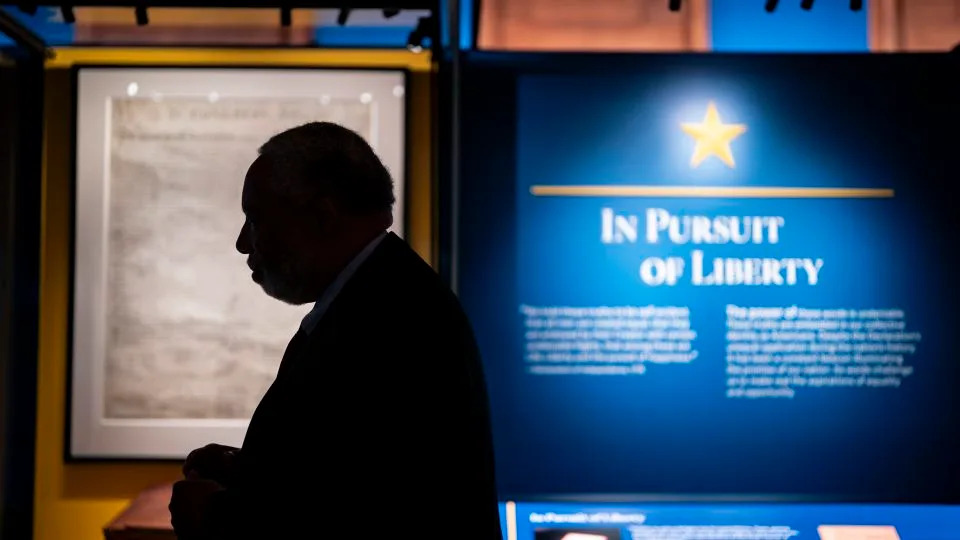
Lonnie Bunch III, the 14th secretary of the Smithsonian Institution, speaks near the mahogany desk that former President Thomas Jefferson used to sign the Declaration of Independence in 1776, ahead of the opening of the "American Aspirations" exhibit, featuring some of the Smithsonian's most treasured objects to commemorate the 250th anniversary of the United States, at the Smithsonian Castle on the National Mall, on Thursday, May 28, 2026 in Washington, DC. - Al Drago for The Washington Post/Getty Images
With citizen appointments stalled, the board is increasingly populated by political officeholders — including six members of Congress and Vice President JD Vance — prompting concern among some observers that the White House could reshape the board to align with its priorities.
Politics, Policy And The Search Criteria
Traditionally, candidates for the Smithsonian's top job were evaluated on museum leadership, scholarship and institutional management. Now, several people familiar with the process say political savvy and crisis-management skill are equally essential. The next secretary will likely need to defend the Smithsonian's independence while navigating pressure from the White House and a sometimes-wary Congress.
'The ability to handle pressure from the White House and the political dexterity to work with Congress' could be defining qualifications, a source close to the board said.
Potential candidates outside the Smithsonian may be hesitant to leave secure posts for a role that entails both public visibility and political heat, making recruitment more difficult.
Chief Justice Roberts: Quiet Stewardship
Chief Justice John Roberts, who has served as chancellor of the Smithsonian since 2005, is viewed by many as a stabilizing presence. Insiders say Roberts typically works quietly and is unlikely to publicly champion a particular candidate or outcome; instead, they expect him to focus on ensuring a transparent and orderly process.
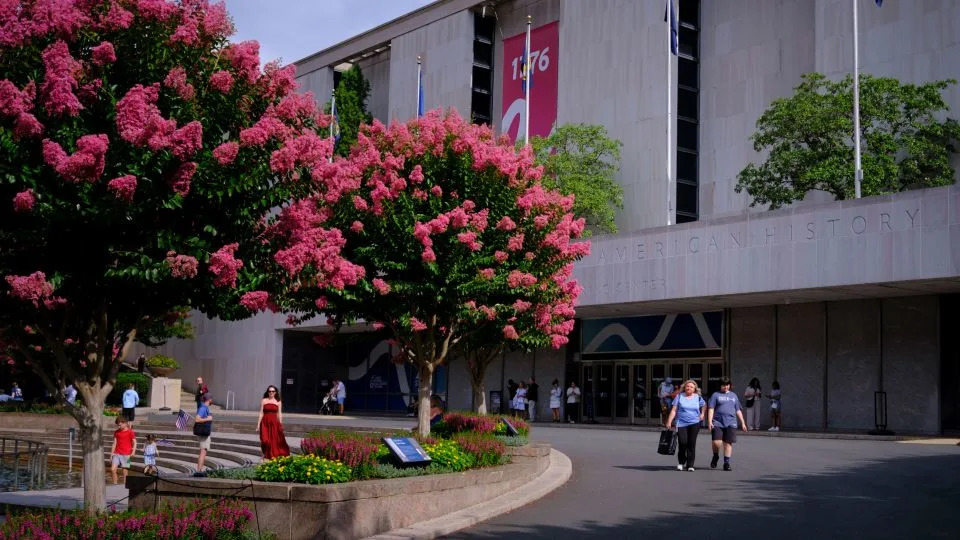
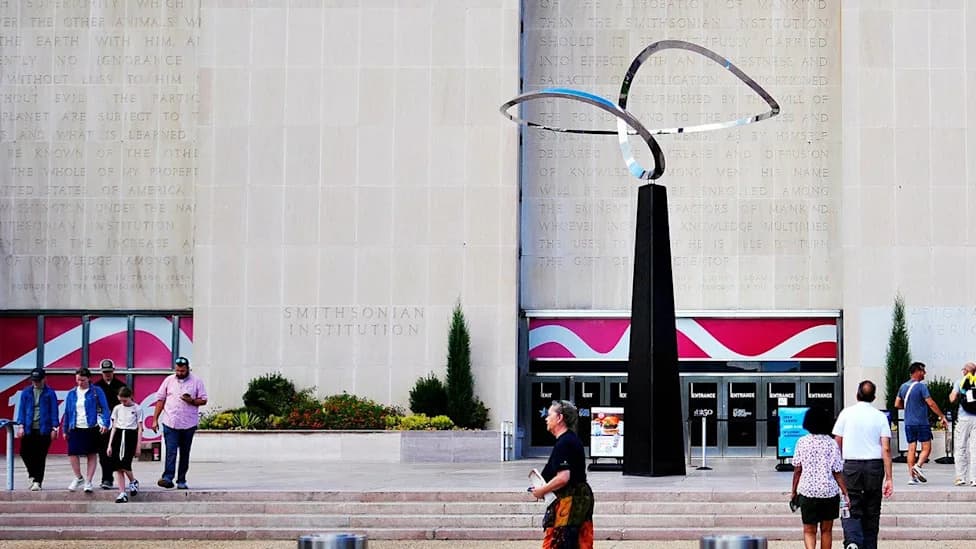
People walk past the entrance of the Smithsonian National Museum of American History in Washington, DC, on July 8, 2026. - Tom Brenner/The Washington Post/Getty Images
Observers caution that Roberts' careful approach could be influenced by the prospect of litigation. Some critics argue that elements of the administration's intervention may exceed executive authority and could be challenged in court — matters Roberts may prefer not to take public positions on.
What Comes Next
The Board of Regents is expected to engage a search firm to identify potential successors and will move forward with a formal selection. But the stalled appointment process for citizen regents and the administration's public moves — including its report accusing Smithsonian leadership of promoting a divisive ideological framework and a suggestion that federal agencies curtail collaboration — complicate the transition.
At stake is more than a single personnel choice: the outcome will test whether a major cultural institution can retain its curatorial independence and public mission amid escalating partisan pressure.
Reporting note: This article draws on public statements, an Interior Department letter to Congress about the signage plan, and interviews with people familiar with the Smithsonian's governance who spoke on background.
Help us improve.