The long-clawed shrew undergoes Dehnel’s phenomenon, a seasonal remodeling of skull and brain that lowers metabolic costs in winter. Hokkaido University researchers analyzed 136 skulls collected between 1948 and 1988 and found the braincase shortens while the snout grows taller and wider. The change is a regulated trade-off that keeps shrews active but reduces energy demands; modern imaging, metabolomics and genomics are now being used to probe the underlying mechanisms.
Tiny Shrews Remodel Their Skulls Each Winter — The Incredible Dehnel’s Phenomenon
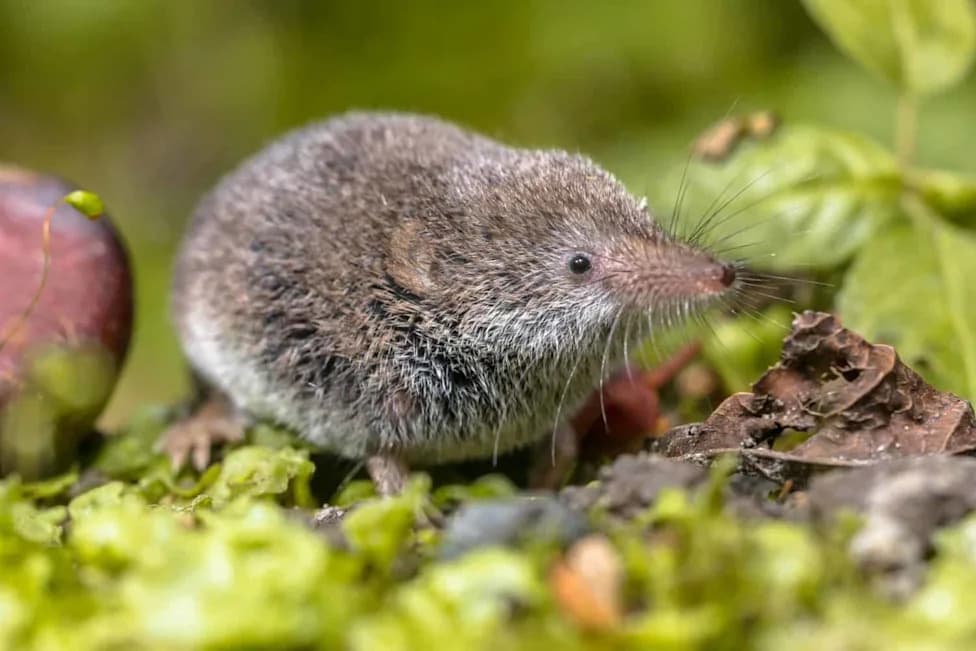
Eurasian pygmy shrew (Sorex minutus) mouse in natural habitat. This is one of the smallest mammals in the world.© Rudmer Zwerver/Shutterstock.com
The natural world is full of surprising survival strategies. One of the most extraordinary belongs to the long-clawed shrew: each winter this tiny mammal remodels parts of its skull and brain in a seasonal process called Dehnel’s phenomenon. New research using museum specimens has clarified how and why these changes happen.
What Happens Each Winter?
Long-clawed shrews, found in northeastern Asia including Hokkaido, Japan, face severe energetic stress in winter because of their very high metabolic rates and small body size. Rather than relying on fat reserves, many shrews reduce the size of metabolically expensive tissues during the cold months. Researchers have observed that the braincase shortens while the snout becomes taller and wider — an anatomical reorganization, not merely a uniform shrinkage.
Researchers at Hokkaido University analyzed over 100 shrew specimens to expand their findings.©Richie Chan/Shutterstock.com
Evidence From Historical Specimens
Scientists at Hokkaido University examined 136 long-clawed shrew skulls collected between 1948 and 1988. Because many shrews die before a second winter, museum collections spanning different months provide a rare, detailed timeline of seasonal change. By comparing skulls from across the year, researchers reconstructed how shape and proportions shift from summer to winter and back again.
Why Remodel? The Energy Trade-Off
The brain is energetically costly to maintain. Shrinking brain volume and other tissues lowers baseline energy requirements when food is scarce, yet shrews remain active and continue to forage. This suggests the seasonal remodeling is a regulated trade-off: the animals reduce metabolic operating costs without becoming immobile or nonfunctional.
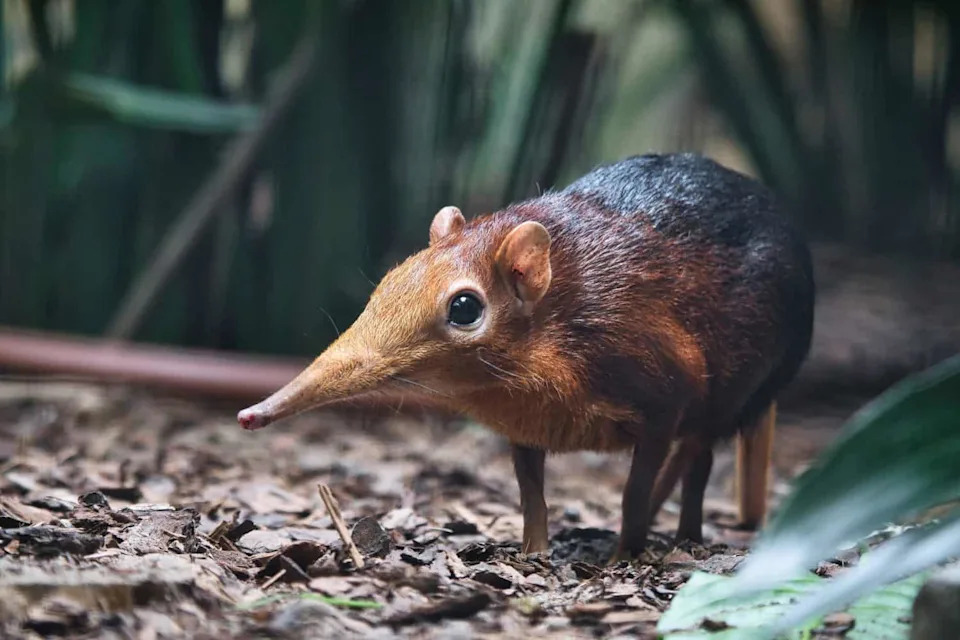
Scientists are now actively researching to learn if other shrew species, such as the red-backed elephant shrew, may have the same survival skills.©Martin Koebsch/Shutterstock.com
Functional Benefits Beyond Size
Interestingly, the enlarged snout seen in winter is likely adaptive: longer, wider nasal passages help warm and humidify cold inhaled air before it reaches the lungs, offering an additional thermal benefit. Different tissues follow distinct seasonal trajectories, and regrowth in spring is often partial rather than a perfect restoration — so “reversible” is accurate but can oversimplify the process.
What Scientists Still Want to Know
Researchers do not yet fully understand the molecular and cellular mechanisms that allow bones and neural tissue to shrink and regrow seasonally. Current and future studies aim to identify the genes, hormonal signals, and environmental cues (such as photoperiod and temperature) that trigger remodeling. Modern tools — advanced imaging, metabolomics and genomics — are opening new ways to probe these changes and to explore whether similar phenomena occur in other shrew species.
Broader Significance
While shrews are unlikely to offer direct medical cures, their natural ability to remodel neural and skeletal tissue repeatedly makes them valuable models for studying plasticity in adult mammals. Observing such coordinated change in an animal small enough to fit in a human hand highlights the remarkable flexibility of mammalian biology and the ingenuity of evolutionary solutions to seasonal hardship.
Takeaway: Dehnel’s phenomenon is a finely tuned, seasonal remodeling of skull and brain that reduces winter energy costs while keeping shrews active — a powerful example of adaptive plasticity in mammals.
Help us improve.