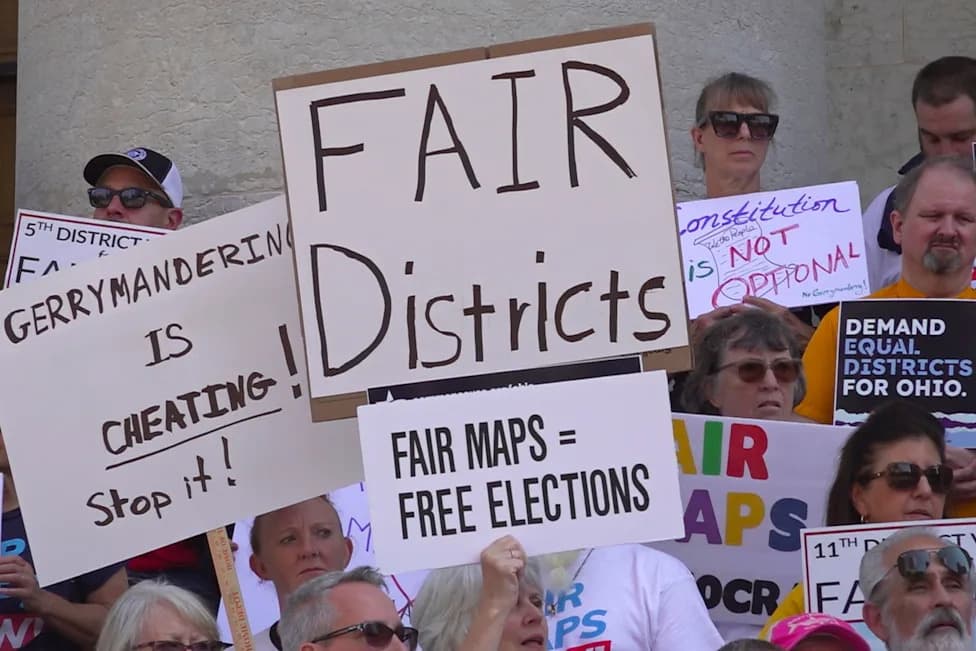
Protect Democracy estimates 34.8 million Americans were moved into new congressional districts across nine states ahead of the 2026 midterms. Texas had the largest numerical reassignment (10.45M people) and Utah the largest proportional shift (69.1%). The report describes this as the largest modern wave of mid‑decade redistricting and warns it disrupts voters, incumbents and election administration. Authors recommend independent commissions and structural reforms to reduce partisan mapmaking.
34.8 Million Americans Shifted Into New Congressional Districts in Major Mid‑Decade Redistricting Wave

File photo: a woman fills out a ballot during early voting at the Garners Ferry Adult Activity Center, May 26, 2026, Hopkins, South Carolina.
A new analysis from nonprofit Protect Democracy estimates that 34.8 million Americans were reassigned to new U.S. congressional districts across nine states ahead of the November 2026 midterm elections. The group says the reshuffling, driven largely by partisan mid‑decade redraws that began in 2025, represents the largest modern wave of mid‑decade redistricting.
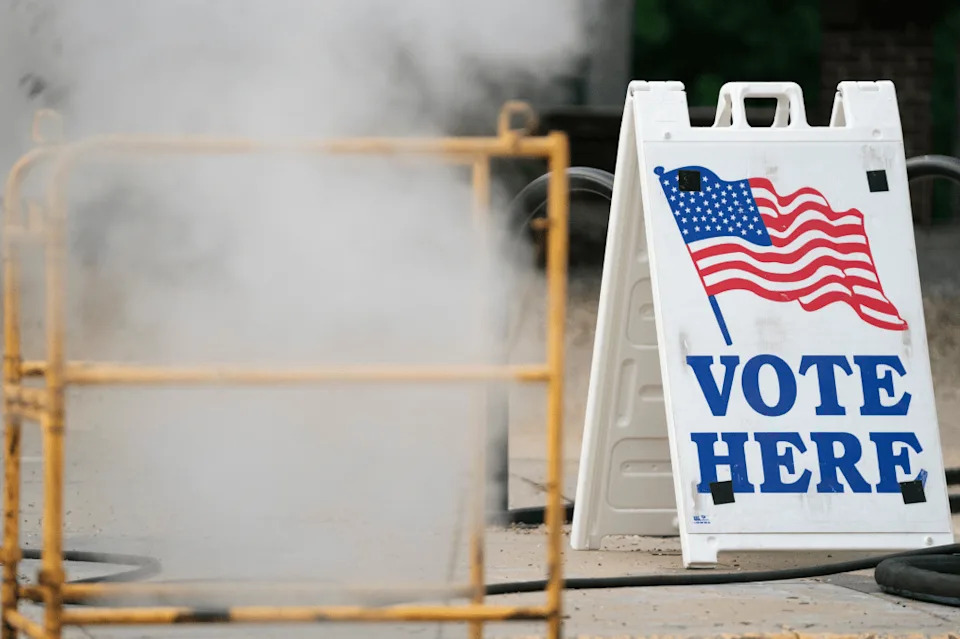
File photo: steam rises near a sign before polls open for early voting, Solomon Blatt PE Center, May 26, 2026, Columbia, South Carolina.
Key Findings
Using block‑level 2020 Census data, Protect Democracy found that roughly one in 10 Americans was placed in a different congressional district between 2024 and 2026. Across the nine states analyzed — Texas, California, Florida, Tennessee, North Carolina, Ohio, Alabama, Louisiana and Utah — 26.3% of residents were moved into another district.
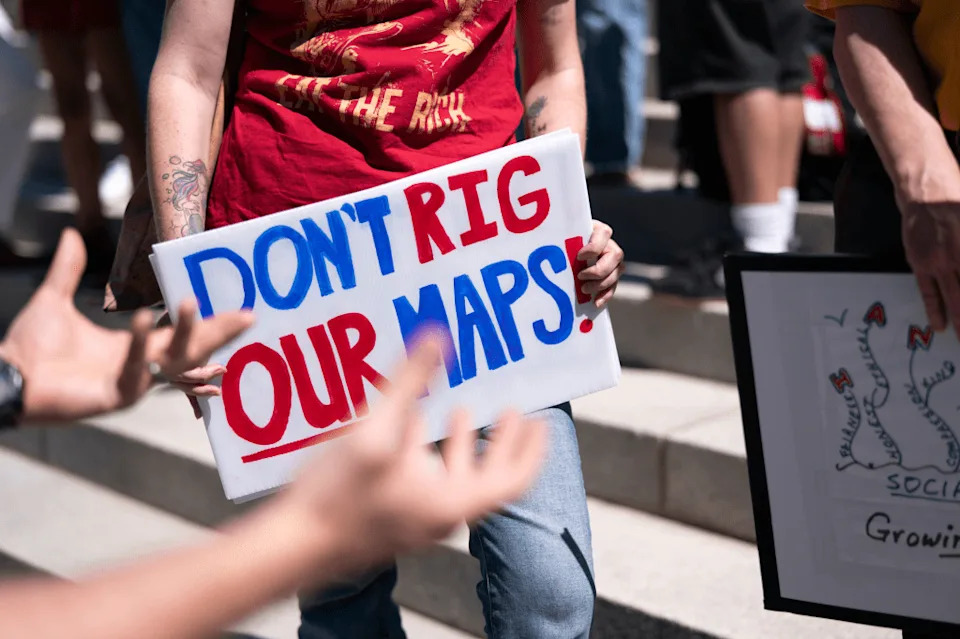
File photo: protesters are on the statehouse steps at a rally against congressional redistricting, May 14, 2026, Columbia, South Carolina.
- Numerical Impact: Texas had the largest number of people reassigned: 10,448,258 residents, or 35.8% of the state.
- Largest Proportional Change: Utah experienced the biggest disruption proportionally: about 2,260,487 residents, equal to 69.1% of the state.
- Other Major Shifts: California reassigned 9,214,062 people (23.3%) and Florida moved 6,265,306 residents (29.1%).
- Materially Different Districts: The report defines a district as 'materially different' when more than 25% of its electorate has changed since 2024; by that threshold, 18.5% of Americans now live in substantially altered districts.
What This Means
Protect Democracy and independent analysts warn that accelerating mid‑decade redraws can disrupt representation and election administration. At least eight sitting House members are seeking reelection in districts that differ from the ones where they previously ran. New boundaries can require rapid changes to ballot configurations, polling locations and voter notifications, complicating preparations for voters, campaigns and election officials.

File photo: ACLU South Carolina stickers are shown at a rally against congressional redistricting, May 14, 2026, Columbia, South Carolina.
Ben Raderstorf, a policy advocate and co‑author of the report, warned that voters — not parties — ultimately bear the cost when maps are repeatedly redrawn.
How the Analysis Was Done
Protect Democracy compared block‑level 2020 Census populations under previous and revised district boundaries to estimate how many people were reassigned. The method measures population movement across district lines but does not account for people who moved residence between 2020 and 2026.
Policy Responses and Limits
The report notes that most of the new maps appear designed to maximize partisan advantage, though Ohio and Utah are identified as possible exceptions. As remedies, authors recommend independent redistricting commissions and suggest multimember districts or proportional representation as structural reforms to reduce incentives for partisan mapmaking. The paper emphasizes that proportional representation is a policy proposal reflecting the authors' preference rather than a conclusion from the population analysis.
Protect Democracy also notes that officials in several other states — including Georgia, Washington, Colorado, New York, Maryland, Virginia and New Jersey — have considered or signaled possible redraws ahead of the 2028 elections, raising the prospect that congressional maps could become temporary political instruments rather than stable lines lasting the decade.
Protect Democracy's analysis focuses on population movement rather than projecting partisan outcomes, but it underscores a central dynamic: when one party redraws maps to protect or expand its position, the opposing party often feels compelled to retaliate rather than accept potential seat losses, fueling an escalatory cycle of mid‑decade redistricting.
Help us improve.