Speaker Mike Johnson has repeatedly used scheduling tactics and surprise adjournments to avoid divisive House votes, a pattern shaped by a narrow GOP majority and pressure from Donald Trump’s faction. Critics note that while the House passed 948 measures this session, only 112 have become law, and many passed items were ceremonial. Johnson’s avoidance strategy aims to preserve party unity but has drawn criticism from both Democrats and some Republicans and may define his legacy.
Why Mike Johnson Keeps Dodging Tough Votes
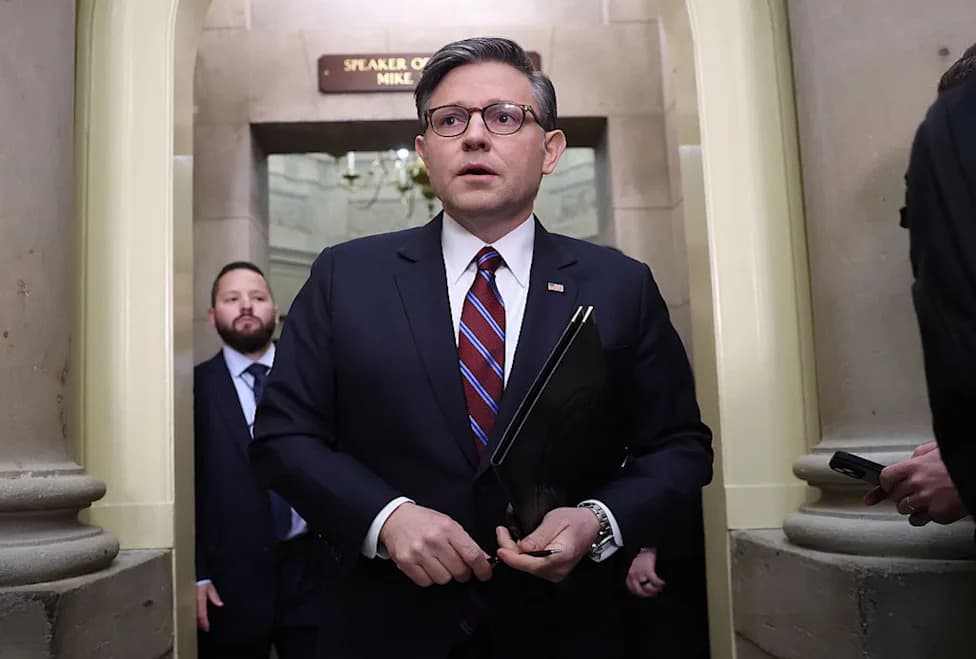
Speaker of the House Mike Johnson, R-La., speaks to reporters outside of his Capitol office on Sept. 16, 2026. Kevin Dietsch/Getty Images
Speaker Mike Johnson has spent nearly three years leading a deeply fractured Republican conference while repeatedly avoiding consequential House floor fights. His approach — using calendar maneuvers, procedural tweaks and surprise adjournments — has become a defining feature of his speakership and a flashpoint for criticism from both Democrats and some Republicans.
A Speaker With An Unconventional Rise
Johnson, a four-term congressman from Louisiana’s 4th District, rose to the speakership after the Matt Gaetz-led revolt that toppled Kevin McCarthy. Before becoming speaker he held no formal House leadership posts beyond chairing the Republican Study Committee, a conservative policy-focused group. That lack of leadership experience, combined with loyalty pressures from former President Donald Trump and a narrowly divided conference, has shaped the choices he makes on the House floor.
Calendar Tricks And Abrupt Adjournments
When contentious roll calls loom, Johnson often manipulates the legislative calendar rather than force a divisive vote. When scheduling fails, he has a pattern of adjourning the chamber and sending members home — a tactic used, for example, when Rep. Thomas Massie pushed votes to release the Epstein files and when hard-line Republicans obstructed procedural business to press for passage of a federal elections bill.
Procedural Moves To Limit Congressional Responses
Johnson’s leadership has also supported procedural changes that critics say blunt Congress’s ability to respond to executive actions. When the administration moved to declare a national emergency to impose tariffs, Johnson’s allies backed a parliamentary revision that redefined what counts as a "day" under expedited congressional review — a move tucked into broader budgetary procedure that limited the window for challenge.
Backlash From Both Sides
The speaker’s retreats have drawn fire from Democrats, who call him an absentee leader, and from some Republicans, who complain that lawmakers are canceling too many voting days. Critics point to figures such as the House’s tally of 948 measures passed this session, versus just 112 laws enacted — a disparity that underscores the ceremonial or nonbinding nature of many approvals. House Republicans reportedly canceled dozens of scheduled voting days this Congress, fueling complaints about governance and accountability.
Consequences And Outlook
Johnson’s pattern of avoidance aims to preserve party unity by minimizing public, recorded splits. But it comes at a cost: frustrated members within his conference, public criticism over inaction, and a record of relatively few enacted laws. With polling suggesting possible Democratic gains that could flip control of the House, Johnson may not face many more high-stakes floor fights before voters render judgment — yet his method of governing by avoidance will likely shape how historians and voters evaluate his tenure.
Key examples: the use of calendar manipulation to avoid votes on emergency tariff resolutions; adjourning the House ahead of votes to release the Epstein files and to defuse intraparty conflict; and shortening sessions to limit high-profile war- and spending-related resolutions.
Help us improve.