A 770-year-old convent has been located beneath a Roskilde soccer field after ground‑penetrating radar revealed walls, rooms and a church wing about six feet down. St. Clare's Convent, founded in 1256 and dismantled after the 16th‑century Reformation (with many bricks reused at Selsø Castle), appears remarkably preserved in GPR images. Excavation of the eastern half—limited by planned parking construction—will begin and could take six to 12 months, with archaeologists hoping to recover artifacts, organic remains and burials that illuminate medieval monastic life.
770-Year-Old Convent Revealed Beneath Roskilde Soccer Field by Ground‑Penetrating Radar

ITALY - FEBRUARY 02: St Clare, 1548, by Giovanni Battista Moroni (ca 1520-1578), oil on canvas, 182.7x125 cm.
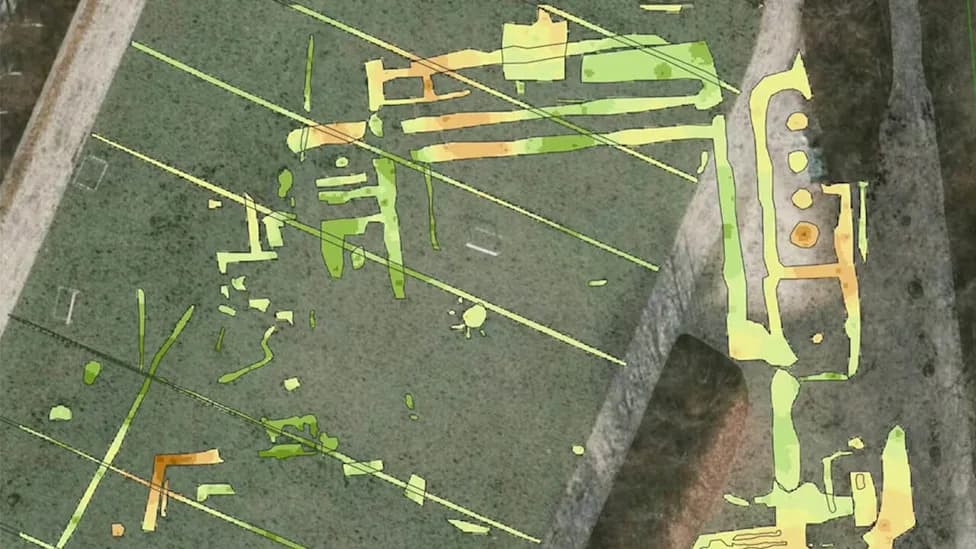
Archaeologists have identified the buried remains of a 770-year-old convent under a soccer field in Roskilde, Denmark, after high-resolution ground‑penetrating radar (GPR) surveys revealed the structure about six feet below the surface.
Discovery and Method
Experts from the Norwegian Institute for Cultural Heritage Research (NIKU) carried out GPR scans while the site was being prepared for a new parking facility. The radar system sends electromagnetic waves into the ground and records reflections from buried features; in this case the imaging produced unexpectedly clear traces of walls, room divisions and a church wing.
What the Radar Shows
The GPR results outline a complex that appears to include:
- A communal dining hall (the refectory)
- A chapter house used for daily meetings and scripture readings
- A parlor for receiving visitors
- A kitchen and storage or cellar spaces
- A library and scriptorium where manuscripts would have been copied and illuminated
- An attached church forming the southern wing of the complex
Researchers caution that the convent likely rose two stories in places, so precise room counts remain uncertain until excavation confirms the radar interpretations.
Historical Context
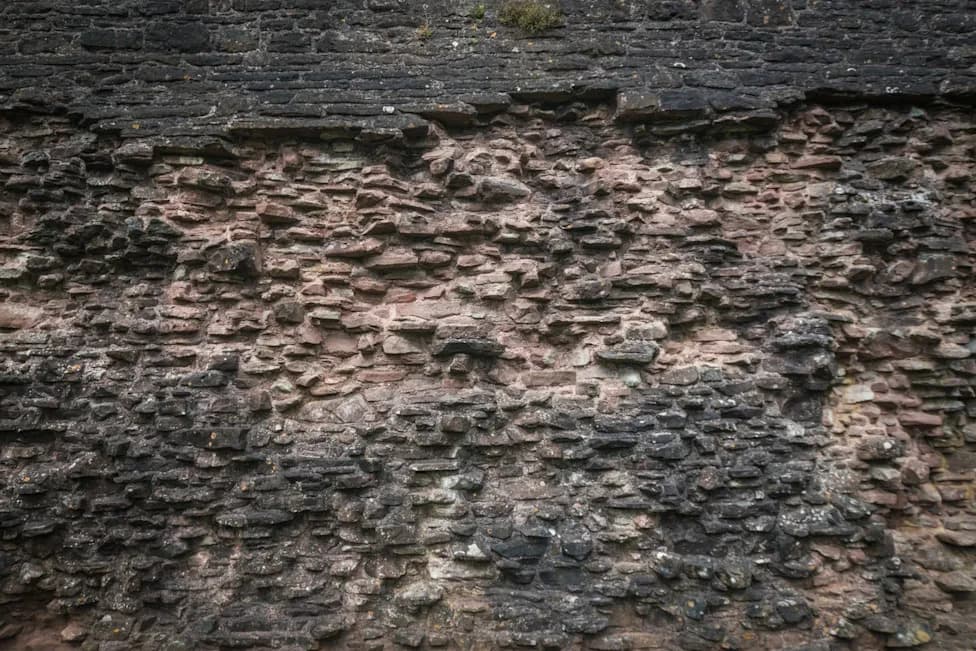
St. Clare's Convent dates to 1256 and was one of five influential monastic houses in medieval Roskilde. After the Protestant Reformation in the 16th century the convent was dismantled; officials say roughly half a million bricks were removed and sold for reuse at nearby Selsø Castle, which helped erase obvious surface traces of the site.
Planned Excavation
Because the discovery surfaced during preparatory work for a parking facility, excavation will be limited to the area directly affected by construction. Archaeologists plan to begin work on the eastern half of the convent; that first phase is expected to take roughly six to 12 months due to the careful, delicate nature of excavation in a built environment.
"The results are simply impressive," said archaeologist Arne Abel Stamnes. "GPR data do not always provide such clear images and often the interpretation requires extensive analytical work."
What Researchers Hope to Learn
Specialist in Medieval Archaeology Jesper Langkilde said the team hopes to recover artifacts and organic remains that illuminate daily life at the convent. "We also expect many burials, which can tell us about who the nuns were and who else was interred at the site," he added. Finds could shed light on diet, health, devotional practices and manuscript production at the house.
Significance
The discovery demonstrates the power of non‑invasive geophysical surveying for revealing well-preserved archaeological complexes beneath modern landscapes. If excavation confirms the radar interpretation, St. Clare's Convent will provide a rare, detailed window into female monastic life in Denmark from the High Middle Ages through the Reformation.
Next steps: Targeted excavation of the eastern sector, conservation of any recovered materials, and analysis of burials and artifacts to reconstruct the convent’s social and material history.
Help us improve.