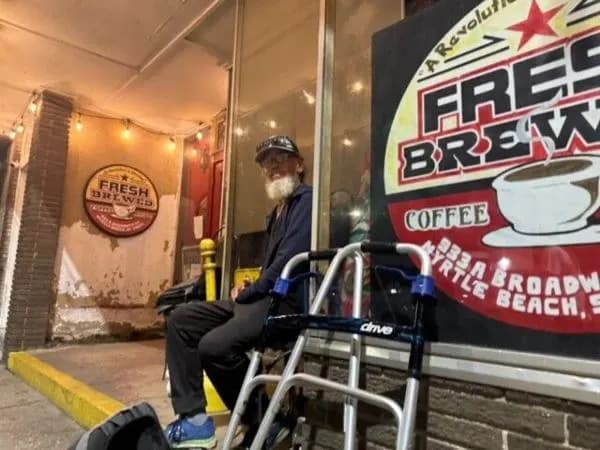
The South Grand Community Improvement District's Sept. 11 letter advising businesses not to give food or water to people experiencing homelessness sparked strong backlash when staff at MoKaBe's Coffeehouse published it online. Several local businesses publicly rejected the guidance, and some—like Kenny's Upstairs—offered free water during a 94°F heat spell. CID board president Natasha Bahrami apologized for the unauthorised communication and said she hopes the controversy drives momentum for real social-service solutions. City officials say outreach continues, while business owners warn workers are being asked to serve as crisis responders without proper support.
St. Louis Outcry: Businesses Defy CID After Letter Urges Shops Not To Give Water To Unhoused People
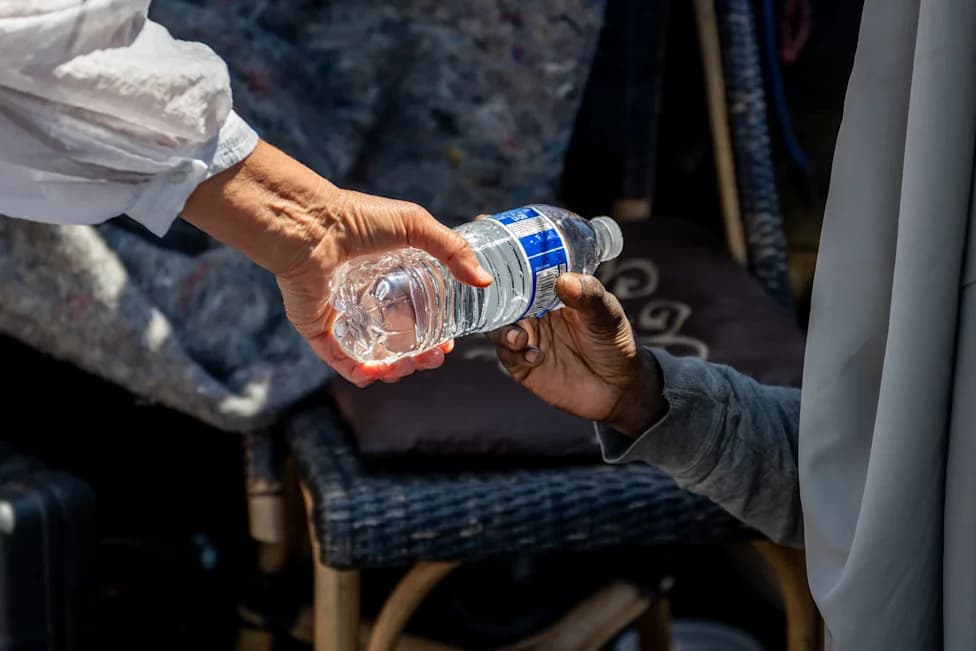
Photo Credit: Getty Images
A Sept. 11 letter from the South Grand Community Improvement District (CID) telling businesses not to distribute food or water to people experiencing homelessness provoked widespread anger across St. Louis' South Grand corridor—even as daytime temperatures climbed into the 90s.
The CID notice instructed property owners to call 911 about people sleeping, defecating, or urinating in entryways and warned that providing water, coffee, or food during extreme weather "can unintentionally encourage individuals to remain and panhandle in front of local businesses."
The directive became public after workers at MoKaBe's Coffeehouse posted the letter online. Staff there and at several other businesses condemned the guidance: "We are extremely disappointed and quite frankly, angry that some of our fellow South Grand businesses have signed off and support this," MoKaBe's employees wrote on social media.
As temperatures reached 94 degrees, Kenny Marks, owner of Kenny's Upstairs bar, taped a "free water" sign to coolers outside his business in direct protest. "That's just not how you treat humans during any time, but especially during a heat wave," Marks told St. Louis Public Radio, calling the letter "pure disgust."
"A letter went out that did not go through the proper channels to communicate this effectively and I take responsibility for that,"
— Natasha Bahrami, South Grand CID Board President
After backlash, Natasha Bahrami, the CID board president and owner of the Gin Room, said she had not reviewed the letter before it was sent and accepted responsibility for the communication failure. Several businesses quickly distanced themselves from the CID message; owners of Terror Tacos and Tree House apologized and said the letter did not reflect their values. Terror Tacos co-owner Bradley Roach noted the restaurant provides water and restroom access to those who ask.
At the same time, some business owners urged that public anger not obscure the difficult conditions their staff face. Bahrami cited threats against workers, drug overdoses and human waste in the neighborhood as part of a larger public-safety and public-health challenge. Danni Eickenhorst, co-owner of Steve's Hot Dogs, said employees are being asked to act as untrained social workers and crisis responders: "Unfortunately, our frontline restaurant workers up and down South Grand are being asked to act as social workers and as crisis responders without training or support to do so."
Eickenhorst requested a review from the city's Department of Human Services. According to St. Louis Public Radio, her findings indicated only limited engagement over a 13-month period—some site visits and meetings, plus water, hygiene kits and resource lists. The city disputes that characterization, saying outreach is ongoing: Ryan Sheehan, a spokesman for the Department of Human Services, said teams visit neighborhoods daily and "do on occasion offer water and snacks, especially in extreme heat, because everyone deserves hydration."
MoKaBe's owner Mo Costello captured the tension: "There's always enough solutions, but there's never enough resources." The episode has prompted calls for clearer community communication, better-trained outreach workers, and sustained social-service investment rather than ad-hoc responses.
Broader Context
The story is part of wider debates about public space, development and water access in other cities, with recent coverage noting similar disputes in Sausalito, Phoenix, Johannesburg, Utah and Pennsylvania where infrastructure and development choices intersect with community access to water and services.
Help us improve.