Chinese researchers report a major hydrothermal field inside China’s EEZ with reported peak gold of about 15.4 g/t and silver up to 1,271 g/t, plus three cone-shaped sulfide mounds and ore rich in chalcopyrite, pyrite and sphalerite. However, the figures come from Chinese state media and lack broad third-party verification. At depths of roughly 700–1,500 meters, the deposit is currently considered not mineable, highlighting both technical and environmental hurdles and a broader international rush to map seabed minerals.
China Announces 'World-Class' Seafloor Gold and Silver Find — Mining Still Years Away

China Found a Ton of Gold. Now Comes the Hard Part. - Moby
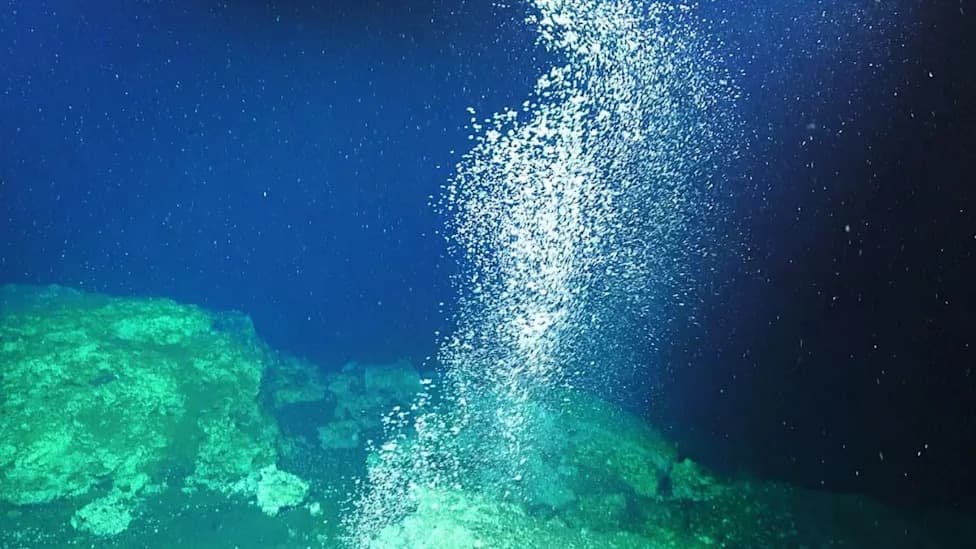
Chinese researchers say they have identified a large hydrothermal field in the western Pacific — inside China’s exclusive economic zone (EEZ) — with unusually high reported concentrations of gold and silver.
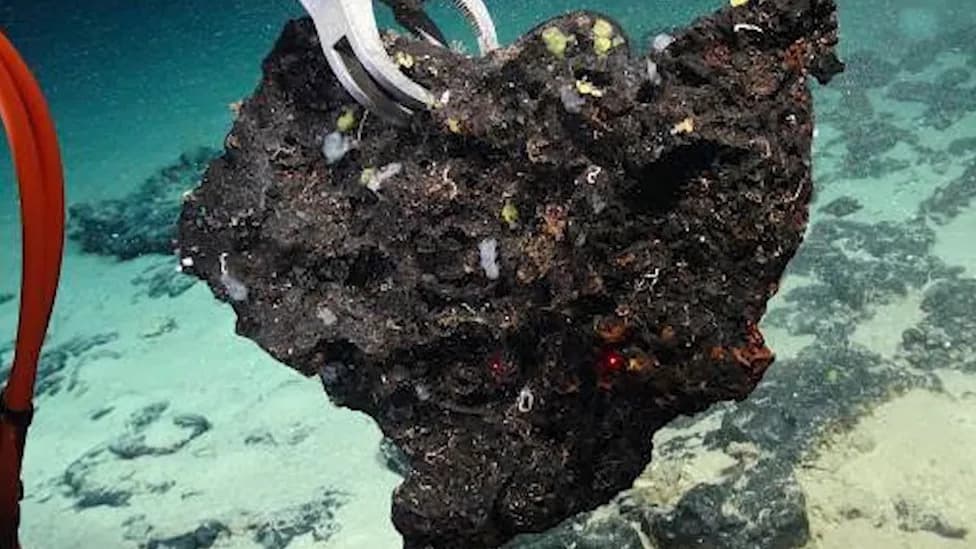
Lab analyses cited by Chinese state media reported peak gold concentrations of about 15.4 grams per ton and silver values as high as 1,271 grams per ton. The research expedition also described a newly mapped field composed of three large, cone-shaped sulfide mounds. Shipboard tests indicated the ore is dominated by chalcopyrite, pyrite and sphalerite — minerals commonly associated with copper, zinc and iron.
Why the Find Matters
The reported grades would make this a notable discovery compared with many land-based deposits, and the fact that it lies within China’s EEZ reinforces Beijing’s resource-security strategy: locating high-value minerals in undisputed waters to reduce geopolitical friction over international seabed claims.
Major Caveats
All technical figures so far have been presented by Chinese state media and lack broad third-party verification. More importantly, the deposit sits at depths of roughly 700–1,500 meters, where extreme pressure and complex seafloor geology mean commercial extraction is currently beyond established capabilities.
Practical recovery would require breakthroughs in deep-sea mining technology, substantial investment, and robust environmental and regulatory frameworks. Deep-sea mining also raises ecological concerns that have already slowed international progress on seabed projects.
Global Context
The announcement fits a wider trend of nations mapping and characterizing seabed mineral resources inside their EEZs ahead of any comprehensive international rules. Examples include Norway’s exploration licenses for the Norwegian and Greenland Seas, the Cook Islands’ nodule exploration licenses granted in 2022, Japan’s seabed mining tests, and a U.S. April 2025 executive order directing federal agencies to advance seabed mineral leasing (including waters off American Samoa).
What’s next: Independent verification of the deposit’s size and grade is essential. If confirmed, a state or private mining entity would still need to demonstrate both sustained interest and the technical capacity to extract ore from 700–1,500 meter depths — a hurdle that makes commercial production unlikely in the near term.
Help us improve.