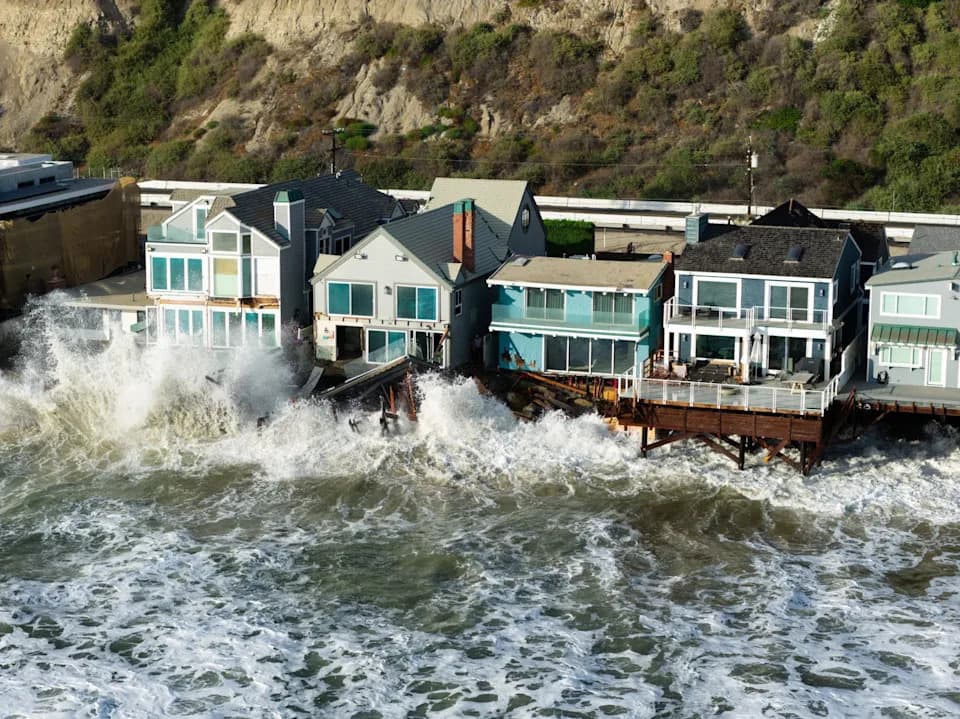
Unusually warm early-winter conditions on the Tibetan Plateau can perturb the jet stream and launch wave patterns that travel eastward and help intensify atmospheric rivers over the eastern Pacific. Observational analysis and climate-model experiments show that models initialized with plateau land-temperature anomalies reproduce the extreme 2016–2017 and 2022–2023 California storms, while sea-surface-temperature–only models do not. Incorporating plateau land signals into seasonal forecasts may improve early warnings and preparedness for damaging West Coast precipitation.
How Warmth Over the Tibetan Plateau Can Trigger Powerful Atmospheric Rivers in California
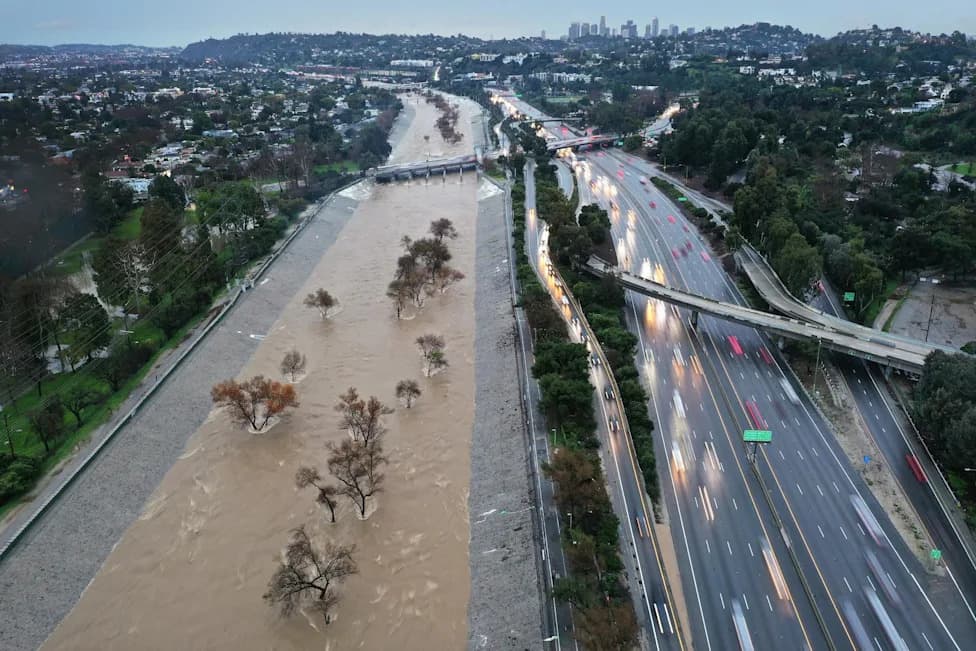
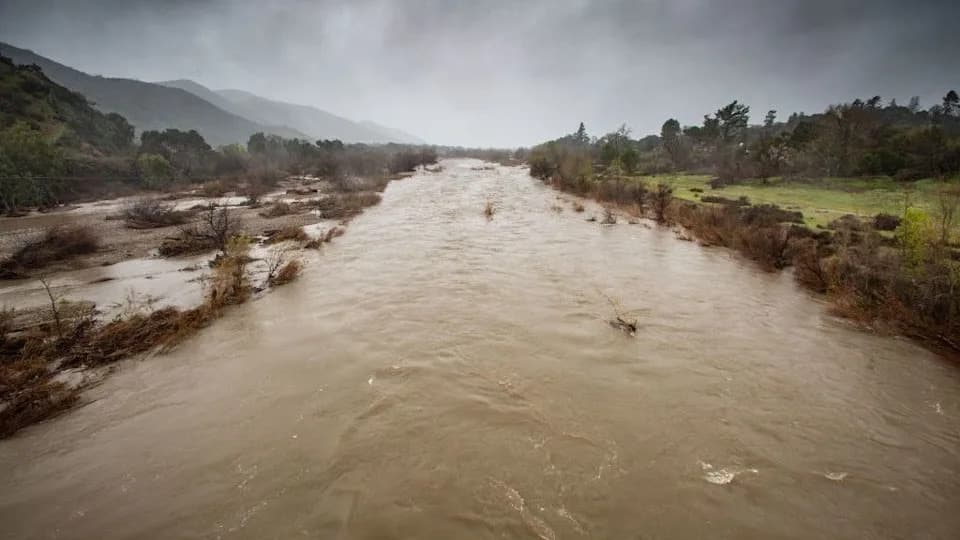
Heavy rain from an atmospheric river sent the Los Angeles River, normally mostly empty, spilling over its sides in February 2024.Mario Tama/Getty Images
The Tibetan Plateau sits halfway around the globe from the U.S. West Coast, yet unusually warm conditions there in early winter can start a chain of atmospheric events that amplify late-season atmospheric rivers and bring extreme rainfall and heavy snow to California and neighboring states.
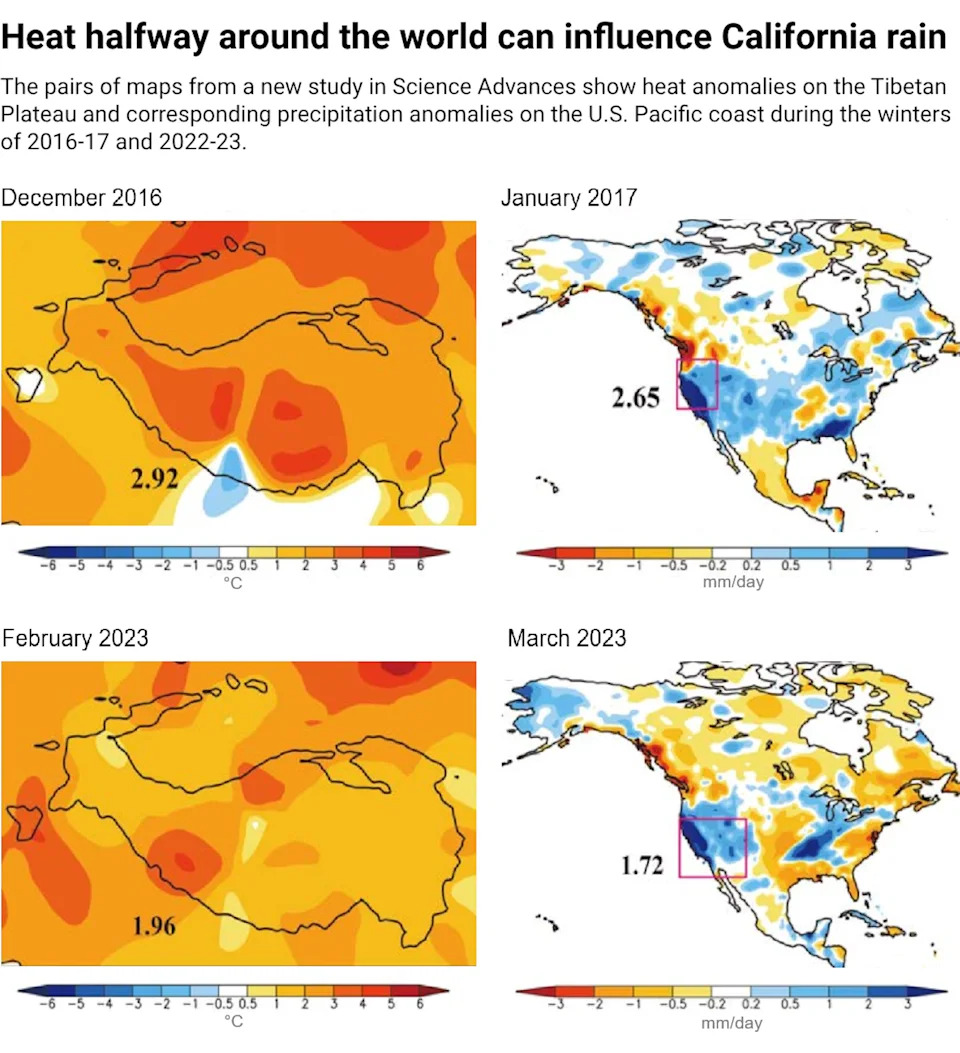
Yongkang Xue, et al., 2026
What We Found
Our research team of atmospheric scientists, led by Yongkang Xue (University of California, Los Angeles), documents a statistically robust link between early-winter warming on the Tibetan Plateau and increased late-winter precipitation in California. The findings, published in Science Advances, show that land-temperature signals from the plateau can help explain record wet winters — notably 2016–2017 and 2022–2023 — that ordinary ocean-based forecasts did not predict.
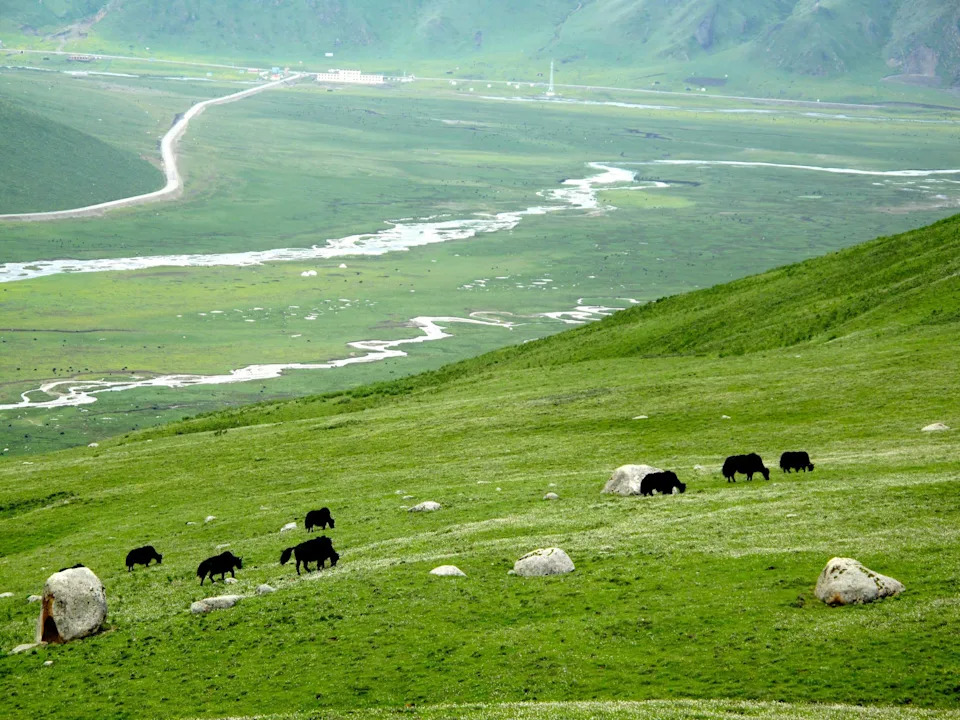
Yaks graze on the Tibetan Plateau in Asia.Tenace10 via Wikimedia Commons,CC BY-SA
Observations and Model Experiments
We began by analyzing observational records and found a significant association between higher-than-normal plateau temperatures in early winter and stronger late-winter storms hitting the U.S. West Coast. Because correlation does not prove causation, we then ran targeted climate-model experiments. Models driven only by sea-surface temperatures failed to reproduce either the observed plateau warming or the extreme California precipitation. When we initialized models with the observed Tibetan Plateau land-temperature anomalies, the simulations reproduced both the early-winter warming and the later California precipitation extremes.
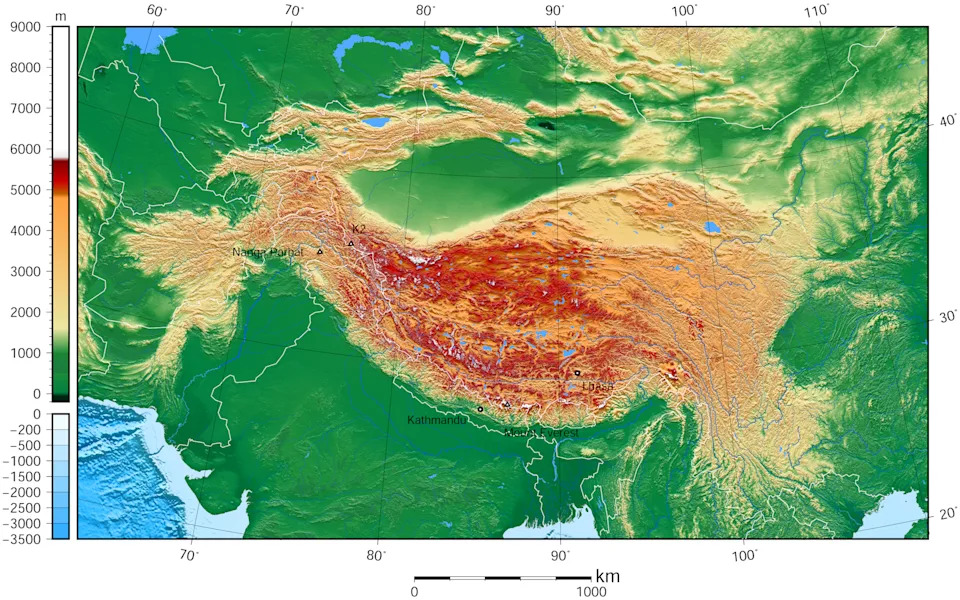
A topographic map shows the elevation of the Tibetan Plateau, rimmed by the Himalayas to the south and west.darekk2, using NOAA data,CC BY-SA
How Warming on the Plateau Affects Weather Thousands of Miles Away
The Tibetan Plateau is enormous and very high, averaging about 14,800 feet (4,500 meters) above sea level. When its surface warms anomalously, it heats the air above and alters large-scale temperature gradients. Those changes can perturb the jet stream — the fast west-to-east upper-level airflow that steers weather across the Northern Hemisphere.
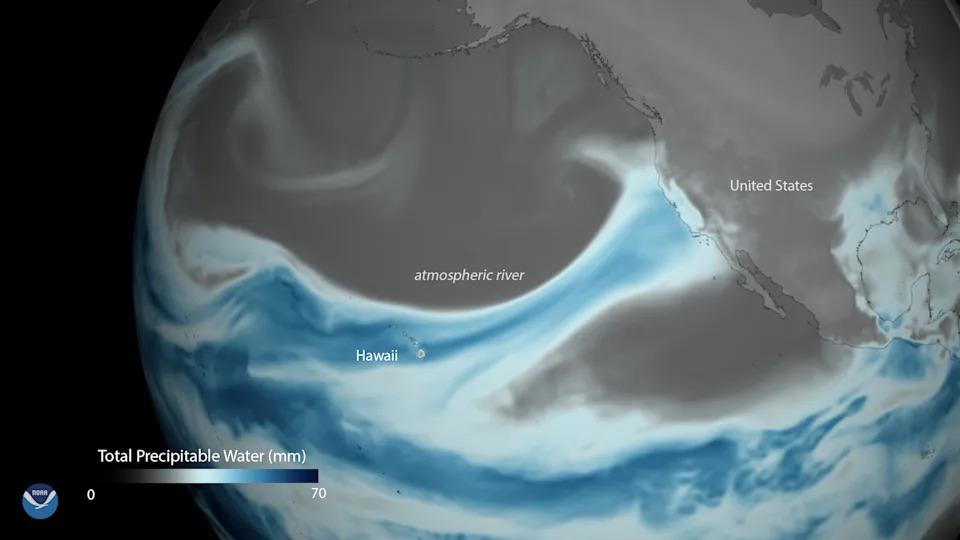
Satellite data shows the moisture in a powerful atmospheric river drenching Northern California on April 6, 2018.NOAA
The perturbation can propagate eastward as a large-scale atmospheric wave known as a Tibetan Plateau–Rocky Mountain wave train. By the time this wave reaches the eastern Pacific, it can become unstable and "break," similar to an ocean wave breaking near shore. This wave breaking modifies atmospheric structure and stability over the Pacific and can create conditions that strengthen atmospheric rivers.
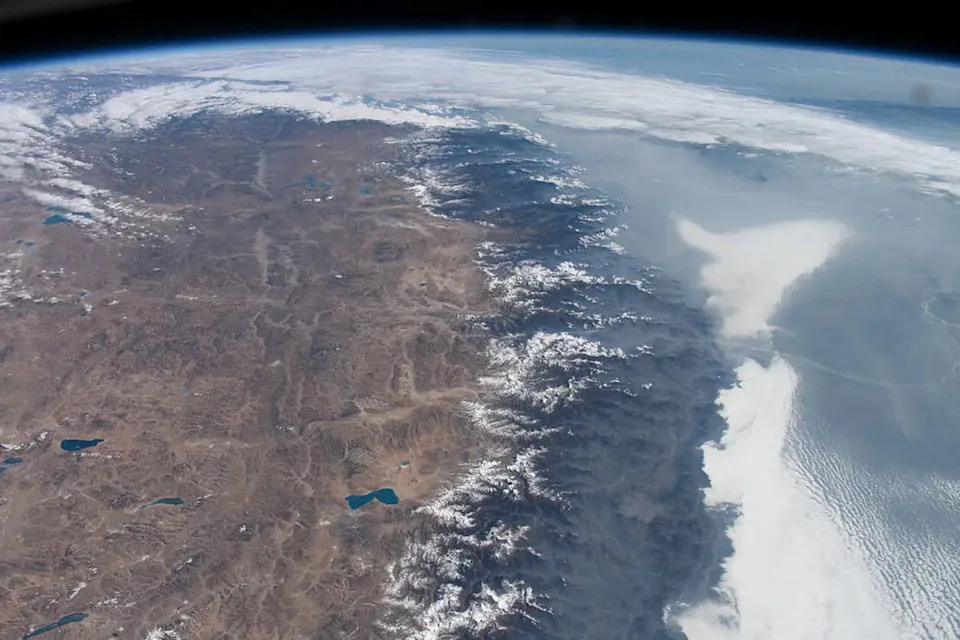
The Himalayas separate the Tibetan Plateau from the Indian subcontinent in this photo shot from the International Space Station.NASA
Why Atmospheric Rivers Matter
Atmospheric rivers are long, narrow corridors of concentrated water vapor. When they make landfall on the U.S. West Coast, they deliver intense rain and heavy snow and are responsible for many of California's largest precipitation events. Our study indicates that early-winter plateau warming can amplify the planetary-scale patterns that make atmospheric rivers especially intense.
Forecasting and Preparedness Implications
Seasonal forecast systems have traditionally emphasized ocean indicators like the El Niño–Southern Oscillation. Our results suggest that including remote land signals — specifically early-winter Tibetan Plateau temperature anomalies — could improve seasonal predictions of atmospheric river activity and extreme precipitation on the U.S. West Coast. Better early-warning information could give communities, water managers and emergency planners more lead time to prepare.
Broader Climate Connections
The Tibetan Plateau also influences other regional climates, including the East Asian monsoon. Related research from our group has shown how Rocky Mountain spring temperatures can affect weather in the U.S. Southern Plains, indicating that remote high-elevation land anomalies can have wide-reaching impacts.
Conclusion: Monitoring Tibetan Plateau temperatures in early winter, alongside oceanic and atmospheric indicators, can strengthen seasonal forecasting of atmospheric rivers and help reduce societal impacts from extreme West Coast precipitation events.
Author: Yongkang Xue, University of California, Los Angeles. Study published in Science Advances. Funding acknowledged from the U.S. Department of Energy.
Help us improve.