The study links unusually warm pulses on the Tibetan Plateau in Dec 2016 and Feb 2023 to record winter rainfall across California and neighboring states about a month later. Analysis and model experiments show those warm anomalies launched Rossby wave trains that broke over the eastern Pacific, intensifying atmospheric rivers that produced extraordinary precipitation. The storms caused roughly $6.6 billion in damage and at least nine deaths. Monitoring the Tibetan Plateau could improve early warnings for West Coast extreme storms.
Tibetan Plateau Heat Linked To Record West Coast Flooding — Study Shows Long‑Range Atmospheric Trigger
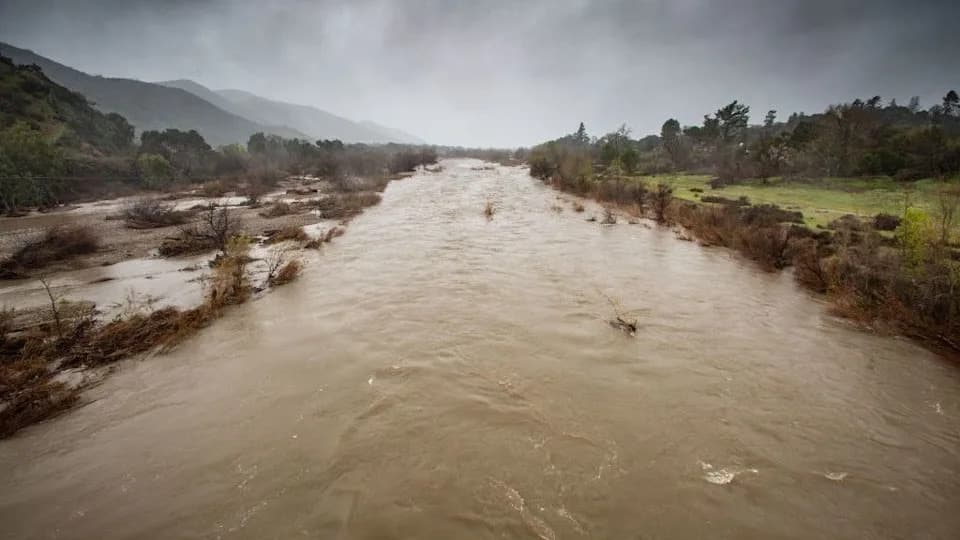
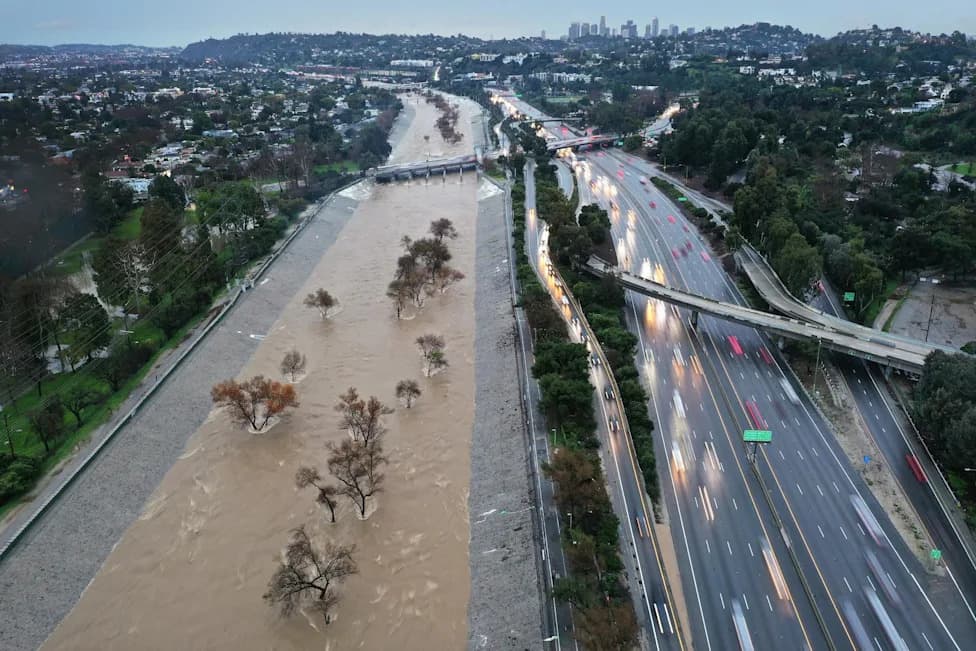
The raging Santa Ynez River in Solvang, California after rainstorms in March 2023. | Credit: George Rose/Getty Images
Researchers report that unusually high temperatures on the Tibetan Plateau helped trigger two devastating winter storms that produced record rainfall across California and nearby states in early 2017 and 2023. The peer‑reviewed analysis links warm pulses over the high plateau to a chain of atmospheric disturbances that amplified atmospheric rivers striking the U.S. West Coast, causing widespread damage and loss of life.
What the study found
The study finds that short‑lived but pronounced warm anomalies on the Tibetan Plateau in December 2016 and February 2023 were followed roughly one month later by extreme precipitation across parts of California, Nevada, Oregon, Utah and Arizona. Those events together resulted in about $6.6 billion in reported damage and were associated with at least nine deaths, according to the authors.
How a distant heat pulse can affect U.S. weather
The mechanism described by the team centers on Rossby wave dynamics and atmospheric rivers. Warm spells on the plateau produced a strong thermal contrast with surrounding regions, generating an atmospheric disturbance that propagated eastward along the jet stream as a Rossby wave train. When that wave train reached the northeastern Pacific, it experienced wave breaking — a process that reduces atmospheric stability and intensifies moisture transport.
These amplified atmospheric rivers — narrow, concentrated corridors of water vapor — then delivered extraordinary rainfall to the U.S. Pacific Coast. The researchers used observational records and advanced model experiments to reproduce the sequence and link the Tibetan warming to the downstream extreme precipitation.
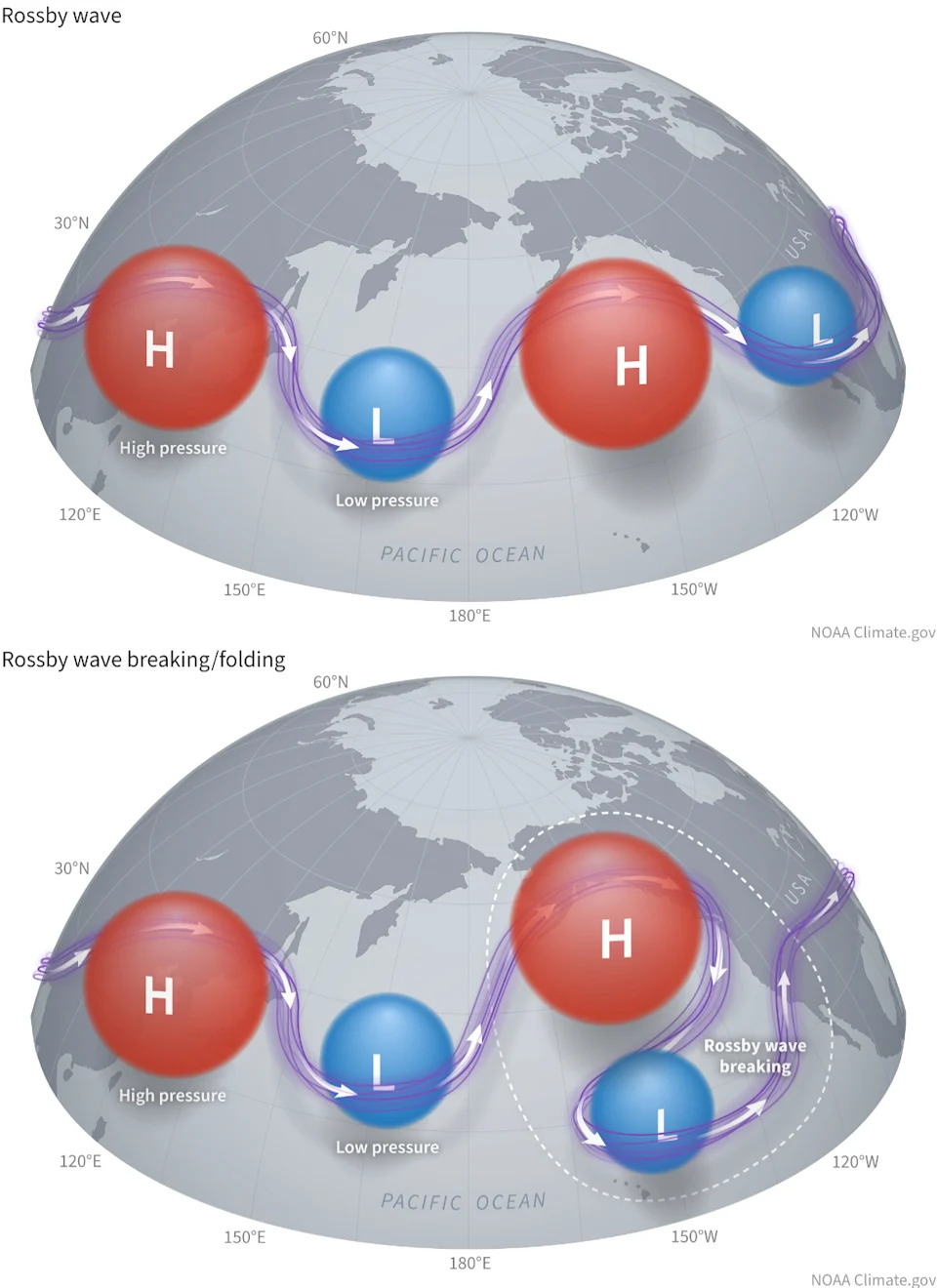
Rossby waves are waves in Earth's atmosphere that wrap around high- and low-pressure systems. When there is an atmospheric disturbance, it can propagate in what is known as a Rossby wave train. | Credit: NOAA Climate
“Over the eastern Pacific, the wave breaks — much like a towering ocean wave crashing near the shore,” said lead author Yongkang Xue of UCLA, summarizing how wave breaking strengthened atmospheric rivers and triggered exceptional rainfall.
Forecasting implications and caveats
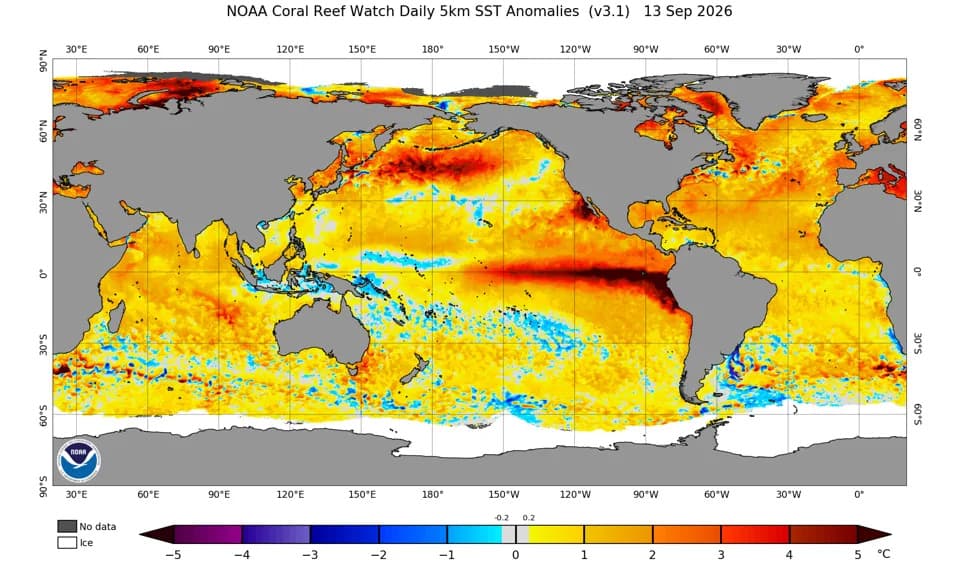
The paper highlights that operational forecasting systems, which often emphasize ocean signals such as El Niño and La Niña, did not predict these extreme downpours. Notably, both episodes occurred during La Niña conditions — typically associated with drier winters in the U.S. West — which contributed to forecasting challenges.
Model simulations in the study reproduced the observed storms with notable fidelity, suggesting that monitoring temperature anomalies over the Tibetan Plateau could provide an additional upstream indicator for early warning systems targeting the western U.S. coast. Experts not involved in the work described it as a focused, impactful case study that reinforces how remote, high‑altitude temperature anomalies can have outsized downstream effects.
Study details
The results were published on Sept. 9 in Science Advances. The lead author is Yongkang Xue, a distinguished professor of atmospheric and oceanic sciences at UCLA. Matthew Huber of Purdue University, who was not part of the research, emphasized that mountains and plateaus influence planetary‑scale waves and that temperature anomalies aloft effectively alter those waves.
Bottom line: Small but pronounced temperature increases on the Tibetan Plateau can set off atmospheric wave trains that amplify atmospheric rivers over the eastern Pacific, producing extreme rainfall across the U.S. West. Incorporating this teleconnection into forecasting could help give coastal communities more lead time for preparation and reduce future impacts.
Help us improve.