On CBS's 60 Minutes, an airman identified as "Bravo" described surviving a damaged parachute, falling at high speed and hiking to concealment with severe injuries after his F-15 was downed over Iran. His co-pilot "Alpha" was rescued about six hours after the shoot-down; Bravo's extraction took roughly 50 hours. Declassified footage showed a high-risk recovery involving dozens of helicopters and elite special operations units. The broadcast drew both acclaim for the rescue and criticism that it served as Pentagon-friendly messaging, which the Pentagon denied.
US Airman 'Bravo' Recounts 50-Hour Ordeal and Dramatic Special Forces Rescue on CBS '60 Minutes'
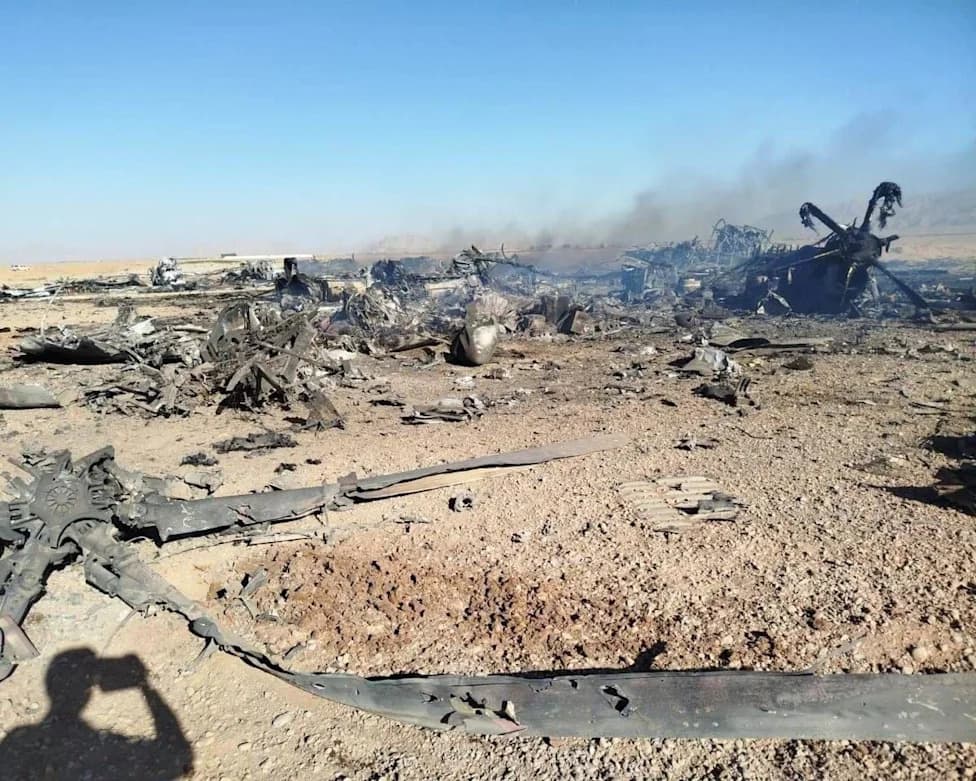
Wreckage is seen from what Iranian authorities say is a US military helicopter that crashed during a mission to rescue the missing American pilot of an F-15E that was downed earlier this week, in a handout image provided on 5 April 2026 in an unspecified location in Iran.Photograph: Iran's Ministry of Culture and Islamic Guidance via Getty Images
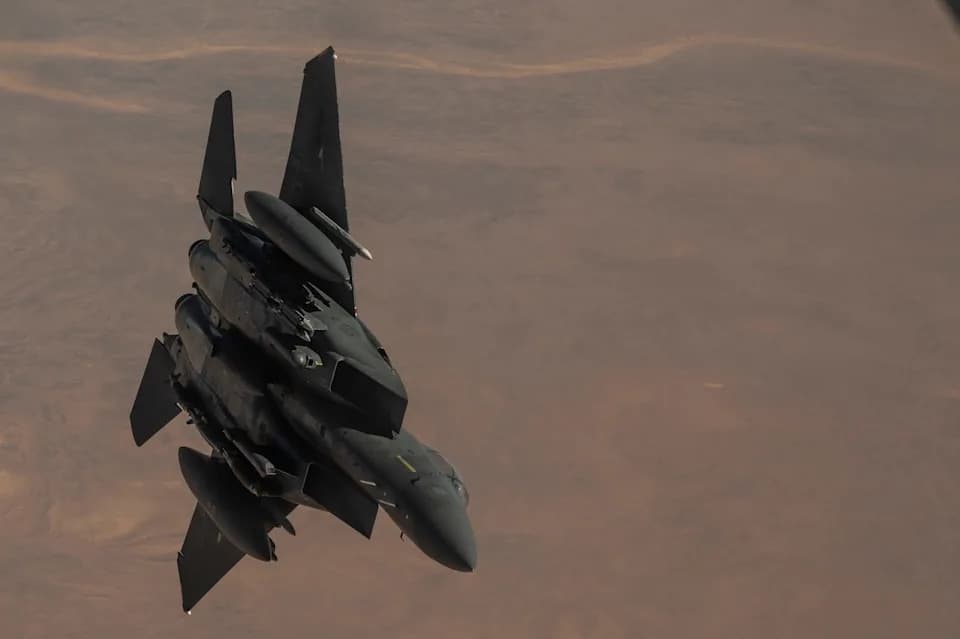
A US airman identified only by his codename, "Bravo," recounted on CBS's 60 Minutes how he climbed a 7,000 ft ridge with a broken back, arm and shoulder after his F-15 was downed over Iran, then survived roughly 50 hours on the ground before a complex US special operations extraction reached him.
The broadcast included declassified footage and on-camera interviews with senior US military figures. The segment drew praise for its dramatic rescue footage but also criticism from some media analysts who characterised the piece as possible Pentagon-friendly messaging amid a controversial and costly conflict.
What Bravo described:
Bravo told interviewer Norah O'Donnell that his jet was struck by a shoulder-fired missile and that his parachute was damaged after he and his co-pilot ejected. He said he realised his chute was not deploying properly and experienced a terrifying fall before striking the ground.
"When I looked up and saw no parachute, that was the most terrifying thing I've ever seen," Bravo said. "So I paused, right then. And I prayed: 'Lord, your will be done. But if I'm getting through this, I need help.'"
Medical advisers cited in the segment estimated Bravo's impact speed based on his injuries at roughly 70–100 mph. He described multiple fractures in his back, arm and shoulder, a sprained ankle and facial and head injuries. Despite this, he said he moved away from the crash site with only a pistol, a communications device and a tracking beacon, then climbed a ridge to seek concealment.
The rescue operation:
CBS aired declassified video of two linked recovery efforts. The co-pilot, referred to as "Alpha," was recovered in a high-risk daytime raid that involved more than 20 helicopters and close-quarters combat, including helicopters taking fire. Alpha was retrieved roughly six hours after the shoot-down.
Bravo's recovery took much longer. CBS reported that the April operation mobilised thousands of personnel and involved elite US units, including Army Delta Force and Navy SEAL Team Six, plus a CIA decoy operation intended to distract Iranian forces reportedly pursuing a bounty on the airmen. US bombers and drones reportedly struck nearby Islamic Revolutionary Guard Corps positions to support the mission.
Two large search-and-rescue aircraft carrying special forces and small helicopters landed on a makeshift desert airstrip several miles from Bravo's hiding place. The segment showed that one rescue plane became stuck in soft sand, was abandoned and then destroyed to prevent capture. Military officials on the programme said more than 90 Americans were on the ground, several hundred were in the air, and up to 5,000 people supported the operation overall.
Reaction and controversy:
The 60 Minutes segment prompted debate. Some critics accused the programme of amplifying a pro-military or Pentagon-favourable narrative; other outlets reported that securing the pilots' participation in the programme was a priority for certain officials. The Pentagon denied coercion, saying each pilot chose whether to participate and that operational security was preserved.
CBS's reporting and the subsequent media coverage highlight both the human drama of the rescue and the broader political controversy surrounding the conflict and how military successes are presented to the public.
Help us improve.