Physicist Níckolas de Aguiar Alves modeled the exact acceleration and deceleration sequence from TNG’s "The Battle" and found that an attacker would see three simultaneous images of the USS Stargazer, not two. The result follows from the same geometry behind Cherenkov radiation and relates to studies of electromagnetic "memory" effects. Alves’ paper (arXiv, Aug 22, 2026) is accepted by the American Journal of Physics. An extra warp burst could produce even more ghost images.
Physicist Shows Star Trek’s “Picard Maneuver” Would Produce Three — Not Two — Ghost Ships
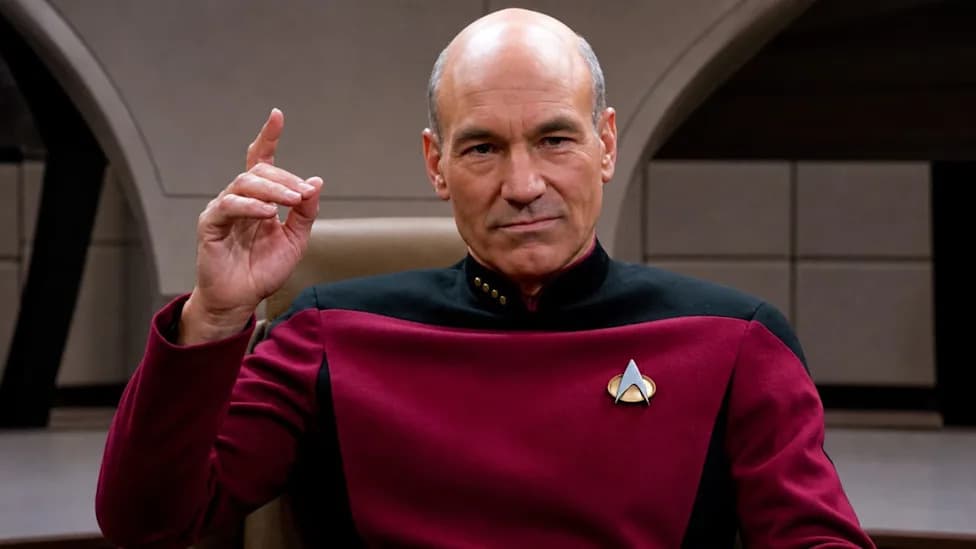
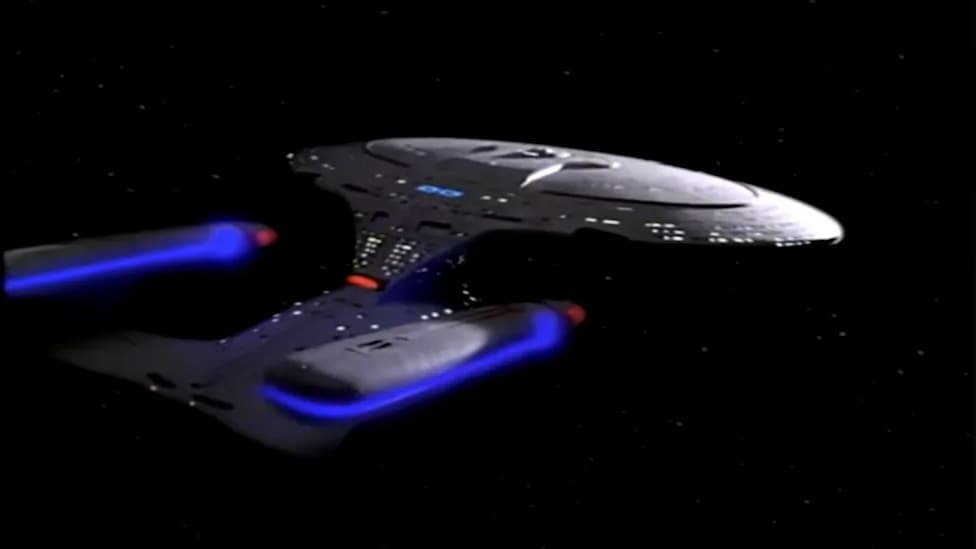
Image: Star Trek
Summary: A recent paper by Níckolas de Aguiar Alves models the exact acceleration and deceleration sequence from Star Trek: The Next Generation’s first-season episode "The Battle" and finds that an attacker would see three simultaneous images of the USS Stargazer instead of the two the show portrays. The result follows from the same geometry behind Cherenkov radiation and is linked to studies of electromagnetic "memory" effects. The study is on arXiv and accepted by the American Journal of Physics.
How the Maneuver Works — And What the Math Shows
In the episode, Captain Jean-Luc Picard orders the USS Stargazer to accelerate to warp, stop abruptly near an attacker, and fire so the enemy sees two ships and targets the wrong one. Níckolas de Aguiar Alves, a physicist at the Federal University of ABC (UFABC) in Brazil, recreated the episode's exact motion — not a single constant warp speed but two distinct acceleration phases: a burst to superluminal velocity followed by a deceleration to rest near the adversary.
Alves' calculations show that, because signals (or lightlike emissions) from multiple points along the ship's worldline can arrive at the attacker's position at the same time, the attacker would perceive several apparent images of the same ship. When the motion includes two separate acceleration events, the spacetime geometry allows three different emission events to be seen simultaneously. In short: three images, not two.
Analogs From Physics
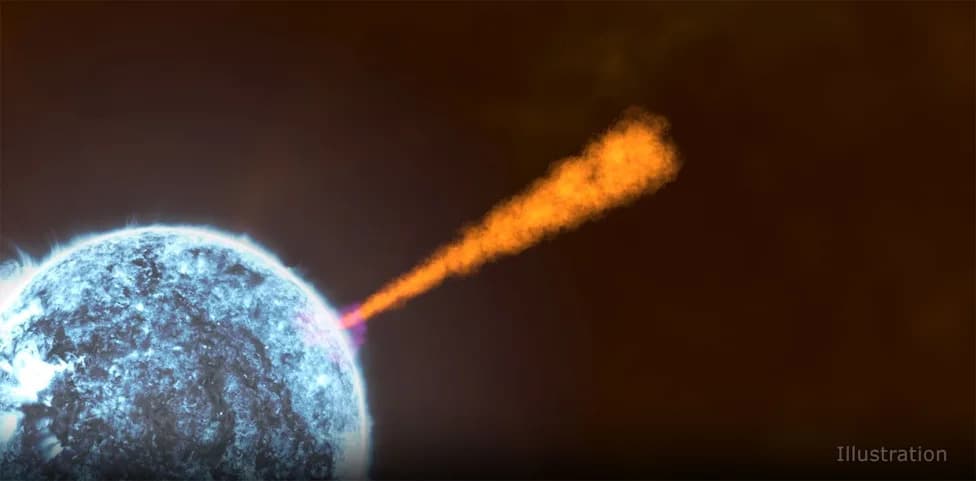
This effect is not purely science fiction. A helpful classical analogy is sound: if an object outruns the waves it emits, a distant observer can receive signals from different instants of the object's motion at once. A closer electromagnetic analogue is Cherenkov radiation — the blue glow around reactor cores — which appears when a charged particle travels faster than light does inside a medium (water or glass), outrunning its electromagnetic wavefronts and producing a coherent shockwave. Alves used the same underlying geometry in his analysis.
More Images With More Bursts
Alves reports that adding another warp burst would increase the number of simultaneous apparent images — in his toy model, a third burst could raise the total to five ghost images. More apparent positions increase the adversary’s confusion and, in the simplified scenario Alves models, make the tactic even more effective than the episode implies.
“The main thing they got perfectly, and I think it is a great illustration,” Alves told Ars Technica, praising the writers for capturing the core idea.
Broader Context: Memory Effects
Alves’ interest in the episode grew out of unrelated work on particles moving through media where light travels more slowly than in vacuum. He noticed that the spacetime diagrams he was sketching — a pedagogical tool for intuition — matched the episode’s geometry. His broader research concerns the electromagnetic analog of the gravitational-wave "memory effect," where a passing wave can leave a lasting change in a particle’s trajectory. Some researchers suggest such electromagnetic memory could be easier to detect in media where light speed is reduced.
Publication and Significance
The paper, titled "The unexpected effectiveness of the Picard maneuver: Seeing three images of the same superluminal spaceship," was posted to arXiv on August 22, 2026, and has been accepted by the American Journal of Physics, a journal focused on pedagogy and accessible physics research. Alves' work is therefore formal, peer-oriented analysis that begins with a 1987 TV plot but leads to clear pedagogical and conceptual insights about wavefront geometry and observational effects.
Bottom line: Star Trek got the idea right in spirit — but the real math suggests Captain Picard’s trick would have been even more disorienting for an attacker than the show depicted.
Help us improve.