UC Riverside scientists have named a new genus of soft bugs Swiftiephylus and four 'blonde' species — S. taylorae, S. amator, S. intrepidus and S. poetorum — in honor of Taylor Swift. The herbivorous insects, associated with Australian Allocasuarina plants, have pale bodies with red-orange markings that may camouflage them on she-oak flowers. The naming aims to raise public interest in insect diversity and conservation.
Swiftiephylus: Four 'Blonde' Insects Named in Honor of Taylor Swift to Spotlight Conservation

"Taylor Swift's iconic look is her blonde hair and red lips. These insects are pale yellow with accents of red throughout," says Sarah Schroeder, who recently named four insects after the popstar. Lev Radin/ZUMA Press Wire/dpa
Researchers at the University of California, Riverside have described a new genus of soft bugs and named four newly identified species after pop superstar Taylor Swift. The genus, Swiftiephylus, includes four pale, 'blonde' species that scientists hope will help draw public attention to insect diversity and conservation.
New Genus and Species
The researchers placed the insects in a newly described genus, Swiftiephylus, and named the species Swiftiephylus taylorae, Swiftiephylus amator, Swiftiephylus intrepidus and Swiftiephylus poetorum. The species epithets are Latinized references to Taylor Swift and three of her album themes — "Lover," "Fearless" and "Poets" (a nod to The Tortured Poets Department).
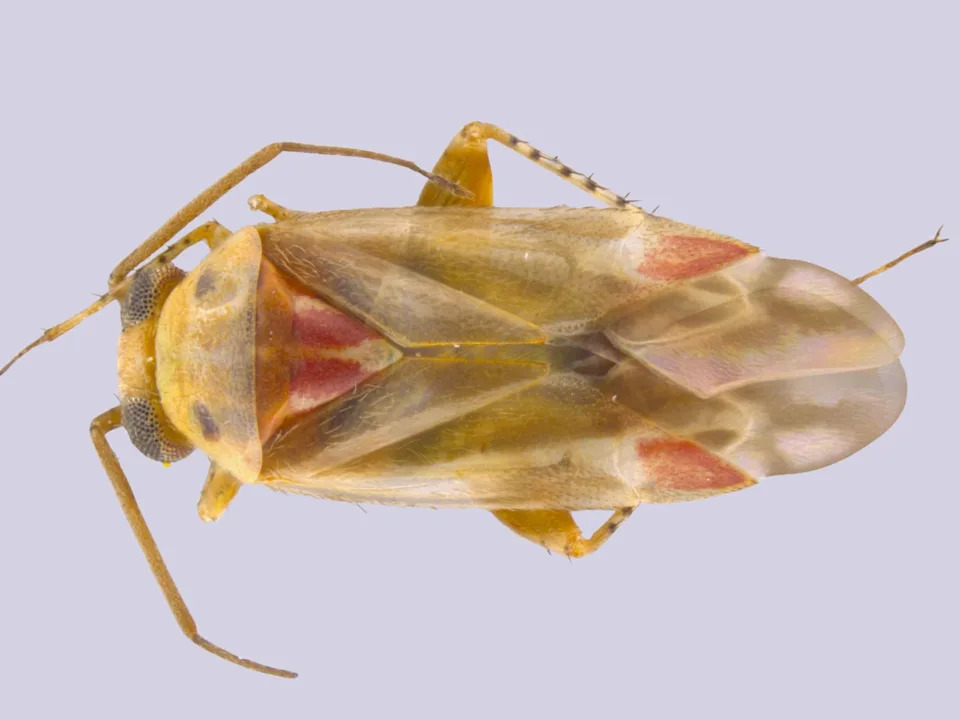
"Taylor Swift's iconic look is her blonde hair and red lips. These insects are pale yellow with accents of red throughout," says Sarah Schroeder, who recently named four insects after the popstar. Sarah Schroeder/UCR/dpa
Appearance and Ecology
All four species are described as pale or "blonde" with red-orange markings. These color patterns — pale bodies with red-orange structures — may help the insects blend into she-oak (Allocasuarina) flowers. The bugs are herbivores and appear to be closely associated with plants in the Australian genus Allocasuarina.
"Taylor Swift's iconic look is her blonde hair and red lips. These insects are pale yellow with accents of red throughout," said doctoral student Sarah Schroeder, a co-author of the scientific paper. "It felt authentic to me as a lifelong Swiftie to honour Taylor in this way, as well as bring attention to the diversity of insects that has yet to be discovered."
Discovery and Naming
The specimens that led to this discovery were first collected between 1995 and 2004 during a US–Australian biodiversity project that amassed roughly 50,000 samples. Those collections required years of sorting, examination and taxonomic work before the new genus and species were formally described and named.
Why This Matters
While naming species after celebrities is not uncommon in taxonomy, the researchers emphasize that their choice was intended to engage the public and highlight the vast, often overlooked diversity of insects. By linking scientific discovery to a widely recognized cultural figure, the team hopes to bring increased attention to insect conservation and the need to study lesser-known species.
Help us improve.