Jin So‑hee and a small but growing number of younger women are leaving stressful city jobs to become haenyeo — traditional Korean female free‑divers who harvest seafood without breathing equipment. The work is physically punishing: Jin lost seven kilograms in her first year and suffered ear pain and headaches but learned freediving techniques to adapt. The UNESCO‑recognised tradition symbolizes female independence, yet numbers are falling and warming seas are thinning catches. Young divers and advocates are documenting and training to preserve the practice for future generations.
Young Women Leave Korea's Corporate Grind To Revive Haenyeo Free-Diving Tradition
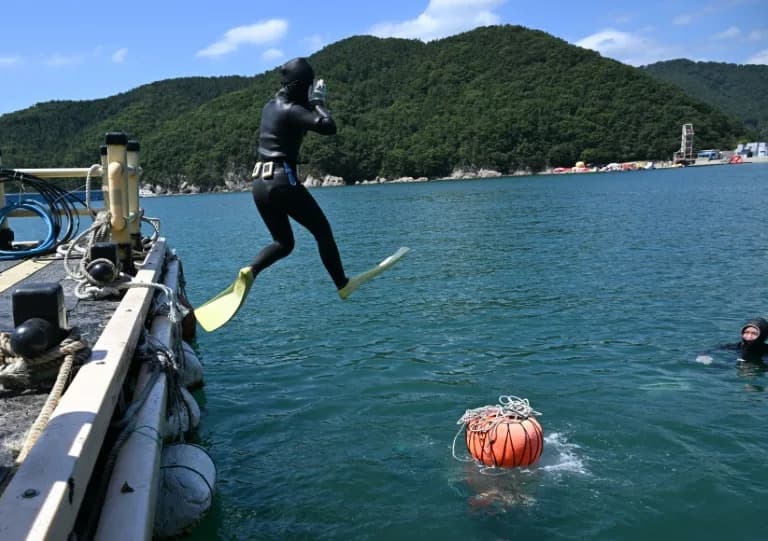
South Korean haenyeo Jin So-hee dives into the sea in the South Korean coastal town of Geoje (Jung Yeon-je)
Jin So-hee and a growing handful of younger women are trading long shifts and city stress for the punishing, sea‑bound life of the haenyeo — Korea's centuries‑old community of female free‑divers who harvest seafood without breathing gear. Their reasons are both practical and philosophical: escaping an exhausting work culture and reclaiming a meaningful, tradition‑rich livelihood.
Jin, 33, grew up in Busan and trained in skincare and nail art before working as a nursing assistant. At 25 she moved to the quieter coastal town of Geoje after becoming worn down by long hours, one‑day weekends and low pay. There she encountered haenyeo in their 70s still diving to support themselves and decided to join them.
Her first year was brutally hard: she lost seven kilograms (15 pounds) and at times felt so exhausted she "could barely lift a spoon." Haenyeo dive using only a wetsuit and goggles, the latter traditionally treated with mugwort and saliva to prevent fogging. Jin suffered severe ear pain from pressure changes and splitting headaches after surfacing — common ailments among haenyeo — and later learned modern freediving and scuba techniques to better equalise ear pressure and reduce risk.
Tradition, Independence And Recognition
For centuries the haenyeo have held a unique social role in Korean society: many women became primary breadwinners for their families through diving. The practice — closely associated with Jeju Island but found along other coasts such as Geoje — is recognised by UNESCO and celebrated as a symbol of female resilience and independence in a historically patriarchal country.
However, numbers are falling. UNESCO notes the number of haenyeo on Jeju dropped from 3,437 in 2021 to 2,371 last year, and the wider tradition faces an uncertain future.
Breaking Into A Tight‑Knit Community
Newcomers such as Jin and fellow young diver Woo Jung‑min, 40, have also had to earn the trust of older, close‑mouthed haenyeo. Initially wary of being filmed, many elder divers resisted when the younger pair started documenting daily life for YouTube. The duo persisted, hoping their footage will serve as both a record and a recruitment tool for future generations.
"We wanted to document the fact that there were young haenyeo like us, so that someday, this could become a kind of record and perhaps even an asset for future generations," said Woo.
Risk, Beauty And Environmental Threats
Choi Young‑hee, 60, arrived at the sea later in life after nearly two decades selling clothes in Seoul department stores. She was drawn to diving after seeing figures repeatedly surface and submerge off Geoje — at first she mistook them for dolphins. Choi now runs an organisation that teaches haenyeo culture and trains aspiring divers.
Yet haenyeo face mounting dangers: the sea is physically unforgiving, a torn wetsuit in winter can be life‑threatening, and divers describe the work as taking them into an "underworld" where the physical and mental toll is immense. Warming seas and disrupted marine ecosystems are also thinning catches and making the livelihood more precarious. An old haenyeo saying captures the peril: "You earn your living in the realm of the dead and spend it in the world of the living."
Still, divers point to the ocean's fragile beauty — once visible in displays such as red sea squirts carpeting the seafloor like "a field of roses" each spring — now diminished by environmental change. Younger haenyeo and advocates are documenting, training and campaigning to preserve both the culture and the marine environment that sustains it.
What’s Next: The haenyeo tradition survives through a combination of hands‑on training, modern diving techniques, community outreach and digital documentation. Whether these efforts will reverse demographic decline or adapt the practice for a warming ocean remains an urgent question for the coming decades.
Help us improve.