The discovery of a three-dimensional Charnia fossil in Finnmark, northern Norway, offers a rare, detailed view of an Ediacaran organism dated to about 560 million years ago. Unlike the common flattened impressions, this specimen preserves subtle 'keels' along its branches, revealed by rapid burial in a turbidity current. Led by University of Cambridge researchers and published in Palaeontology, the find expands the known range of early animals and hints at an unexpected local fossil community.
Rare 560-Million-Year-Old Charnia Fossil in Norway Reveals Unseen 3D Anatomy

(Yorick Veenma via SWNS)
A remarkably well-preserved, three-dimensional fossil of the Ediacaran organism Charnia has been discovered in a sheep field in Finnmark, northern Norway. Dated to about 560 million years ago, this specimen is the first confirmed Charnia in Scandinavia in decades and preserves anatomical detail rarely seen in soft-bodied fossils of this age.
What Is Charnia?
Charnia is an iconic Ediacaran organism that resembles a fern but is not closely related to modern plants. It appears to have lacked a mouth, internal organs or obvious means of locomotion, and likely lived fixed to the seafloor. Paleontologists often describe such organisms as soft-bodied and gel-like — a sedentary, 'goo-filled' life-form rather than an active swimming animal.
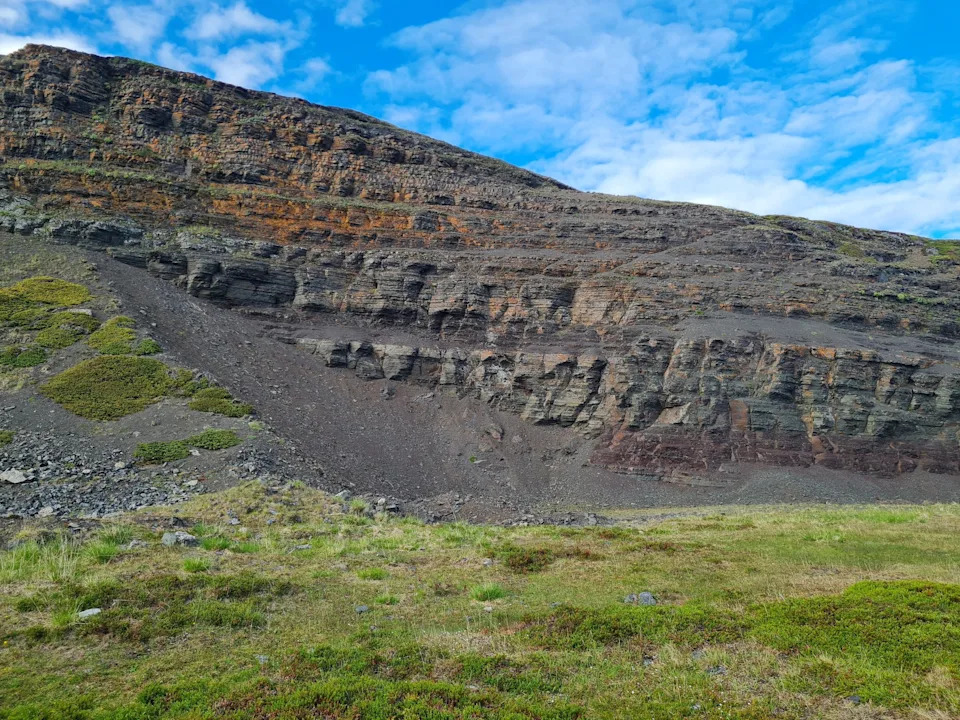
(Yorick Veenma via SWNS)
Exceptional Three-Dimensional Preservation
Most Ediacaran fossils are preserved as flattened impressions, like a flower pressed between pages. In contrast, the Norwegian Charnia retains three-dimensional shape because the animal was rapidly buried by an underwater avalanche (a turbidity current), which filled its body with sediment and conserved its form. This preservation revealed subtle ridges, called 'keels', running along each branch — a structural detail not visible in the typical flattened specimens.
Why This Find Matters
The discovery expands the known geographic range of Charnia and other Ediacaran organisms, suggesting these early animals may have been more widely distributed than previously thought. The Finnmark site also produced unusual, umbrella-shaped structures and other forms that do not match well-known Ediacaran fossils, hinting at a previously unrecognized local community of early complex life.
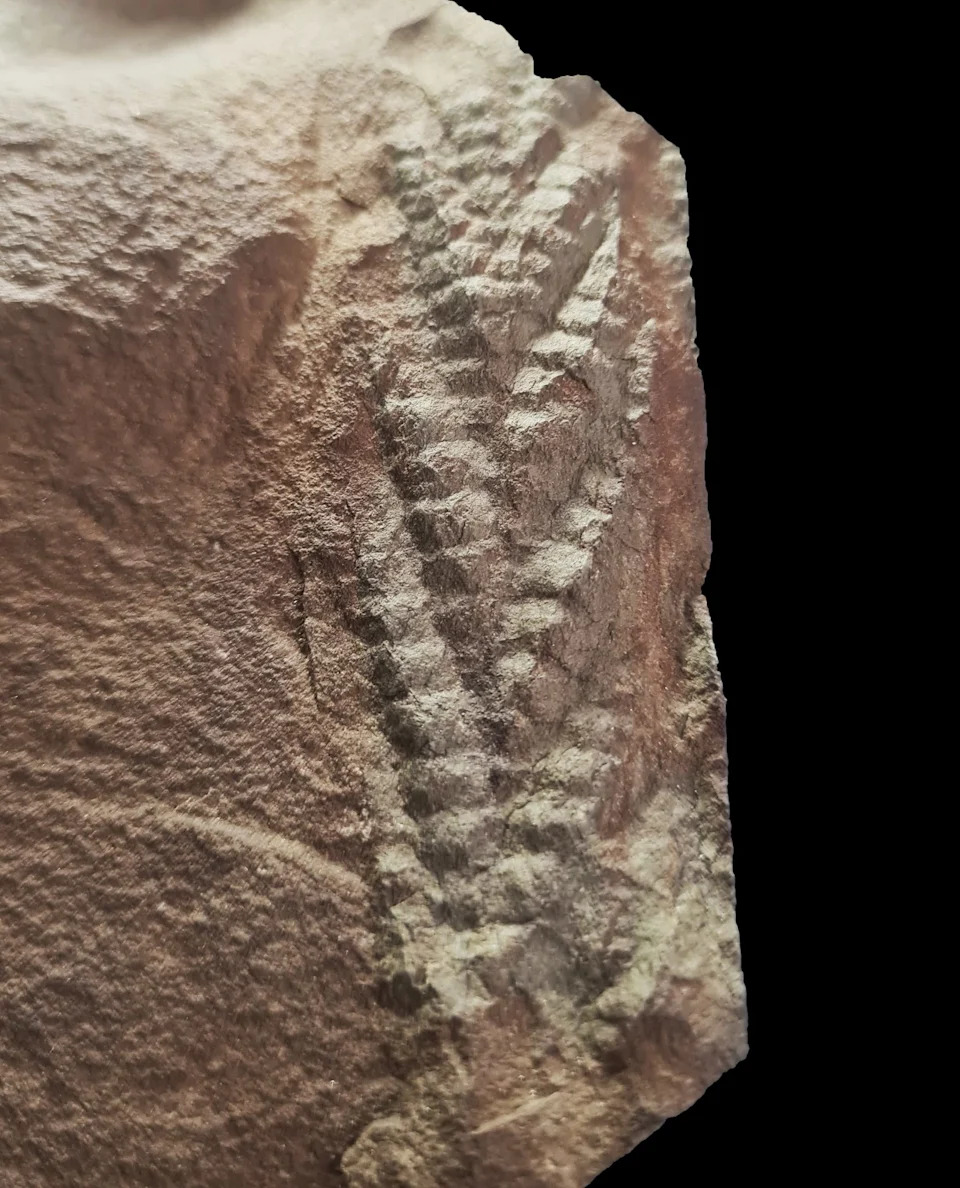
(Yorick Veenma via SWNS)
Study lead author Yorick Veenma (University of Cambridge) said that seeing the same species preserved differently can reveal anatomical features that were missed before. Co-author Neil Davies noted the rarity of three-dimensional preservation for soft-bodied organisms and emphasised how uncommon suitable Ediacaran rock outcrops are.
Study and Publication
The research was led by scientists at the University of Cambridge and published in the journal Palaeontology. The findings provide new anatomical insight into one of the earliest known complex organisms and identify Finnmark as a promising location for further discoveries.
Takeaway: This Norwegian Charnia offers an unusually detailed window into the anatomy and distribution of Ediacaran life and underscores the importance of exploring new and understudied outcrops for paleontological breakthroughs.
Help us improve.